Reptile Substrate Accessories for a Cleaner Setup
Zoo Med Eco Earth Coconut Fiber is the best all round substrate for humidity holding enclosures, Zoo Med ReptiBark suits large tropical species that need chunkier bedding, and Zilla Terrarium Liner is the cleanest low maintenance option. Zoo Med Excavator Clay is the pick for burrowing desert species.
Zoo Med Eco Earth Coconut Fiber is our top overall substrate for humidity dependent species, Zoo Med ReptiBark is the better chunky option for large tropical enclosures, and Zilla Terrarium Liner is the easiest choice for keepers who want minimal cleaning.
Substrate is harder to get right than it looks because the same bedding that holds humidity for a crested gecko will rot in an arid setup, and some popular products carry a real impaction risk for certain species. We compared moisture retention, particle size, burrowing behaviour, ease of spot cleaning and what keepers report about mould, odour and long term cost.
What to look for
Match the substrate to the species, not the look The single most common mistake is choosing bedding for how it looks in the enclosure. A humid coconut fibre base will cause scale rot in an arid species, while sand in a tropical setup will not hold the humidity a gecko needs. Look up the target humidity range for your animal first, then choose a substrate that reaches it without constant intervention.
Impaction risk and particle size Impaction happens when an animal swallows substrate that it cannot pass, and the risk depends heavily on species, age and particle size. Juveniles and species that hunt across the ground are most vulnerable. Where risk is a concern, feed in a separate container or on a dish, or use a solid liner. Discuss any concerns with an exotics veterinarian, particularly if your animal is showing appetite or defecation changes.
Loose substrate versus liners Loose bedding lets animals dig, which is a real behavioural need for many species and reduces stress. Liners and carpet remove impaction risk and make cleaning trivial, which suits quarantine and juveniles. Many keepers use a liner for the first months and switch to loose substrate as the animal grows, which is a reasonable middle path.
Cleaning schedule and preventing mould Spot clean visible waste daily and stir the substrate weekly so damp areas do not sit compacted at the base. Full replacement intervals vary from monthly for fine bedding in a busy enclosure to several months for bark that is rinsed and reused. In humid setups, a drainage layer and a clean up crew of springtails and isopods do more to prevent mould than frequent full changes do.
The best picks, ranked

Zoo Med Eco Earth Coconut Fiber Substrate
Eco Earth is compressed coconut fibre that expands with water and then releases moisture slowly, which is why it holds tropical humidity better than bark or soil alone. It supports burrowing and works well as a bioactive base once springtails and isopods are added. Keepers report it needs a full change less often than most beddings if spot cleaned regularly.
Pros
- Excellent moisture retention
- Works as a bioactive base
- Compressed bricks store compactly
Cons
- Can dry into dust if left too long
- Sticks to feeder insects and food
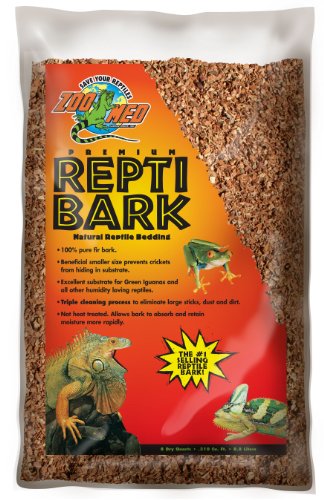
Zoo Med ReptiBark Natural Fir Bark Bedding
ReptiBark uses larger fir bark chips that absorb and release moisture while staying loose enough for air to move through, which prevents the sour, compacted layer that fine substrates develop in big enclosures. The chunk size also makes waste easy to scoop out. It can be rinsed and reused several times, which offsets the higher initial cost.
Pros
- Resists compacting in large enclosures
- Easy to spot clean around
- Can be washed and reused
Cons
- Chunk size poses impaction risk for small species
- Heavier than fibre substrates

Zilla Terrarium Liner
A reusable liner removes impaction risk entirely because there are no loose particles to swallow, and cleaning is a matter of lifting it out and rinsing. It suits quarantine setups, juveniles and any species where you want to monitor waste closely. The obvious cost is that it prevents burrowing, which some species need for security.
Pros
- No impaction risk at all
- Fast to clean and dry
- Lasts far longer than loose bedding
Cons
- Prevents natural burrowing
- Holds odour if not washed promptly

Exo Terra Plantation Soil
Plantation Soil is a compressed coconut husk product with a finer texture that live plants root into readily, which is what a bioactive vivarium needs. It holds humidity well and supports a clean up crew of springtails and isopods. As with any fine substrate, keep it slightly damp rather than wet to avoid anaerobic pockets forming at the base.
Pros
- Live plants root well
- Holds humidity consistently
- Supports a clean up crew
Cons
- Can go anaerobic if waterlogged
- Needs a drainage layer in tall vivariums

Zoo Med Excavator Clay Burrowing Substrate
Excavator Clay is mixed with water, shaped and allowed to dry, after which it holds tunnels and burrows without collapsing. That gives arid species the structural digging they cannot get from loose sand. Setup takes a day or two of drying time, and rebuilding after a deep clean is a real job rather than a quick swap.
Pros
- Tunnels hold their shape
- Very low dust once set
- Natural look for desert setups
Cons
- Long setup and drying time
- Difficult to fully replace

Zilla Reptile Terrarium Bedding Coconut Husk
Zilla’s coconut husk bedding covers the same ground as premium fibre substrates at a lower cost per bag, making it practical for keepers with several enclosures to fill. Moisture retention is good, though particle consistency varies more between bags than the Zoo Med equivalent. It works well as a base layer under a finer top dressing.
Pros
- Good value for multiple enclosures
- Retains humidity well
- Works as a base under finer bedding
Cons
- Particle size varies between bags
- Occasional debris needs sifting out
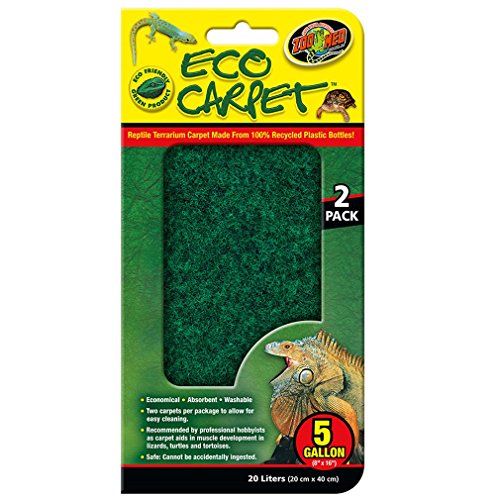
Zoo Med Reptile Cage Carpet
Cage carpet is a cut to fit reusable mat that gives a secure walking surface with no loose particles, which suits juveniles and species prone to swallowing bedding. Buying two lets you swap a clean one in while the other dries. Claws can catch in the fibres over time, so inspect it regularly and replace it once it starts to fray.
Pros
- Lowest ongoing cost
- No loose particles to ingest
- Provides secure footing
Cons
- Claws can snag in worn fibres
- Absorbs odour between washes
How they compare
| # | Model | Material | Best for | Score | Price |
|---|---|---|---|---|---|
| 1 | Zoo Med Eco Earth Coconut Fiber Substrate | Compressed coconut fibre | Best overall | 9.4 | Check price |
| 2 | Zoo Med ReptiBark Natural Fir Bark Bedding | Natural fir bark chips | Best for large tropical species | 9.2 | Check price |
| 3 | Zilla Terrarium Liner | Absorbent reusable fabric | Best for easy cleaning | 9.0 | Check price |
| 4 | Exo Terra Plantation Soil | Compressed coconut husk | Best for bioactive setups | 8.8 | Check price |
| 5 | Zoo Med Excavator Clay Burrowing Substrate | Burrowing clay | Best for burrowing desert species | 8.6 | Check price |
| 6 | Zilla Reptile Terrarium Bedding Coconut Husk | Coconut husk | Best value | 8.3 | Check price |
| 7 | Zoo Med Reptile Cage Carpet | Reusable carpet mat | Best budget | 8.0 | Check price |
Common questions
Which substrate is best for humidity?
Coconut fibre products such as Zoo Med Eco Earth and Exo Terra Plantation Soil hold and release moisture most consistently. Bark chips also work well in larger enclosures where airflow prevents compacting.
Is sand safe for reptiles?
It depends entirely on the species and the individual. Some desert species live on sand naturally, while others face real impaction risk, particularly juveniles. Excavator Clay is a common alternative because it holds burrows and produces far less loose grit.
How often should I change reptile substrate?
Spot clean daily and stir weekly. Full changes typically run from monthly for fine bedding to every few months for bark that is washed between uses. Any sour smell or visible mould means change it sooner.
What is a bioactive setup?
It is an enclosure with live plants and a clean up crew of springtails and isopods that break down waste continuously. It needs a drainage layer, a suitable soil substrate and time to establish, but it dramatically reduces full substrate changes.
Can I reuse reptile bedding?
Bark chips can be rinsed and reused several times. Fibre substrates generally cannot, because waste works into the material. Liners and carpet are designed for repeated washing and are the most economical over time.
What causes mould in a terrarium?
Consistently wet substrate with poor airflow, usually made worse by uneaten food. Improve ventilation, let the surface dry between mistings, remove leftover feeders promptly and consider adding springtails, which consume mould directly.
Do all reptiles need to burrow?
No, but many do, and denying a burrowing species the depth to dig is a common source of stress. Check your species’ natural behaviour, and if it burrows, provide at least a few inches of substrate it can move through.
Are liners suitable long term?
For some species, yes, particularly arid ones that do not burrow. For digging species, a liner denies natural behaviour, so most keepers use it only during quarantine, illness or early growth.
Our take
For most tropical enclosures Zoo Med Eco Earth is the substrate we would start with, because it holds humidity reliably and transitions easily into a bioactive setup later. Large snakes and big tropical lizards do better on ReptiBark, which resists compacting and can be washed and reused. If your priority is a hygienic, low effort enclosure with no impaction risk, a reusable liner is the sensible choice, and any concerns about your animal’s health should go to an exotics veterinarian rather than a product change.