Magnetic Car Chargers That Won’t Drop Your Phone
ESR’s HaloLock vent mount leads with N52 magnets and true 15W output for the widest phone fit. Anker’s MagGo delivers dependable 7.5W charging in a foldable, budget frame. Belkin’s BoostCharge Pro adds official MagSafe certification and an aluminum arm for iPhone owners who want guaranteed alignment.
ESR’s HaloLock vent mount is the strongest all-around pick, pairing N52 magnets with true 15W output, though it still needs a PD-rated car adapter to hit that speed.
Magnet strength, wattage and mount style vary more than most shoppers expect. We compared listed specs, MagSafe certification status and owner feedback on grip and heat across seven current Amazon listings.
How to choose
What to look for in a magnetic car charger Magnet grade decides whether a phone stays centered over the coil once the road gets rough. N52 neodymium magnets, used in the ESR and Belkin mounts above, hold tighter than the generic magnets in cheaper options. Wattage matters next. A 7.5W charger suits short commutes, while 15W needs a PD-rated car adapter to actually reach that speed. MagSafe certification, which Belkin carries, confirms the magnet spacing matches Apple’s exact spec.
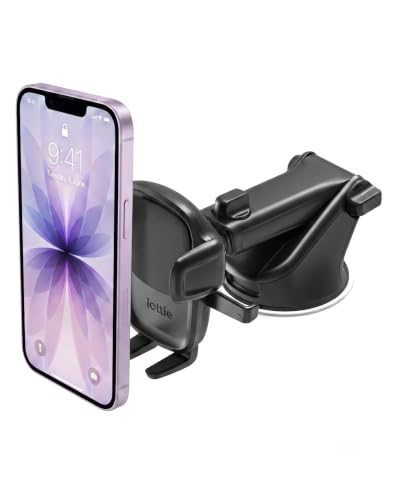
Vent, dashboard or CD slot: which mount fits your car Vent clips install in seconds and remain the most common mount, though they can block AC or heater airflow. Dashboard and windshield suction mounts, like the iOttie iTap, free up the vents but depend on suction or adhesive grip that weakens after months of heat cycling. CD slot mounts, such as the Nimaso, keep both vents and dashboard clear. That option only works in vehicles that still have a functioning CD player.
Getting real 15W speed without overheating Apple caps MagSafe wireless charging at 15W, and only a PD-rated adapter unlocks that ceiling. A standard 5W USB port leaves any of these chargers running well under their rated speed. Sustained 15W output builds heat, which is why ESR added an active fan to the CryoBoost model. Passive vent mounts without a fan may throttle output during long summer drives to protect the phone’s battery.
Options for phones without MagSafe Android phones and older iPhones need a metal ring or plate to grip these mounts, since they lack Apple’s built-in magnet array. Spigen and Nimaso both include an adhesive metal accessory for exactly this reason. Alignment through a metal ring is less precise than true MagSafe. Charging speed on non-MagSafe phones typically settles near 7.5W, regardless of the charger’s rated maximum.
The shortlist, ranked

ESR HaloLock Magnetic Wireless Car Charger
N52 neodymium magnets in ESR’s HaloLock line the phone up directly over the charging coil, even across speed bumps. Output peaks at 15W, but only with a PD-rated car adapter plugged in. A 360-degree vent clip lets the phone rotate between portrait and landscape without detaching.
Pros
- N52 magnets resist pothole jostling better than standard-grade magnets
- Vent clip rotates 360 degrees between portrait and landscape
- USB-C cable included in the box
Cons
- Full 15W speed requires a separate PD car adapter
- Narrow slat vents can make the clip harder to seat

Anker MagGo Magnetic Wireless Car Charger
Anker’s MagGo vent mount folds flat for glovebox storage between drives. Output caps at 7.5W, a speed built for daily commutes rather than long trips. Owner reports point to a magnetic snap that holds through stop-and-go traffic.
Pros
- Foldable arm tucks away flat when not mounted
- Magnetic hold stays secure through daily stop-and-go driving
- Lower cost than the 15W models in this lineup
Cons
- 7.5W charges slower than ESR’s 15W options
- Grip loosens on wide, flat vent fins

Belkin BoostCharge Pro Magnetic Wireless Car Charger
Apple’s own MagSafe license backs this Belkin mount, guaranteeing magnet spacing matches iPhone tolerances exactly. An aluminum arm holds its angle under the weight of a phone and case. Support stops at MagSafe iPhones, since no metal-ring adapter ships in the box.
Pros
- Official MagSafe license guarantees precise coil alignment
- Aluminum arm resists sagging under phone and case weight
- Vent clamp stays fixed on rough roads
Cons
- No metal-ring adapter, so non-MagSafe phones cannot attach
- Priced above the other vent mounts in this list

Spigen OneTap Pro Magnetic Wireless Car Charger
Spigen’s OneTap Pro clips onto a vent and throws in a metal ring for phones without MagSafe. Output tops out at 7.5W. Installation takes seconds, though the ABS plastic clip flexes more than metal-armed rivals.
Pros
- Lowest price point in this comparison
- Metal ring included for standard, non-MagSafe cases
- Lightweight clip mounts on a vent in seconds
Cons
- Plastic clip feels less rigid than metal-armed mounts
- Charging speed tops out at 7.5W

iOttie iTap Magsafe Wireless Car Mount
iOttie skips vent mounting entirely, relying on a suction base for dashboard or windshield placement. A telescopic arm extends to 5.5 inches, useful for taller center consoles. One-hand release lets the driver free the phone without fumbling for a button.
Pros
- Suction base fits dashboards where vent clips will not reach
- Telescopic arm adjusts viewing height for tall consoles
- One-hand release speeds up removing the phone
Cons
- Suction grip can weaken on textured dashboard surfaces over time
- Larger footprint than any vent-clip design here
Nimaso Magnetic Wireless Car Charger
Nimaso threads through a car’s CD slot rather than a vent, so climate airflow stays unobstructed. A gooseneck arm bends to nearly any viewing angle. A metal plate in the box adds grip for phones without MagSafe.
Pros
- CD slot mount leaves vent airflow completely unblocked
- Gooseneck arm bends to nearly any angle
- Metal plate included for non-MagSafe phones
Cons
- Only works in vehicles with a functioning CD slot
- Gooseneck can droop under a heavier phone and case

ESR CryoBoost Magnetic Car Charger
A built-in cooling fan sets ESR’s CryoBoost apart, fighting thermal throttling during hot afternoon drives. It sustains 15W output longer than passive vent mounts during extended navigation. A faint fan hum is noticeable to some owners in a quiet cabin.
Pros
- Active cooling fan curbs thermal throttling on hot days
- Sustains 15W output longer than passive vent designs
- Quick-release magnetic swap for one-handed removal
Cons
- Fan produces a faint hum some owners notice in quiet cabins
- Draws more power from the car’s USB port than passive mounts
The lineup, side by side
| # | Model | Max output | Best for | Score | Price |
|---|---|---|---|---|---|
| 1 | ESR HaloLock Magnetic Wireless Car Charger | 15W wireless | Best overall | 9.4 | Check price |
| 2 | Anker MagGo Magnetic Wireless Car Charger | 7.5W wireless | Best value | 9.1 | Check price |
| 3 | Belkin BoostCharge Pro Magnetic Wireless Car Charger | 15W wireless | Best premium | 8.9 | Check price |
| 4 | Spigen OneTap Pro Magnetic Wireless Car Charger | 7.5W wireless | Best budget | 8.6 | Check price |
| 5 | iOttie iTap Magsafe Wireless Car Mount | 10W wireless | Best for dashboard mounting | 8.4 | Check price |
| 6 | Nimaso Magnetic Wireless Car Charger | 7.5W wireless | Best for CD slot mounting | 8.2 | Check price |
| 7 | ESR CryoBoost Magnetic Car Charger | 15W wireless | Best for heat management | 8.0 | Check price |
Common questions
Do magnetic car chargers work without MagSafe?
Yes, with an adhesive metal ring or plate on the phone or case, though alignment is less precise and speed usually drops near 7.5W.
How strong do magnets need to be for a car mount?
N52-grade neodymium magnets, used in the ESR HaloLock and similar mounts, hold through potholes and hard turns better than generic mounts.
What is the fastest wireless charging speed for magnetic car chargers?
Most MagSafe-compatible chargers cap at 15W, matching Apple’s official MagSafe limit, and hitting that speed requires a PD-rated car adapter.
Can a magnetic phone mount damage a car’s dashboard?
Suction-based dashboard mounts rarely cause damage but can leave a faint residue ring over time; vent clips and CD slot mounts avoid dashboard contact entirely.
Vent mount vs dashboard mount: which is better for daily driving?
Vent mounts install faster and sit lower in the sightline, while dashboard mounts free up airflow but rely on suction grip that can weaken with heat.
Is 7.5W wireless charging fast enough in a car?
For commutes under 30 minutes, 7.5W keeps the battery from draining during navigation; longer drives benefit more from a 15W charger.
Do magnetic car chargers work with a phone case on?
Only with MagSafe-rated cases or ones paired with a metal ring insert; thick cases can also weaken the magnetic connection and slow charging.
Which magnetic car charger works best for the iPhone 16?
Its built-in MagSafe magnets work with any of these mounts, though Belkin’s official Apple certification offers the tightest guaranteed alignment.
Can I mount a magnetic charger without an air vent?
Yes, the iOttie iTap uses a suction base for the dashboard or windshield, and the Nimaso threads through a car’s CD slot instead.
Do magnetic car mounts overheat a phone during navigation?
Sustained 15W charging generates heat, and only the ESR CryoBoost adds an active fan to manage it during long trips.
Our pick
ESR’s HaloLock earns the top spot here, pairing N52 magnet strength with genuine 15W output at a mid-range cost. Drivers who want Apple’s own certification and don’t mind paying more should choose Belkin’s BoostCharge Pro instead. Anyone charging on short commutes gets more value from Anker’s MagGo, a lower-cost, foldable mount built for daily driving rather than long trips.