Slam Ball or Wall Ball: Picking the Right Medicine Ball
Dynamax Medicine Ball ranks best overall for grip and build quality across its full weight range. Rogue Fitness Elite Slam Ball fits heavy CrossFit style slam training up to 50 pounds. Yes4All Wall Ball costs the least, making it the easiest entry point for a first home gym ball.
Weight ranges swing widely across this category, from 2 pound rehab balls to 50 pound slam balls built for CrossFit boxes. Dynamax and Rogue Fitness lead on build quality, while Yes4All and RitFit fit lighter, gentler use. Shell material and bounce behavior matter as much as weight when matching a ball to a specific drill.
Slam balls and wall balls solve different problems, and grabbing the wrong type can crack a shell or damage a floor. We compared listed specifications, shell material, weight increments, and owner feedback from Amazon reviews to sort these seven picks by real use case rather than price alone.
Our top picks

Dynamax Medicine Ball
A vinyl coated shell and double stitched seams handle repeated wall throws and rotational passes. Weight jumps from 4 to 30 pounds while the diameter stays fixed at 14 inches, so a full gym set stacks without size mismatches. Grip holds even when palms sweat, according to owner feedback.
Pros
- 14 inch diameter stays constant across every weight
- Double stitched seams survive daily wall throws
- Textured surface grips well during sweaty sessions
Cons
- Costs more per ball than basic slam balls
- Dead drop design skips rebound drills entirely

Rogue Fitness Elite Slam Ball
Dense rubber shell wraps a sand composite fill for a controlled dead bounce. Weight options run from 10 to 50 pounds, extending past what most home gyms stock. Textured rubber resists slipping through explosive overhead slams.
Pros
- 50 pound top weight covers advanced athletes
- Textured shell stays grippy during fast slams
- Rubber construction tolerates concrete gym floors
Cons
- Poor rebound makes it unsuitable for wall catches
- Heavier sizes need open floor space to swing

Titan Fitness Rubber Medicine Ball
Molded rubber shell with printed weight numbers keeps identification quick in a group setting. Sizes span 6 to 20 pounds, aimed at home gyms building out a full rack. Moderate bounce works for both wall throws and partner passes.
Pros
- Molded numbers stay legible after months of use
- Bounce level suits wall ball training
- Lower cost per pound than premium brands
Cons
- Diameter runs smaller than Dynamax at matching weight
- New units carry a noticeable rubber odor

ProsourceFit Weighted Medicine Ball
Textured rubber surface catches cleanly after a wall throw instead of absorbing a floor slam. Weights span 6 to 20 pounds, and color coding speeds identification in group classes. Rebound stays predictable, keeping catch drills consistent rep after rep.
Pros
- Color coded weights speed transitions in group classes
- Rebound stays predictable through repeated wall throws
- Textured grip supports secure two hand catches
Cons
- Not built for max effort floor slams
- Top weight caps out at 20 pounds

Yes4All Wall Ball
Soft PVC shell gives slightly on impact, easing beginners into medicine ball work. Options run 4, 6, 8, and 10 pounds, layering onto bodyweight routines. Some sizes add dual handles for rotational core exercises.
Pros
- Lowest entry weight for new lifters
- Soft shell stays comfortable during early sessions
- Dual handle sizes unlock rotational core moves
Cons
- Weight tops out at 10 pounds
- PVC shell wears faster under daily slams

Trideer Slam Ball
Sand fill sits inside a no bounce rubber shell, built for compact garage workouts. Weight runs 10 to 30 pounds, and a matte finish resists cracking in cold storage. Dead drop landings stay quieter than hollow shelled alternatives.
Pros
- Dead drop landings cut noise during repeated slams
- Matte shell holds up in cold garage storage
- Compact diameter fits tight home gym corners
Cons
- No bounce rules out wall ball drills
- Sand fill can shift slightly after heavy use
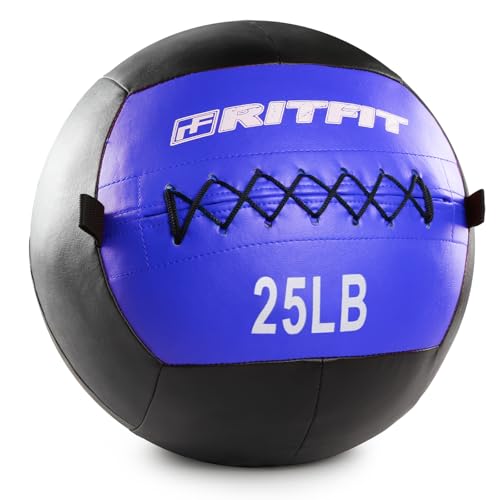
RitFit Leather Medicine Ball
Softer PU leather shell targets physical therapy settings and controlled partner throws. Starting weight drops to 2 pounds, lighter than nearly every rubber option here. Smaller diameter fits smaller hands during slow, controlled passes.
Pros
- Lightest starting weight in this lineup
- Leather shell cushions catches during rehab work
- Compact diameter suits smaller hands
Cons
- Top weight falls short of dedicated slam balls
- Leather shell is not rated for concrete slams
Side by side
| # | Model | Weight range | Best for | Score | Price |
|---|---|---|---|---|---|
| 1 | Dynamax Medicine Ball | 4 to 30 lb | Best overall | 9.4 | Check price |
| 2 | Rogue Fitness Elite Slam Ball | 10 to 50 lb | Best for CrossFit slams | 9.1 | Check price |
| 3 | Titan Fitness Rubber Medicine Ball | 6 to 20 lb | Best value | 8.8 | Check price |
| 4 | ProsourceFit Weighted Medicine Ball | 6 to 20 lb | Best for wall ball throws | 8.6 | Check price |
| 5 | Yes4All Wall Ball | 4 to 10 lb | Best budget | 8.4 | Check price |
| 6 | Trideer Slam Ball | 10 to 30 lb | Best for home gym slams | 8.2 | Check price |
| 7 | RitFit Leather Medicine Ball | 2 to 12 lb | Best for rehab and partner throws | 8.0 | Check price |
What to look for
What to look for in a medicine ball Two shell types dominate this category: no bounce slam balls and moderate bounce wall balls. Slam balls pack sand or dense rubber to absorb floor impact, suited to CrossFit style drills. Wall balls keep enough bounce to rebound off a target, suited to squat to throw movements. Match shell type to your primary exercise before comparing weight or brand.
Slam ball vs wall ball: which type fits your workout Rogue Fitness Elite Slam Ball and Trideer Slam Ball use dead drop construction, so the ball stops on contact instead of bouncing back. ProsourceFit and Titan Fitness bounce enough to rebound off a wall for repeated catches. A wall ball used for floor slams can crack over time. A slam ball thrown at a wall often just drops with no rebound at all.
What weight medicine ball should a beginner start with New lifters typically start between 4 and 8 pounds for wall throws and core rotation work. Intermediate lifters move toward 10 to 20 pounds for slam training or partner passes. Advanced athletes push toward 30 to 50 pounds using a ball like the Rogue Fitness Elite Slam Ball. Grip texture becomes more important as weight climbs, since sweat cuts control during fast reps.
Best medicine ball for rehab and physical therapy Rehab programs favor lighter balls, often starting between 2 and 6 pounds, to rebuild coordination without straining a healing joint. Soft leather shells, like the RitFit option, cushion catches during slow partner throws. Physical therapists often reach for these lighter balls during balance drills and rotational core work. Smaller diameters also help patients with smaller hands keep a secure grip.
Questions worth asking
What is the best medicine ball weight for beginners?
Most beginners start between 4 and 8 pounds for wall throws and core rotation drills. Lighter loads let new lifters lock in form before adding weight.
How heavy should a slam ball be for CrossFit training?
CrossFit style slam work commonly uses 10 to 30 pounds, with advanced athletes reaching 50 pounds. Rogue Fitness Elite Slam Ball spans that entire range in one product line.
Which medicine ball works best for wall ball throws?
ProsourceFit Weighted Medicine Ball and Titan Fitness Rubber Medicine Ball both rebound predictably off a wall. Their moderate bounce suits repeated catch and throw drills.
Can a slam ball be used for wall throws?
Slam balls are built for dead drop impact rather than rebound, so they perform poorly against a wall. A rubber or PVC wall ball catches and bounces back more predictably.
Is a heavier medicine ball better for building strength?
Heavier balls raise power output during slams, but only when grip and form stay controlled. Climbing gradually from 10 pounds toward 30 or 50 pounds keeps injury risk lower.
What is the difference between a slam ball and a medicine ball?
A slam ball uses sand filled, no bounce construction meant for floor impact. A general medicine ball may include bounce, suiting wall throws, catches, and rotational passes.
Are leather medicine balls good for rehab work?
Yes. Soft PU leather shells, like the RitFit Leather Medicine Ball, cushion catches during controlled rehab movements. Starting weights near 2 to 6 pounds also suit early stage recovery.
How do you pick a medicine ball for a home gym?
Home gym buyers should weigh floor space, noise tolerance, and whether slams or wall throws come first. A dead drop ball like Trideer suits garages, while a bouncier wall ball fits open floor space.
Do medicine ball weights come in small increments?
Most lines jump in 2 to 10 pound steps rather than fine increments. Yes4All Wall Ball offers some of the smallest jumps, at 4, 6, 8, and 10 pounds.
Our pick
Dynamax Medicine Ball delivers the most consistent build across its full weight range for general training. Rogue Fitness Elite Slam Ball suits dedicated slam work, while Yes4All and RitFit fit beginners and rehab settings better. Match shell type and starting weight to your primary movement before buying.


