Microphones That Make Voices Sound Clear and Full
The Shure SM7B is our top overall pick for its forgiving cardioid pattern and broadcast tone. The Shure MV7+ is the best value because it runs over USB or XLR, and the Samson Q2U is the best budget option for anyone starting a podcast on a laptop.
If you want one microphone that flatters most voices in an ordinary room, the Shure SM7B is the pick, with the Shure MV7+ close behind for people who do not own an audio interface yet. The Samson Q2U covers the same ground for far less commitment.
Microphone shopping is confusing because the specification sheet rarely predicts how a mic sounds at your desk. Room reflections, mic distance and preamp gain matter as much as the capsule. We compared seven widely sold models on pattern, sensitivity, connection type and mounting needs, and we leaned on what long term owners report about noise, plosives and gain hunger.
What matters most
Dynamic or condenser depends on your room The single biggest factor in home recording quality is not the microphone, it is the room. Dynamic microphones such as the SM7B, PodMic and Q2U have lower sensitivity and tighter patterns, so they mostly hear what is directly in front of them. Condensers such as the AT2020 and Wave:3 capture more detail but also more of the reflections bouncing off bare walls. If your space has hard floors, glass and no soft furnishings, a dynamic mic will get you a usable track faster than any amount of post processing.
USB versus XLR and why gain matters USB microphones contain their own converter and preamp, so they connect straight to a computer. XLR microphones need an audio interface, which adds cost but gives cleaner gain, better upgrade paths and multi mic recording. Gain is the practical sticking point, because passive dynamics such as the SM7B ask for around 60 dB of clean gain and many entry interfaces run out of headroom before that. If you want XLR quality without the gain puzzle, dual output mics like the MV7+ and Q2U sidestep the problem entirely.
Pickup patterns change how you can record Cardioid picks up from the front and is the default for solo speech. Omnidirectional hears everything and suits round table capture in a quiet space. Bidirectional captures front and back, which is useful for a face to face interview with one mic. Stereo spreads a wide image and is mostly for music or ambience. Only the Yeti here offers all four, so buy switchable patterns only if you genuinely record more than one format.
Mounting, plosives and the accessories nobody mentions A heavy mic on a flimsy arm droops, and a mic on a desk tripod records every keystroke through the desktop. Budget for a sturdy boom arm and, for condensers, a shock mount. A pop filter or foam windscreen tames the burst of air from hard P and B sounds, which is the most common flaw in amateur recordings. The SM7B and PodMic include internal filtering, while the AT2020 and Wave:3 benefit clearly from an external filter.
The best picks, ranked

Shure SM7B Cardioid Dynamic Vocal Microphone
The SM7B is a dynamic cardioid microphone built to reject room noise, which is why it shows up in so many podcast studios and untreated home offices. Its internal shock mount and pop filter cut handling thumps and plosives without extra accessories. Owners report it needs a lot of clean gain, so pair it with a strong interface or an inline preamp.
Pros
- Excellent rejection of room reflections and keyboard noise
- Built in shock mount and windscreen included
- Warm, thick tone that suits most speaking voices
Cons
- Needs high gain from an interface or booster
- Heavy enough to require a sturdy boom arm

Shure MV7+ USB and XLR Dynamic Microphone
The MV7+ gives you a USB path for plug and play recording and an XLR path for when you move to an interface, so it grows with a setup instead of being replaced. Onboard processing includes real time denoising and tone shaping through Shure software. Based on specifications it sits close to the SM7B family voicing while asking for far less gain.
Pros
- Works over USB now and XLR later
- Onboard denoise and tone controls help in noisy rooms
- Headphone jack for zero latency monitoring
Cons
- Software is required to unlock the tuning features
- Included desk stand is short for seated speaking

Samson Q2U Handheld Dynamic USB Microphone
The Q2U is the classic first podcast microphone because it is a dynamic handheld mic with both USB and XLR outputs plus a headphone jack. Owners report it sounds noticeably cleaner than most condensers in echoey rooms simply because it rejects distance sound. The bundled desk stand is basic, so most people upgrade to a boom arm early.
Pros
- Very forgiving in untreated rooms
- Two outputs give an easy upgrade path
- Headphone monitoring built in
Cons
- Top end is softer than a condenser
- Bundled tripod stand picks up desk vibration

Rode PodMic Dynamic Broadcast Microphone
The PodMic is an all metal XLR dynamic voiced for speech, with an internal pop filter and a built in swing mount that bolts straight to a boom arm. Its tight cardioid pattern keeps a second host at the same table from bleeding into your track. It needs solid preamp gain, though noticeably less than the SM7B.
Pros
- Rugged all metal build
- Internal pop filter reduces plosives
- Speech tuned voicing needs little editing
Cons
- XLR only, so an interface is required
- Still fairly gain hungry on cheap preamps
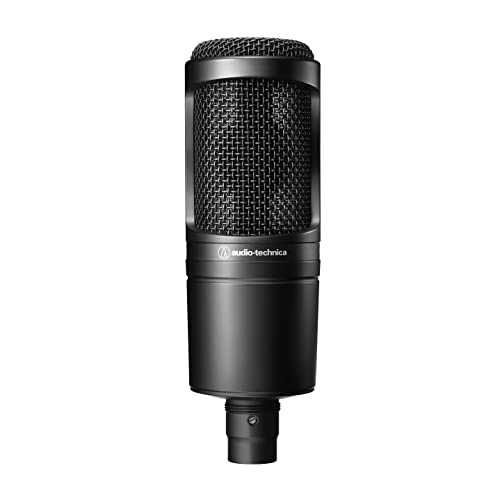
Audio-Technica AT2020 Cardioid Condenser Microphone
The AT2020 is the reference budget condenser for vocals and acoustic instruments, delivering more air and detail than any dynamic here. That sensitivity is a trade, because it will happily record your fan, your chair and your neighbour. Put it in a quiet or lightly treated space and it punches well above its class.
Pros
- Detailed, open top end for vocals
- Handles loud sources without distorting
- Solid metal body at a modest outlay
Cons
- Picks up room noise and reflections easily
- Requires phantom power and a shock mount

Logitech for Creators Blue Yeti USB Microphone
The Yeti remains the most flexible plug and play USB mic because you can switch between cardioid, omni, bidirectional and stereo patterns for interviews, room capture or two person chats. Controls for gain, mute and headphone level sit on the body. Owners report the stock desk stand transmits knocks, so a boom arm or isolation mount helps a lot.
Pros
- Four pickup patterns cover many situations
- Onboard gain, mute and monitoring
- No interface or drivers needed
Cons
- Sensitive to desk vibration on the stock stand
- Bulky footprint on a small desk

Elgato Wave:3 Premium USB Condenser Microphone
The Wave:3 pairs a cardioid condenser with Elgato mixing software so you can balance mic, game and chat audio into separate outputs without a hardware mixer. Its clipguard circuit catches sudden shouts that would otherwise distort a take. It is a condenser, so a quiet room still matters more than any software setting.
Pros
- Software mixer handles multiple audio sources
- Clipguard limits sudden loud peaks
- Capacitive mute and clean desk footprint
Cons
- Condenser sensitivity exposes room noise
- Best features depend on Elgato software
Compared at a glance
| # | Model | Type | Best for | Score | Price |
|---|---|---|---|---|---|
| 1 | Shure SM7B Cardioid Dynamic Vocal Microphone | Dynamic | Best overall | 9.4 | Check price |
| 2 | Shure MV7+ USB and XLR Dynamic Microphone | Dynamic | Best value | 9.2 | Check price |
| 3 | Samson Q2U Handheld Dynamic USB Microphone | Dynamic | Best budget | 9.0 | Check price |
| 4 | Rode PodMic Dynamic Broadcast Microphone | Dynamic | Best for multi host podcasts | 8.8 | Check price |
| 5 | Audio-Technica AT2020 Cardioid Condenser Microphone | Condenser | Best for treated rooms | 8.6 | Check price |
| 6 | Logitech for Creators Blue Yeti USB Microphone | Condenser | Best for switchable pickup patterns | 8.3 | Check price |
| 7 | Elgato Wave:3 Premium USB Condenser Microphone | Condenser | Best for streamers | 8.0 | Check price |
Questions worth asking
Do I need an audio interface to record?
Only for XLR microphones such as the SM7B, PodMic and AT2020. USB models including the Yeti, Wave:3, MV7+ and Q2U connect straight to a computer and handle conversion internally.
Why does my Shure SM7B sound quiet and hissy?
It is a low output passive dynamic that needs roughly 60 dB of clean gain. Many budget interfaces hiss before reaching that level, so owners commonly add an inline gain booster or use an interface with high headroom preamps.
Is a condenser microphone better than a dynamic one?
Not automatically. Condensers capture more detail, which helps in a quiet treated space and hurts in an echoey room. For untreated home recording most people get cleaner results from a dynamic microphone.
How far should I sit from the microphone?
For dynamic mics, roughly a fist width from the grille gives a full, present tone. Condensers usually sound natural at around eight to twelve inches. Moving further away increases the amount of room you record.
Can one microphone handle both podcasting and singing?
Yes. The MV7+ and AT2020 both cover speech and vocals, though the condenser rewards a quieter space. Many owners record spoken content and demos with a single cardioid mic without issue.
What does phantom power mean?
It is 48 volts sent down the XLR cable from an interface or mixer to power a condenser capsule. Condensers such as the AT2020 require it, while dynamic microphones do not need it and are not harmed by it.
Do I need a pop filter?
If you hear a thump on P and B sounds, yes. The SM7B and PodMic have internal filtering that usually suffices, but condensers such as the AT2020 and Wave:3 typically need an external filter or foam screen.
Will a better microphone fix a noisy room?
Only partially. A tight pattern dynamic microphone reduces how much room you capture, but persistent fan noise, traffic or echo still needs soft furnishings, curtains or a moved recording position to fully solve.
The bottom line
For most people the Shure SM7B is the safest long term choice because it forgives a bad room and suits nearly every speaking voice, provided you feed it enough clean gain. The Shure MV7+ is the smarter pick if you want to start on USB and move to XLR later, and the Samson Q2U proves you can begin a podcast properly without much outlay at all.


