Which Miter Saw Should You Buy for Clean Cuts?
The DeWalt DWS779 is the strongest all-round miter saw for its cutting capacity and price, the Bosch GCM12SD is the precision pick thanks to its space-saving glide arm, and the Metabo HPT C10FCGS is the budget choice for trim and light framing.
The DeWalt DWS779 offers the best mix of capacity and value, the Bosch GCM12SD leads on precision and shop footprint, and the Metabo HPT C10FCGS covers tight budgets without giving up clean crosscuts.
Miter saws range from light trim tools to wide sliding compound saws, and picking wrong means either overpaying or running out of capacity mid-project. We compared seven current models on published specifications and owner feedback to map each to a real use.
Our top picks

DeWalt DWS779
The DWS779 is a 12-inch double-bevel sliding compound saw with a wide crosscut capacity that handles baseboard, framing lumber, and wide boards. Owners praise its smooth slide and dust collection for the price, making it a common workshop mainstay.
Pros
- Large crosscut capacity
- Smooth, accurate slide
- Strong value for a 12 inch
Cons
- Heavy to move often
- Stock blade is basic
Bosch GCM12SD
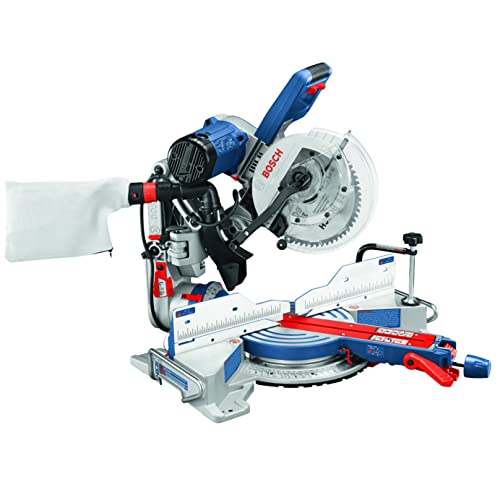
The GCM12SD uses an axial glide arm instead of rails, so it needs far less clearance behind the saw and holds alignment well. Owners report crisp, repeatable cuts and easy bevel adjustments, which suits finish carpentry in a tight shop.
Pros
- Saves space behind the saw
- Very accurate and repeatable
- Easy front bevel controls
Cons
- Premium price
- Heavy cast base

Makita LS1019L
The LS1019L is a 10-inch dual-bevel sliding saw with a compact twin-rail design and a laser guide. It balances capacity and portability, and owners note its smooth cut quality makes it a favorite for trim, molding, and cabinet work.
Pros
- Clean finish cuts
- Compact twin-rail slide
- Helpful laser guide
Cons
- Less capacity than 12 inch
- Laser needs occasional alignment

DeWalt DWS715
The DWS715 is a 12-inch single-bevel compound saw without a slide, which keeps it lighter and cheaper while still cutting wide crown and base. Owners like it as a dependable, no-frills saw for framing and general remodeling around the house.
Pros
- Affordable 12 inch capacity
- Lighter without a slide
- Reliable for framing
Cons
- Single bevel only
- No slide for very wide stock

Metabo HPT C10FCGS
The C10FCGS is a lightweight 10-inch compound saw aimed at trim, crafts, and light framing. It skips the slide to stay inexpensive and easy to carry, and owners recommend it as a first miter saw for occasional home projects.
Pros
- Very affordable
- Light and portable
- Simple to set up
Cons
- No slide, limited width
- Basic fence and clamp

Milwaukee 2734-20
The 2734-20 is a cordless 10-inch dual-bevel sliding saw on the M18 Fuel platform, so it runs on the same batteries as other Milwaukee tools. It suits job sites and garages without a nearby outlet, and owners report strong cut quality for a cordless.
Pros
- No cord to manage
- Shares M18 batteries
- Solid cut quality
Cons
- Battery sold separately
- Runtime limits heavy use

Skil MS6305-00
The MS6305-00 is a 10-inch dual-bevel sliding saw with a low entry price and a built-in laser. It gives newcomers slide capacity and dual bevels without a big spend, and owners find it capable enough for trim, decking, and small remodels.
Pros
- Slide and dual bevel at low cost
- Beginner-friendly controls
- Includes laser guide
Cons
- Less refined than premium saws
- Stock blade is basic
How they compare
| # | Model | Blade size | Best for | Score | Price |
|---|---|---|---|---|---|
| 1 | DeWalt DWS779 | 12 inch | Best overall | 9.3 | Check price |
| 2 | Bosch GCM12SD | 12 inch | Best for precision | 9.1 | Check price |
| 3 | Makita LS1019L | 10 inch | Best for finish work | 8.9 | Check price |
| 4 | DeWalt DWS715 | 12 inch | Best value | 8.7 | Check price |
| 5 | Metabo HPT C10FCGS | 10 inch | Best budget | 8.4 | Check price |
| 6 | Milwaukee 2734-20 | 10 inch | Best cordless | 8.6 | Check price |
| 7 | Skil MS6305-00 | 10 inch | Best for beginners | 8.2 | Check price |
How to pick the right one
Blade size sets your capacity A 10-inch saw is lighter and cheaper but cuts narrower stock, while a 12-inch saw handles wide baseboard and crown in a single pass. Choose 12 inch if you regularly cut wide boards, and 10 inch if trim and portability matter more.
Sliding versus non-sliding Sliding saws pull the blade forward to cut wider material, which is essential for shelving and wide boards. Non-sliding compound saws cost less and stay lighter, so pick a slide only if your typical stock is too wide to cut without one.
Single versus dual bevel A single-bevel saw tilts one way, so you flip the workpiece for opposite angles. A dual-bevel saw tilts both directions and speeds up crown and repetitive angled cuts, which owners find worth the extra cost on bigger jobs.
Dust collection and stands Miter saws throw a lot of dust, so a good port and a shop vacuum keep the cut line visible. Pair the saw with a stable stand or bench, since accuracy depends on the material being fully supported on both sides of the blade.
Questions worth asking
What size miter saw do I need?
For trim and small projects a 10-inch saw is plenty, while wide baseboard, crown, or framing lumber is easier on a 12-inch saw. Match the blade size to the widest stock you cut most often.
Do I need a sliding miter saw?
Only if your material is wider than a fixed saw can cut in one pass. Sliding saws add capacity and cost, so a non-sliding compound saw is fine for narrow trim and simple angled cuts.
What is the difference between single and dual bevel?
A single-bevel saw tilts in one direction, so you flip the board for the opposite angle. A dual-bevel saw tilts both ways, which saves time on crown molding and repeated cuts.
Are cordless miter saws powerful enough?
Modern cordless saws such as the M18 platform handle most trim and framing cuts well. They trade some runtime for portability, so heavy all-day cutting still favors a corded saw.
Can a miter saw cut metal or plastic?
With the correct blade, many saws can cut aluminum trim or PVC, but check the manual first. Never use a standard wood blade on metal, and slow your feed rate for cleaner results.
Do I need to replace the stock blade?
Stock blades are usually basic. Upgrading to a higher-tooth-count finishing blade noticeably improves cut quality on trim and hardwood, which many owners do soon after purchase.
How do I keep cuts accurate?
Support the workpiece fully, keep the fence and blade square, and let the blade reach full speed before cutting. Periodically check the bevel and miter detents against a square to catch drift.
Is a miter saw or circular saw better for trim?
A miter saw makes faster, more repeatable angled crosscuts, which is why it is preferred for trim and molding. A circular saw is more portable and better for breaking down sheet goods and long rip cuts.
Our pick
For most workshops the DeWalt DWS779 offers the best balance of capacity, accuracy, and price. Choose the Bosch GCM12SD if precision and a small footprint matter more, or the Metabo HPT C10FCGS if you need a light, affordable saw for trim and occasional projects.


