Matching Circular Saw Blades to Framing and Finish Cuts
Diablo D0740A leads for clean finish cuts, pairing 40 teeth with a thin 0.059 inch kerf. Diablo D0724A is the framing pick, ripping wet lumber fast on 24 teeth. Oshlun SBW-072024 covers demolition and dirty cuts for the lowest outlay of the seven.
Diablo D0740A is the blade to fit for clean crosscuts in plywood and trim. Framing crews ripping studs and wet treated stock want the Diablo D0724A instead, and the Oshlun SBW-072024 earns its place as the cheap spare that lives in the truck.
Picking gets confusing because tooth count, kerf, and carbide quality pull in different directions, and the wrong mix either burns the cut or bogs a cordless saw. We compared published specifications, tooth geometry, and owner reports on edge life to rank the seven blades below.
How to choose
How many teeth does a circular saw blade need? Tooth count trades speed for smoothness. A 24 tooth blade takes big bites and clears chips fast, which framing rewards. Forty teeth slow the feed and leave plywood and trim edges clean. At 60 teeth the surface approaches sanded, but material comes off slowly and heat builds if you push. Owning one coarse and one fine blade beats hunting for a single compromise.
Is thin kerf or full kerf better for your saw? Kerf is the width of material the blade removes. Around 0.059 inch, a thin kerf asks less of the motor and meaningfully stretches cordless runtime. A full kerf near 0.071 inch gives a stiffer plate that resists wandering under hard feeds and bevels. Corded saws with power to spare run either happily, so choose by saw rather than assuming thinner always wins.
Do blade coatings actually matter? Yes, because pitch is the silent killer. Resin bakes onto the plate and teeth, and a gummed blade drags, overheats, and burns cuts long before its carbide dulls. Non-stick finishes such as Diablo’s Perma-Shield delay that build-up. On any blade, a session with proper blade cleaner restores surprising performance for far less than a replacement.
Which blade should you use for treated lumber, melamine, or abrasive stock? Each difficult material punishes the wrong blade differently. Coarse teeth tear melamine, fine teeth burn in wet pressure treated stock, and standard carbide chips against fibre cement. Read the material rating printed on the blade body before mounting it. Keep one dedicated blade for abrasive jobs so a good finish blade never meets a dirty cut.
Our top picks

Diablo D0740A 7-1/4 in. 40-Tooth Finish Blade
Forty ATB teeth and a 0.059 inch kerf make this the blade for trim, plywood, and sheet goods where tear-out shows. Laser cut stabiliser vents keep the plate true, and the Perma-Shield coating resists the pitch build-up that makes blades burn. Owners report edge life well beyond typical hardware store finish blades.
Pros
- Leaves clean edges in plywood and melamine
- Thin kerf eases the load on cordless saws
- Coating keeps pitch from gumming the teeth
Cons
- Too fine for fast framing rips
- Thin plate can deflect under a forced feed
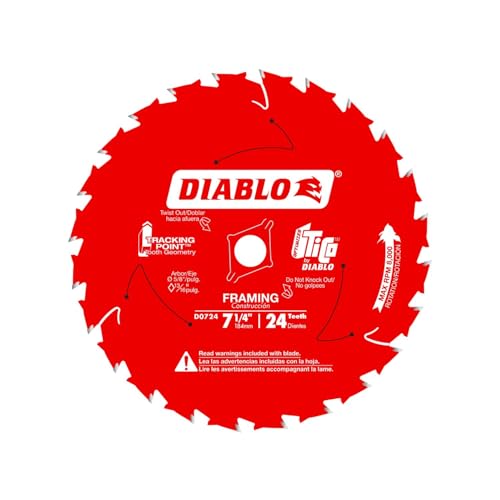
Diablo D0724A 7-1/4 in. 24-Tooth Framing Blade
Twenty four aggressive teeth clear chips fast, exactly what ripping studs and wet pressure treated stock demands. Its thin kerf keeps battery drain low on cordless saws. TiCo high density carbide shrugs off the occasional buried nail better than most blades in this class, according to owner reports.
Pros
- Rips framing lumber and wet treated stock fast
- Thin kerf extends cordless runtime
- Carbide survives grit and hidden nails
Cons
- Tears plywood edges
- Wrong tool for finish or trim cuts

DEWALT DWA171460 7-1/4 in. 60-Tooth Blade
Sixty carbide teeth take shallow bites that leave hardwood trim, veneered ply, and laminate looking almost sanded. This is as smooth as a handheld circular saw reasonably gets. Feed slowly, because a fine blade like this builds heat and burns the moment you rush it.
Pros
- Smoothest edge of any blade compared here
- Cuts veneered plywood without splintering
- Widely stocked and easy to replace
Cons
- Burns unless the feed stays slow
- Struggles in wet or resinous lumber

Milwaukee 48-40-0720 7-1/4 in. 24-Tooth Blade
Milwaukee shaped this blade around cordless power curves, combining a thin kerf with open gullets that stop the motor bogging mid cut. General construction cutting is its home, where speed matters more than edge quality. Owners report a real gain in cuts per battery charge over thicker plates.
Pros
- Measurably kinder to battery runtime
- Large gullets clear chips quickly
- Carbide resists chipping on site debris
Cons
- Coarse finish suits framing only
- More vibration in thin stock

Bosch DCB724 Daredevil 7-1/4 in. 24-Tooth Blade
Tooth geometry on the Daredevil splits the difference, ripping reasonably fast without shredding plywood edges. Expansion slots in the plate control heat warp on long cuts and deep bevels. One blade for everything is a compromise, but this is the sensible version of it.
Pros
- Balances rip speed against edge quality
- Expansion slots limit warping on long cuts
- Tracks true through deep bevels
Cons
- Masters neither framing nor finish
- Coating wears faster than premium rivals

IRWIN Tools Marathon 24030 7-1/4 in. 24-Tooth Blade
Heat treated carbide teeth on a vented full kerf body have kept this blade a framing staple for years. Removing more material per pass asks more of the saw, yet the stiff plate tracks straight and resists deflection. Owners report edge life that outruns the modest outlay.
Pros
- Stiff full kerf body tracks straight
- Proven carbide holds an edge
- Stocked almost everywhere
Cons
- Full kerf drains cordless batteries faster
- Too rough for trim work

Oshlun SBW-072024 7-1/4 in. 24-Tooth Blade
Carbide tips at this price make it the blade to sacrifice on demolition and dirty cuts. Dimensional lumber cuts cleanly enough, and retiring it after a nail strike costs little. Blade tension holds up well for the class, according to owner feedback, so it stays usable rather than wobbling early.
Pros
- Ideal for dirty or demolition cuts
- Carbide tipped rather than stamped steel
- Cheap enough to stock several
Cons
- Shorter edge life than premium blades
- No coating, so pitch builds up
How they compare
| # | Model | Diameter | Best for | Score | Price |
|---|---|---|---|---|---|
| 1 | Diablo D0740A 7-1/4 in. 40-Tooth Finish Blade | 7-1/4 inches | Best overall | 9.4 | Check price |
| 2 | Diablo D0724A 7-1/4 in. 24-Tooth Framing Blade | 7-1/4 inches | Best for framing | 9.2 | Check price |
| 3 | DEWALT DWA171460 7-1/4 in. 60-Tooth Blade | 7-1/4 inches | Best for fine finish work | 9.0 | Check price |
| 4 | Milwaukee 48-40-0720 7-1/4 in. 24-Tooth Blade | 7-1/4 inches | Best for cordless saws | 8.8 | Check price |
| 5 | Bosch DCB724 Daredevil 7-1/4 in. 24-Tooth Blade | 7-1/4 inches | Best for general construction | 8.6 | Check price |
| 6 | IRWIN Tools Marathon 24030 7-1/4 in. 24-Tooth Blade | 7-1/4 inches | Best value | 8.3 | Check price |
| 7 | Oshlun SBW-072024 7-1/4 in. 24-Tooth Blade | 7-1/4 inches | Best budget | 8.0 | Check price |
Good to know
How many teeth should a general purpose circular saw blade have?
For a 7-1/4 inch saw, 24 teeth is the framing standard and 40 the finish standard. Buyers wanting one blade for everything should choose 40 teeth, since it still rips acceptably without wrecking plywood edges.
Why is my circular saw blade burning the wood?
Pitch build-up is the most common cause, ahead of a dull edge, too fine a tooth count, or a feed slow enough to let the blade rub. Clean the blade first. Burning on clean stock afterwards points to worn carbide.
Can carbide tipped saw blades be sharpened?
Yes, professional services sharpen them several times over, which pays off on premium finish blades. Budget blades often cost less to replace. Each sharpening removes a little tooth, so cut quality shifts gradually.
What does a thin kerf blade actually do?
It removes less material per cut, so the motor works less and a cordless saw gets more cuts per charge. In exchange, the thinner plate can deflect under forced feeds or long bevels. Corded saws see a smaller benefit.
Which way do circular saw blade teeth face?
Teeth point in the rotation direction, so the arrow on the blade must match the arrow on the guard. At the front of the shoe, teeth should angle down and forward. A backwards blade rubs, smokes, and barely cuts.
Do you need a special blade for pressure treated lumber?
A standard 24 tooth carbide framing blade copes, though moisture and preservative chemicals corrode plates over time. Coated blades resist this better, and wiping the blade down after a treated lumber session extends its life.
What is the diamond knockout in a saw blade arbor?
It is a pre-scored diamond insert inside the round 5/8 inch arbor hole. Tap it out and the blade fits worm drive and older saws with diamond arbors. Removal is permanent, so leave it in unless your saw requires it.
How do you prevent tear-out when cutting plywood?
Use a higher tooth count, place the good face down because circular saws tear on the exit side, and score the cut line with a knife first. Backing the cut with a sacrificial sheet or running painter’s tape along the line holds veneer fibres in place.
The verdict
Two blades serve most workshops better than one, and the Diablo D0740A plus the Diablo D0724A cover finish and framing between them without compromise. Anyone insisting on a single blade should take the Bosch DCB724 Daredevil as the honest middle ground. Keep an Oshlun SBW-072024 around as the blade you can cheerfully ruin on demolition work.