Sergers That Give Home Sewing a Factory Finish
The Brother 1034D is the most sensible first serger thanks to colour coded threading and dependable stitch quality. The Juki MO-654DE runs quieter and smoother for heavy use. For stretch fabrics and knits, the Janome 8002D handles differential feed cleanly.
For most home sewists the Brother 1034D is the serger to start with, followed by the Juki MO-654DE for smoother heavy duty work and the Janome 8002D for knit and stretch fabric handling.
Sergers are intimidating because the threading path is unfamiliar and a mistimed loop turns into a bird’s nest rather than a seam. We compared threading systems, differential feed ratios, stitch widths, stitches per minute, presser foot pressure adjustment and included accessories, then weighed what owners report about retiming, tension drift and how each machine copes with thick denim or slippery jersey.
The best picks, ranked

Brother 1034D Serger
The 1034D has been the default recommendation for home sergers for years, and the colour coded threading diagram is a large part of why. It handles three and four thread overlock stitches with a differential feed that copes with knits without waving the seam. Owners report it keeps running for years with routine cleaning and oiling.
Pros
- Colour coded threading is genuinely helpful
- Reliable stitch quality
- Widely supported with parts and tutorials
Cons
- Louder than premium machines
- Tension dials need learning

Juki MO-654DE Portable Serger
Juki brings its industrial heritage to a home sized machine, and the difference shows in how smoothly it runs at speed with less vibration than lighter units. The knife system cuts cleanly through layers, and stitch quality holds up on heavier fabrics. It is the pick for someone sewing regularly rather than occasionally.
Pros
- Runs smoothly with less vibration
- Excellent on heavy fabrics
- Solid mechanical build
Cons
- Threading has less hand holding
- Heavier to move

Janome 8002D Serger
Janome’s differential feed adjustment is easy to dial in, which matters enormously when a jersey seam wants to stretch out as it feeds. The machine handles rolled hems and narrow edges neatly with the included accessories. It is a practical choice for anyone sewing activewear or t shirts.
Pros
- Excellent differential feed control
- Neat rolled hems
- Straightforward controls
Cons
- Fewer stitch options than premium models
- Manual is brief

Brother ST4031HD Serger
The ST4031HD is Brother’s heavier duty take on the same platform, with a metal frame and a durable knife aimed at denim, canvas and upholstery weight fabric. It keeps the colour coded threading that makes Brother machines approachable. The extra mass reduces walking on the table at speed.
Pros
- Handles thick layers well
- Stable at speed
- Familiar Brother threading
Cons
- Overkill for light fabrics
- Heavier to store

Singer ProFinish 14CG754 Serger
Singer offers a wider spread of stitch configurations here, running from two thread through to four thread work plus rolled hems and flatlock. That flexibility suits sewists who want to experiment with decorative finishes. Owners report the tension needs more attention when switching between configurations.
Pros
- Wide stitch configuration range
- Good accessory set
- Decorative finish options
Cons
- Tension fussier between setups
- Plastic parts in places
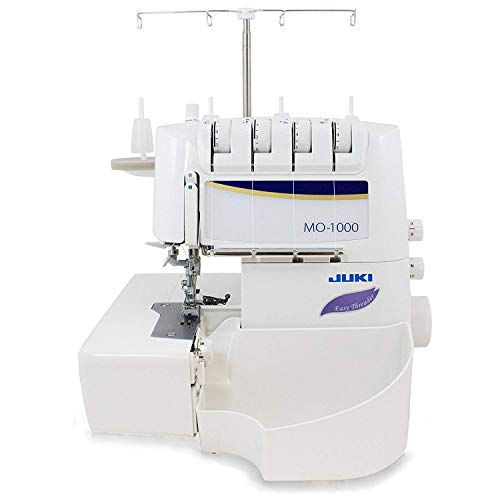
Juki MO-1000 Serger
The MO-1000 addresses the single biggest barrier to serger use with an air assisted looper threading system that pushes thread through the path for you. For anyone who avoids their serger because of rethreading, that feature alone changes the machine’s usefulness. It sits at the premium end of home overlockers.
Pros
- Looper threading is close to effortless
- Fast and smooth in use
- Strong build quality
Cons
- Highest outlay here
- Air system needs correct thread placement
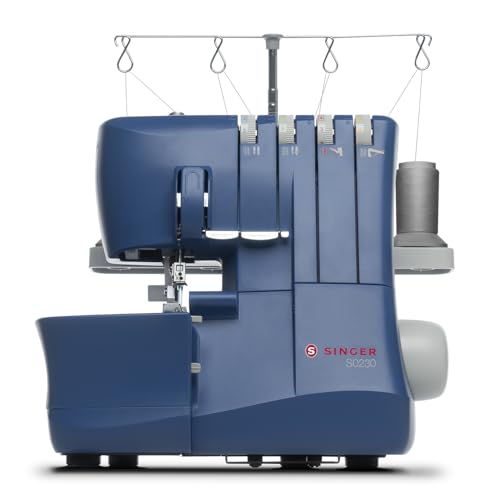
Singer S0230 Serger
The S0230 covers the basics of three and four thread overlocking at the lowest outlay in this group. It suits someone finishing seams occasionally rather than producing garments weekly. Based on specifications it runs slower than the premium machines, which is not a problem for light home use.
Pros
- Lowest entry cost
- Compact on a small table
- Simple stitch selection
Cons
- Noisier under load
- Struggles with very thick layers
How they stack up
| # | Model | Threads | Best for | Score | Price |
|---|---|---|---|---|---|
| 1 | Brother 1034D Serger | 3 or 4 thread overlock | Best overall | 9.4 | Check price |
| 2 | Juki MO-654DE Portable Serger | 2, 3 or 4 thread | Best value | 9.2 | Check price |
| 3 | Janome 8002D Serger | 3 or 4 thread overlock | Best for knits and stretch | 9.0 | Check price |
| 4 | Brother ST4031HD Serger | Metal chassis | Best for heavy fabrics | 8.7 | Check price |
| 5 | Singer ProFinish 14CG754 Serger | 2, 3 or 4 thread | Best for stitch variety | 8.5 | Check price |
| 6 | Juki MO-1000 Serger | Air assisted looper threading | Best threading system | 8.3 | Check price |
| 7 | Singer S0230 Serger | 3 or 4 thread | Best budget | 8.0 | Check price |
What to look for
What a serger does that a sewing machine cannot A serger trims the raw edge and wraps it in thread in one pass, producing the clean interior finish you see in shop bought clothing. It also sews stretch seams that flex with knit fabric rather than popping under strain. What it does not do is replace a sewing machine: you still need one for topstitching, zips, buttonholes and any seam you want to press open. Most home sewists end up using both machines on the same garment.
Threading systems and why they matter The looper threading path is the reason sergers get abandoned in cupboards. Colour coded diagrams help enormously, and lay in tension discs speed things up. Air assisted threading on premium machines pushes thread through the loopers for you and removes the barrier entirely. Whatever machine you buy, thread in the correct order, upper looper before lower looper on most models, since doing it out of sequence causes most first day frustration.
Differential feed explained Differential feed uses two sets of feed dogs moving at different rates, letting you stretch or ease fabric as it passes under the needle. Set above one to gather and prevent knits from waving, and below one to stop lightweight woven fabric from puckering. Learning to adjust this dial is the single skill that turns a serger from frustrating to useful, especially on jersey and lightweight knits.
Maintenance, blades and thread choice Sergers throw lint aggressively because they trim as they sew, so brush out the knife area and loopers regularly. Oil according to the manual, and replace the lower knife when cuts start looking ragged rather than trying to sharpen it. Use cone thread on the supplied spool stands, since serger thread is finer and designed for the higher speeds involved. Cheap thread sheds lint and drifts tension, which owners often mistake for a machine fault.
Questions worth asking
Do I need a serger if I already have a sewing machine?
It is optional but transformative for garment sewing. A sewing machine can zigzag an edge, but a serger produces a cleaner finish faster and handles knits far better.
How many threads do I need?
Four thread overlock is the workhorse for garment seams, three thread suits edge finishing, and two thread handles lightweight fabric. Most home machines cover all three configurations.
Is threading a serger really that hard?
The first few times, yes. After that it becomes routine, especially on machines with colour coded paths. Air threading systems on premium models remove most of the difficulty.
Can a serger sew a whole garment?
For simple knit garments, largely yes. Most projects still need a regular sewing machine for hems, topstitching and closures.
What thread should I use in a serger?
Cone thread designed for overlock machines is the right choice, since it is finer and unwinds smoothly at high speed. Ordinary spools can work in a pinch on the correct stand.
How often does the knife need replacing?
Only when cuts start looking frayed or the blade shows visible nicks. Many home users go years before replacement with normal fabric use.
Why does my seam pucker or wave?
That is almost always the differential feed setting. Raise it for knits that stretch out and lower it for lightweight wovens that gather up.
Can sergers handle heavy fabrics like denim?
Yes, though a metal framed heavy duty model handles multiple thick layers more comfortably. Slow down at seam intersections regardless of the machine.
Our pick
The Brother 1034D remains the most sensible first serger, with approachable threading and stitch quality that holds up for years of home use. Sewists working through fabric weekly will appreciate the smoother, quieter Juki MO-654DE, and anyone focused on knits should look at the Janome 8002D for its differential feed control.