7 Montessori Toys That Build Real Independent Play
Lovevery The Block Set leads for open ended play that grows with a child across ages one to four. Melissa and Doug Wooden Shape Sorting Cube is the best value classic for toddlers. Learning Resources Spike the Fine Motor Hedgehog gives budget friendly fine motor practice from eighteen months.
Lovevery The Block Set keeps earning its place for years, growing from stacking games into pretend play as a child ages. Melissa and Doug Wooden Shape Sorting Cube follows close behind as a budget-friendly classic. Owners report both hold attention far longer than battery powered gadgets.
Many products borrow the Montessori name while adding lights and sounds that do the thinking for the child, which makes picking tricky. We compared materials, recommended ages, the specific skill each toy builds and how open-ended the play stays, based on product details and parent feedback.
The best picks, ranked
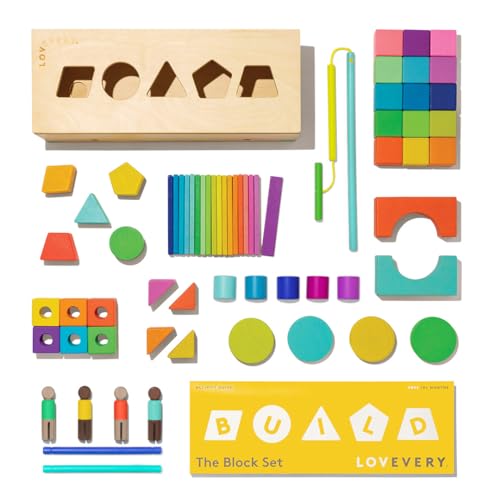
Lovevery The Block Set
Dozens of solid wood pieces invite stacking, sorting and pretend play that shifts as a child grows older. Owners say the quality justifies the price, and the set stays in rotation for years rather than months. An included guidebook suggests age-appropriate activities at each stage.
Pros
- Grows with the child
- High-quality wood pieces
- Encourages open-ended play
Cons
- Premium price
- Many pieces to store

Melissa and Doug Wooden Shape Sorting Cube
Twelve chunky wooden shapes and matching slots build problem solving and hand-eye coordination from the first try. Owners praise construction sturdy enough to survive siblings. Blocks are sized well for toddler hands still learning precise grips.
Pros
- Durable and affordable
- Toddler-sized blocks
- Classic learning value
Cons
- Single-purpose play
- Blocks can go missing

Learning Resources Spike the Fine Motor Hedgehog
Soft quills get pulled and placed to build fine motor control, counting and color sorting on this friendly hedgehog. Pieces store inside the body for easy cleanup, which owners note keeps playrooms tidy. Chunky quills suit small hands still developing a pincer grasp.
Pros
- Great for pincer grip
- Self-storing pieces
- Affordable price
Cons
- Plastic rather than wood
- Limited long-term play

Hape Pound and Tap Bench with Slide Out Xylophone
Balls pounded through the top land on a removable xylophone, teaching cause and effect alongside early music play. Owners say the wooden build feels solid, and the xylophone works as a standalone toy too. Energetic pounding gets channeled into something constructive here.
Pros
- Two toys in one
- Sturdy wooden build
- Teaches cause and effect
Cons
- Pounding can be loud
- Balls can roll away

PairPear Wooden Object Permanence Box with Tray
A ball drops through a hole and reappears in the tray, teaching object permanence and visual tracking in the classic Montessori style. Owners appreciate the smooth, splinter-free finish on every edge. Babies developing early hand control and object awareness suit this best.
Pros
- Authentic Montessori concept
- Smooth safe finish
- Simple, focused play
Cons
- Outgrown fairly quickly
- Single ball to lose
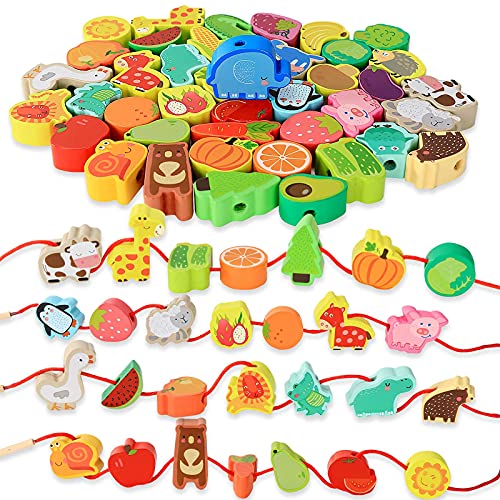
Coogam Wooden Lacing Beads Threading Set
Colorful wooden beads and shapes thread onto a lace, building patterning, color recognition and steady hand control. Owners note the set keeps kids focused and builds concentration over repeated sessions. Smooth beads challenge developing coordination without causing frustration.
Pros
- Builds concentration
- Bright, smooth beads
- Encourages patterning
Cons
- Small parts need supervision
- Laces can tangle

Battat Wooden Activity Cube Discovering Farm
Five sides pack a bead maze, shape sorter, spinning gears and more into one sturdy cube for toddlers to explore. Owners like that it stays put and offers varied play in a small footprint. One versatile station suits homes that want fewer separate toys underfoot.
Pros
- Multiple activities in one
- Stable and sturdy
- Compact footprint
Cons
- Heavier to move
- Bead maze is fixed
Compared at a glance
| # | Model | Material | Best for | Score | Price |
|---|---|---|---|---|---|
| 1 | Lovevery The Block Set | Solid wood | Best overall | 9.4 | Check price |
| 2 | Melissa and Doug Wooden Shape Sorting Cube | Wood | Best value | 9.1 | Check price |
| 3 | Learning Resources Spike the Fine Motor Hedgehog | Plastic | Best budget | 8.7 | Check price |
| 4 | Hape Pound and Tap Bench with Slide Out Xylophone | Wood | Best for cause and effect | 9.0 | Check price |
| 5 | PairPear Wooden Object Permanence Box with Tray | Wood | Best for infants | 8.8 | Check price |
| 6 | Coogam Wooden Lacing Beads Threading Set | Wood | Best for fine motor | 8.9 | Check price |
| 7 | Battat Wooden Activity Cube Discovering Farm | Wood | Best activity center | 8.6 | Check price |
What matters most
What makes a toy Montessori Natural materials, a single clear purpose and child-led open-ended play define the category, rather than lights and sounds that entertain passively. Toddlers get invited to sort, stack, thread or pour, building real skills through repetition and self-correction instead of a button press.
Match the toy to the stage A six-month-old thrives with an object permanence box, while a three-year-old is ready for lacing beads and complex sorting. Check the recommended age, then watch your child’s actual current skills. A toy slightly ahead invites growth; one too advanced breeds frustration.
Materials and safety come first Solid wood with non-toxic finishes holds up to years of use and mouthing, which is why it dominates Montessori shelves. Look for smooth, splinter-free edges and pieces sized to pass a choke-tube test for younger children. Fewer, higher-quality pieces usually beat large plastic sets.
Why less is more on the shelf Montessori philosophy favors a small, rotated selection over an overflowing toy box. Offering a few well-chosen toys at a time helps a child focus deeply and return to work with intention. Store extras away, then swap them in as interest shifts to keep engagement high.
Common questions
What age are Montessori toys for?
Montessori toys span from infancy to preschool, with specific toys suited to each stage. Object permanence boxes fit babies around six months, while sorting cubes and lacing beads suit toddlers and preschoolers building more advanced skills.
Are wooden toys better than plastic for Montessori play?
Wood is favored for durability, natural feel and a lack of electronic distraction, which aligns with Montessori principles. Well-made plastic toys like Spike the Hedgehog still support skills, but solid wood tends to last longer and hold attention.
What makes a toy truly Montessori?
A clear single purpose, natural materials and child-led open-ended play with self-correction define it. Toys that flash, talk or reward button presses generally fall outside the approach.
How many toys should a toddler have out at once?
Montessori practice favors a small rotation of a few carefully chosen toys rather than a full toy box. Rotating options keeps a child focused and helps each toy feel fresh.
Do Montessori toys really help child development?
Toys that encourage sorting, threading and problem solving support fine motor skills, concentration and independence. The benefit comes from active, repeated play rather than passive entertainment.
Are Montessori toys worth the higher price?
Premium sets like Lovevery cost more but are built to grow with a child and last for years. Budget classics such as the Melissa and Doug sorting cube also deliver strong value, so both ends of the range can pay off.
What is an object permanence box used for?
It teaches babies that objects still exist when out of sight, as a ball drops through a hole and reappears in a tray. This supports early cognitive development and hand-eye tracking.
How do I choose a first Montessori toy?
Start with your child’s current stage and pick one toy that gently stretches their skills, such as a sorting cube for a young toddler. Favor solid materials, a single clear purpose and open-ended play over feature-packed electronic toys.
Montessori toys vs regular toys: what is the real difference?
Montessori toys are built around one clear purpose and natural materials, while many regular toys add lights, sounds and multiple functions that entertain rather than teach. The Montessori approach lets a child direct the play and correct their own mistakes.
Final word
Lovevery The Block Set gives families the most long-term value, thanks to open-ended play that adapts as a child grows. Melissa and Doug Wooden Shape Sorting Cube offers a proven, affordable classic. Add Spike the Fine Motor Hedgehog for focused fine motor practice without spending much.


