Outdoor Security Cameras That Handle Weather and Wifi Drops
Arlo’s Pro 5S 2K ranks first for image clarity and flexible mounting. Eufy’s SoloCam S340 suits anyone avoiding monthly fees, since it records locally and charges by solar. Google’s Nest Cam Battery fits households wanting quieter, smarter motion alerts.
Arlo’s Pro 5S 2K covers outdoor spaces best overall. Eufy’s SoloCam S340 fits better for anyone refusing a monthly fee. Google’s Nest Cam Battery handles motion alerts with the least noise. All three hold up through rain, cold and glare.
Spec sheets rarely capture what daily ownership feels like with an outdoor camera. A 4K sensor can still flood a phone with alerts about passing cars, or record beautifully and then lock the clip behind a plan. We compared resolution, night vision type, battery and solar options, field of view and what each camera stores for free, then weighed that against owner reports of false alerts and cold weather battery drain.
The best picks, ranked

Arlo Pro 5S 2K
A bright color night vision spotlight pairs with dual band Wi-Fi, which matters once the camera sits far from the router. Based on specifications, a wide 160 degree HDR view keeps backlit doorways and driveways readable. Owners report the magnetic mount lets them change angles fast, without tools.
Pros
- Sharp 2K HDR image with usable digital zoom
- Dual band Wi-Fi helps at the edge of range
- Magnetic mount makes angle changes fast
Cons
- Most advanced features sit behind a plan
- Battery drains faster in high traffic spots

Eufy Security SoloCam S340
A wide lens and a 3x telephoto lens share a motorised head here, sweeping a full 360 degree pattern to follow movement. Recording stays on built in storage, which is why owners buy it specifically to avoid recurring costs. A bundled solar panel keeps the battery topped up in most climates.
Pros
- Local storage with no ongoing fee
- Pan, tilt and tracking cover a wide yard
- Solar charging cuts down on maintenance
Cons
- Needs decent sun exposure to stay charged
- Tracking can lag on fast moving subjects
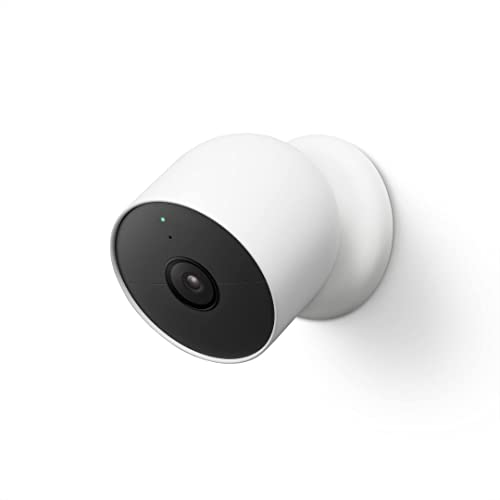
Google Nest Cam (Battery)
People, animals and vehicles get separated on the device itself, so alerts stay relevant even when the internet drops. Based on specifications, short event clips record locally during an outage and upload once the connection returns. Owners report the alert filtering is the main reason they stay within the Google ecosystem.
Pros
- Alert filtering cuts down on useless notifications
- Keeps recording briefly during Wi-Fi outages
- Works indoors or outdoors on the same mount
Cons
- 1080p trails the 2K and 4K rivals here
- Longer event history needs a Nest Aware plan

Ring Stick Up Cam Pro
Radar based motion detection lets owners draw a zone by distance instead of guessing at a flat rectangle. Battery, plug in power or a solar panel all run this camera, so placement rarely becomes a problem. Owners report Alexa integration and shareable clip links are the practical draw for families.
Pros
- Radar zones reduce street and sidewalk alerts
- Three power options fit almost any spot
- Deep Alexa and Echo Show integration
Cons
- Clip history requires a Ring plan
- Resolution stays at 1080p rather than 2K

Reolink Argus 4 Pro
Two lenses stitch into a single 180 degree ultra wide frame, genuinely useful on a house corner where a normal camera misses half the approach. Colour night vision runs without a harsh spotlight. Based on specifications, footage records to a microSD card, so a subscription plan stays optional.
Pros
- 180 degree view replaces two narrower cameras
- Colour night vision without a bright spotlight
- Card storage keeps footage in your hands
Cons
- Stitch line shows on close subjects
- App feels less polished than the bigger ecosystems

TP-Link Tapo C425
2K resolution, colour night vision and free local recording combine here for less than most rivals charge. Solar readiness and a magnetic mount make placement quick. Owners report the app stays simple enough for non technical family members to pull up a clip without help.
Pros
- 2K clarity with no required subscription
- Simple app that family members can use
- Magnetic base makes install nearly tool free
Cons
- Wi-Fi range is average at long distances
- No pan or tilt to follow movement

Blink Outdoor 4
Two AA lithium cells run this camera, and owners report they last a very long time between swaps. A wider lens on this fourth generation closes some of the gap with pricier rivals. Adding the Sync Module 2 and a USB drive stores clips locally instead of in the cloud.
Pros
- Extremely long battery life between changes
- Local USB storage option with Sync Module 2
- Fast, forgiving setup for first time buyers
Cons
- 1080p only, with no colour night vision
- Person detection needs a subscription
What matters most
Does resolution matter more than night vision? A 4K sensor pointed at a dark driveway produces a worse clip than a 1080p camera with a good spotlight. Check how each model handles night: infrared, a bright white spotlight or a low light colour sensor all behave differently. HDR matters too, since the hardest shot for any outdoor camera is a person in a shaded doorway with bright sky behind them.
Which cameras need a subscription and which don’t? This is the largest long term difference between these seven cameras. Arlo, Ring and Nest lean on paid plans for clip history and advanced detection. Eufy, Reolink and Tapo keep footage on local storage by default. Work out what footage needs keeping, and for how long, before choosing a camera.
How power source decides where a camera can mount Battery cameras mount anywhere but need recharging, which in winter can mean pulling the unit down every few weeks. Solar panels only solve that if the spot catches a few hours of direct sun. Wired cameras never quit but tie the install to an outlet. Walk the property first and mark which spots have sun, power or neither.
Setting up motion zones so alerts stay useful The fastest way to make a security camera useless is leaving it detecting every car on the street. Every camera here supports activity zones, and the better ones filter by person, vehicle or animal. Ring’s radar and Nest’s on device detection handle this best. Twenty minutes spent on zones during setup keeps the camera relevant for years.
How they compare
| # | Model | Resolution | Best for | Score | Price |
|---|---|---|---|---|---|
| 1 | Arlo Pro 5S 2K | 2K HDR | Best overall | 9.4 | Check price |
| 2 | Eufy Security SoloCam S340 | 3K dual lens | Best for no subscription | 9.2 | Check price |
| 3 | Google Nest Cam (Battery) | 1080p HDR | Best for smart alerts | 9.0 | Check price |
| 4 | Ring Stick Up Cam Pro | 1080p HDR | Best for Alexa homes | 8.7 | Check price |
| 5 | Reolink Argus 4 Pro | 4K dual lens stitched | Best wide angle | 8.5 | Check price |
| 6 | TP-Link Tapo C425 | 2K QHD | Best value | 8.2 | Check price |
| 7 | Blink Outdoor 4 | 1080p | Best budget | 8.0 | Check price |
Frequently asked questions
Do outdoor security cameras need a subscription?
Not always. Eufy, Reolink and TP-Link Tapo models record to local storage and work fully without a plan. Arlo, Ring and Nest still stream live and send alerts free, but stored clip history and some detection features sit behind a subscription.
How long do battery powered cameras last between charges?
It depends mostly on traffic. A quiet side yard can stretch a battery for months, while a camera facing a busy sidewalk may need charging every few weeks. Owners report cold weather shortens runtime noticeably, which is why a solar panel helps in most climates.
Is a wired camera better than a battery powered one?
Wired cameras never need recharging and record continuously rather than in event clips, so they suit critical spots like a main entrance. Battery cameras win on placement freedom. Many owners run a wired unit at the front door and battery cameras for side and rear coverage.
What resolution actually identifies a face reliably?
Distance and lighting matter more than resolution alone. A 2K camera mounted close to a doorway identifies a face more reliably than a 4K camera at the far end of a driveway. Mount closer to the approach path before spending more on pixels.
Will these cameras hold up in rain and snow?
All seven carry weather resistance ratings suited to exterior mounting. Based on specifications, they tolerate rain, dust and a wide temperature range. Mounting under an eave still helps, mainly by keeping the lens free of water spots and snow buildup.
Can I view multiple outdoor cameras at once?
Yes, every system here offers a multi camera view in its app, and most support casting a live feed to an Alexa or Google smart display. Mixing brands gets awkward, since that means switching between apps instead of one dashboard.
Do outdoor security cameras need Wi-Fi at the mounting spot?
Yes, all seven are Wi-Fi cameras, and signal strength at the mounting point is the most common install problem owners report. The Arlo Pro 5S 2K handles weak signal best thanks to dual band support, and a mesh node or outdoor extender solves most remaining cases.
How do I stop getting alerts about passing cars?
Draw an activity zone that excludes the street, then enable person only detection if the camera supports it. Lowering sensitivity is a blunter fix and risks missing real events. Ring’s radar zones and Nest’s on device detection work best for this in this lineup.
Which outdoor security camera fits a tight budget?
Blink Outdoor 4 delivers dependable basics and extremely long battery life for less than the rest of this list, plus an optional local storage add-on. Expect 1080p resolution rather than 2K or 4K.
Final word
Arlo’s Pro 5S 2K stands out as the most complete outdoor camera here, pairing a sharp HDR image with the mounting flexibility and Wi-Fi range that awkward exterior spots demand. A monthly fee as a dealbreaker points to the Eufy Security SoloCam S340 instead, with local recording, solar power and pan-tilt coverage and nothing to renew. Tight budgets still get dependable basics from the Blink Outdoor 4.