8 Full Frame Mirrorless Cameras for Serious Shooters
Sony a7 IV stays the most balanced full frame body, pairing a 33 megapixel sensor with reliable subject autofocus. Canon EOS R6 Mark II shoots faster for action at 40 frames per second. Nikon Z6 III leads on video with internal raw and a partially stacked sensor.
Mixed stills and video work suits the Sony a7 IV best. Sports and wildlife shooters get more from the Canon EOS R6 Mark II thanks to its burst speed. Filmmakers should look first at the Nikon Z6 III for its internal raw recording.
Choosing among these gets difficult fast, since the specs that matter for a portrait shooter barely overlap with what a documentary filmmaker needs. We compared sensor resolution, autofocus subject detection, burst rates, video codecs, stabilisation ratings and native lens counts, then weighed what owners report about rolling shutter, heat limits and buffer clearing on long shoots.
What to look for
What to look for in a full frame mirrorless camera Resolution, autofocus and video capability pull buyers in different directions, so start with the main subject you shoot. Portrait and landscape work rewards 33 megapixels or more for cropping and print. Action photography benefits from lower resolution paired with higher burst rates. Video work depends on codecs, recording limits and rolling shutter far more than on megapixel count. Lens availability then narrows the shortlist further.
Which body wins on stills: resolution, autofocus and burst Subject detection has become the deciding feature for moving subjects. Canon EOS R6 Mark II detects people, animals, vehicles and aircraft, shooting at 40 frames per second electronically. Sony a7 IV tracks reliably at a more modest 10 frames per second but gives 33 megapixels to crop into afterward. Buffer depth matters as much as burst rate once a sequence runs long.
Which body wins on video: rolling shutter, codecs and heat Fast pans distort under rolling shutter, and a partially stacked sensor like the Nikon Z6 III reduces that noticeably. Internal raw recording removes an external recorder from the rig entirely. Heat sets the other limit: Panasonic Lumix S5 II uses an active fan to record without a time cap, while most rivals stop after extended 4K takes.
How lens ecosystem and size affect the long-term cost Bodies get replaced every few years while lenses last decades, so the mount matters more than the sensor spec. Sony E carries the largest native full frame catalogue, including third party options from Sigma and Tamron. Canon RF restricts third party autofocus lenses more tightly. L mount is shared between Panasonic, Sigma and Leica. Compact bodies like the Sony a7C II lose their size advantage once a large zoom gets attached.
The shortlist, ranked

Sony a7 IV Full Frame Mirrorless Camera
A 33 megapixel sensor sits between resolution and speed, leaving room to crop without the file sizes a 60 megapixel body produces. Real-time tracking with eye detection covers humans, animals and birds, and holds focus through obstructions. Video records 4K up to 60p from a 4.6K oversample in Super 35 crop, with 10 bit colour for grading.
Pros
- Resolution suits both cropping and print
- Subject tracking recovers focus after obstructions
- Largest native full frame lens catalogue
Cons
- 4K 60p applies a Super 35 crop
- Menu system remains dense for newcomers

Canon EOS R6 Mark II Mirrorless Camera
Electronic shutter bursts reach 40 frames per second, changing what a photographer can catch in a bird takeoff or a goal-mouth scramble. A 24 megapixel sensor keeps files manageable at that rate and performs well in low light. Dual Pixel autofocus covers nearly the whole frame and detects people, animals, vehicles and aircraft.
Pros
- 40 fps captures moments other bodies miss
- Uncropped 4K 60p unlike several rivals
- Low light performance from lower pixel density
Cons
- 24 megapixels limits heavy cropping
- Rolling shutter shows on fast pans in electronic mode

Nikon Z6 III Mirrorless Camera
A partially stacked sensor cuts rolling shutter well below the standard sensors used elsewhere in this group. Internal N-RAW and ProRes RAW recording removes the need for an external recorder on serious video jobs. Outdoors, an unusually bright electronic viewfinder helps in strong sun.
Pros
- Internal raw video without an external recorder
- Partially stacked sensor reduces rolling shutter
- Brightest viewfinder among these bodies
Cons
- Files from raw video fill cards quickly
- Larger and heavier than the compact bodies here
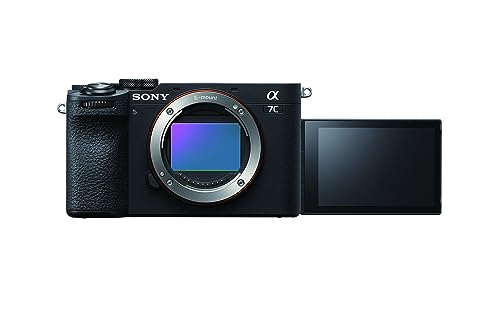
Sony a7C II Compact Full Frame Camera
The same 33 megapixel sensor found in the a7 IV sits inside a body closer to an APS-C camera in size and weight. A fully articulating screen and a dedicated stills and video switch suit solo creators working alone. Compromises show up in the smaller viewfinder and single card slot, not in image quality.
Pros
- Full frame image quality in a travel-sized body
- Same sensor as the larger a7 IV
- Articulating screen suits solo filming
Cons
- Single card slot rules out instant backup
- Smaller viewfinder than the a7 IV
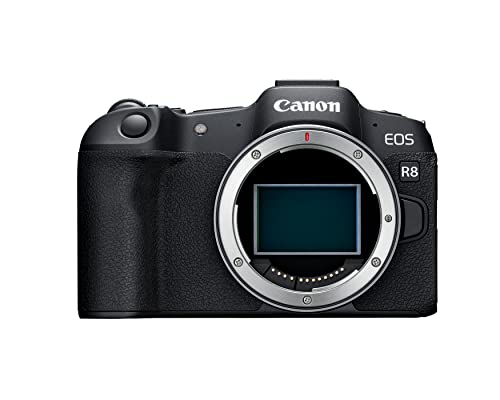
Canon EOS R8 Full Frame Mirrorless Camera
At roughly 461 grams this is the lightest full frame body in the comparison, built around the same 24 megapixel sensor family as the R6 Mark II. Subject detection autofocus carries over from the higher model, unusual at this position in the range. No in-body stabilisation means pairing it with stabilised RF lenses matters for handheld video.
Pros
- Lightest full frame body in this comparison
- Inherits advanced subject detection autofocus
- Uncropped 4K 60p video
Cons
- No in-body image stabilisation
- Smaller battery limits shooting time per charge

Panasonic Lumix S5 II Mirrorless Camera
A cooling fan built into the body removes the recording time limits that force other cameras to stop mid take. Phase detect autofocus finally arrives in this generation, closing the gap with Sony and Canon. Open Gate recording captures the full sensor area, useful when one file needs to feed both landscape and vertical edits.
Pros
- Active cooling removes overheating limits
- Open Gate suits vertical and horizontal delivery
- L mount opens access to Sigma lenses
Cons
- Autofocus still trails Sony and Canon on erratic subjects
- Fan adds bulk to the body

Nikon Z5 II Full Frame Mirrorless Camera
Dual SD card slots and a weather-sealed magnesium alloy body appear at the most accessible point in the Z range. A 24 megapixel sensor with in-body stabilisation covers general photography confidently. Burst speed and video specifications sit below the Z6 III, the trade-off for the lower position in the lineup.
Pros
- Dual card slots at an entry position
- Weather sealing usually reserved for higher models
- In-body stabilisation included
Cons
- Slower burst than the action-focused bodies
- Video specifications trail the Z6 III clearly
The lineup, side by side
| # | Model | Sensor | Best for | Score | Price |
|---|---|---|---|---|---|
| 1 | Sony a7 IV Full Frame Mirrorless Camera | 33 MP full frame BSI CMOS | Best overall | 9.4 | Check price |
| 2 | Canon EOS R6 Mark II Mirrorless Camera | 24.2 MP full frame CMOS | Best for action and wildlife | 9.2 | Check price |
| 3 | Nikon Z6 III Mirrorless Camera | 24.5 MP partially stacked CMOS | Best for video | 9.0 | Check price |
| 4 | Sony a7C II Compact Full Frame Camera | 33 MP full frame BSI CMOS | Best for travel | 8.7 | Check price |
| 5 | Canon EOS R8 Full Frame Mirrorless Camera | 24.2 MP full frame CMOS | Best lightweight full frame | 8.5 | Check price |
| 6 | Panasonic Lumix S5 II Mirrorless Camera | 24.2 MP full frame CMOS | Best value for video | 8.3 | Check price |
| 7 | Nikon Z5 II Full Frame Mirrorless Camera | 24.5 MP full frame CMOS | Best entry point to full frame | 8.0 | Check price |
Good to know
Is full frame worth it over APS-C?
Full frame gathers more light per pixel and produces shallower depth of field at the same framing. APS-C bodies stay smaller and cheaper, with smaller lenses. Low light work or shallow focus central to your shooting style makes full frame worth the jump.
Which full frame mirrorless camera is best for video?
Nikon Z6 III leads on internal raw and rolling shutter. Panasonic Lumix S5 II wins on unlimited recording thanks to active cooling. Choose Nikon for image quality and Panasonic for long uninterrupted takes.
Sony a7 IV vs Canon EOS R6 Mark II: which should I buy?
Sony offers 33 megapixels for cropping and the widest lens choice available. Canon shoots at 40 frames per second and delivers uncropped 4K 60p. Action shooters should lean Canon, mixed hybrid shooters should lean Sony.
How many megapixels do I actually need for full frame?
Twenty four megapixels prints large and handles moderate cropping without issue. Thirty three gives more room for reframing after the fact. Beyond that, file sizes and storage costs grow faster than the visible benefit for most users.
Do these full frame cameras have in-body stabilisation?
Most do, including the Sony, Nikon and Panasonic bodies covered here. Canon EOS R8 is the exception and relies on stabilised lenses instead. In-body stabilisation matters most for handheld video and slow shutter stills.
What is the lightest full frame mirrorless camera?
Canon EOS R8 at roughly 461 grams is the lightest body in this comparison. Sony a7C II comes close and adds in-body stabilisation. Both gain weight quickly once a standard zoom lens gets mounted.
Can full frame mirrorless cameras use older DSLR lenses?
Yes, through each maker’s own adapter, and Canon EF to RF and Nikon F to Z adapters both work well. Autofocus performance varies by lens generation. Third party adapters tend to be less predictable.
Do I need a camera with two card slots?
Paid work, especially weddings and events, benefits from instant backup. Personal work rarely justifies the requirement. Nikon Z5 II offers dual slots at the most accessible position in this group.
The verdict
Sony a7 IV still fits the widest range of work, thanks to a 33 megapixel sensor and dependable subject tracking. Action photographers gain more from the 40 frames per second Canon EOS R6 Mark II delivers. Video-led buyers should weigh the Nikon Z6 III for internal raw against the Panasonic Lumix S5 II for unlimited record times.