Which Paint Marker Works Best on Glass, Wood, or Rock?
POSCA PC-5M covers paper, wood, glass, and metal with opaque, water-based pigment, making it the most flexible marker here. Sharpie Oil-Based Paint Markers bond more permanently to glass and ceramic. Molotow ONE4ALL 227HS suits painters who refill often while working on wood and canvas.
POSCA PC-5M markers are the strongest all-around choice, laying down opaque water-based color on paper, wood, glass, and metal alike. Crafters juggling several surfaces need only one set. Fine detail work suffers a little, since the medium tip is not built for tight lines.
Ink base decides more about a paint marker’s performance than price does, and that makes shopping confusing. We compared tip width, ink type, surface compatibility, and owner-reported durability across current Amazon listings to match each marker to a real project type.
The top picks, ranked

POSCA PC-5M Paint Marker Set (Medium Tip)
A 2.5mm bullet tip pushes water-based, pigment-rich ink onto paper, wood, glass, metal, and plastic alike. Color dries matte and opaque, even over dark backgrounds. Owners report minimal streaking across repeated coats.
Pros
- Opaque coverage holds up over dark or colored surfaces
- Shakeable barrel keeps pigment mixed and flowing
- Wipes off glass or metal before the paint cures
Cons
- Tip frays under heavy pressure on rough surfaces
- Needs a few priming clicks before each session

Sharpie Oil-Based Paint Markers, Medium Point
Oil-based ink flows through a roughly 4.5mm medium tip and bonds to non-porous surfaces like glass, ceramic, and metal. Cured paint resists fading and chipping, based on owner reports from mugs and rocks left outdoors.
Pros
- Adheres tightly to glass and ceramic surfaces
- Cured color resists weather and fading outdoors
- Dries faster than most acrylic paint
Cons
- Solvent smell is noticeable during use
- Ventilation matters more with this oil base

Molotow ONE4ALL Acrylic Paint Marker 227HS, 2mm
A refillable barrel and replaceable nib sit behind this 2mm round tip, feeding acrylic ink through a squeeze-valve system. Flat, matte color lays down on wood, canvas, and stone. Owners praise the pump mechanism for consistent flow session after session.
Pros
- Refillable barrel cuts down on long-term waste
- Nibs swap out to extend the marker’s working life
- Squeeze-valve system keeps flow consistent
Cons
- Per-marker cost runs higher than disposable pens
- Refilling and priming takes some practice to learn

Sakura Pen-Touch Paint Markers, Medium Point
Pigment ink from this medium ball tip shows up bright against black paper, dark wood, and photographs. Roughly 2mm of tip width supports steady lines for lettering. Owners note little bleed even on porous paper stock.
Pros
- High opacity stands out on black or dark surfaces
- Dry ink resists water once set
- Ball tip keeps lines controlled and steady
Cons
- Color range is narrower than acrylic sets offer
- Storing the pen tip-up can cause ink clots
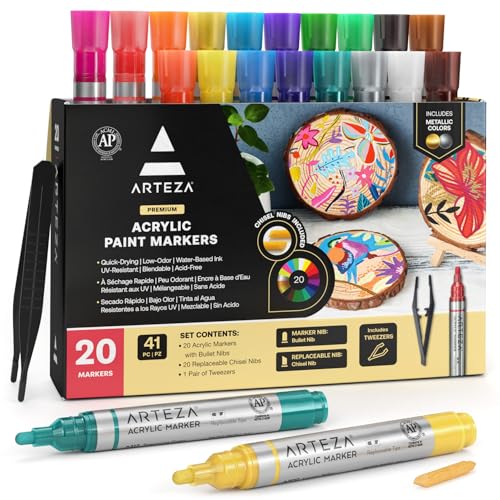
Arteza Acrylic Paint Markers, Extra Fine Tip, 24-Pack
Twenty-four acrylic colors ship with a 0.7mm extra fine tip built for detail work. Water-resistant ink covers paper, canvas, rock, and glass. A range this wide handles most projects without buying a second pack.
Pros
- Wide 24-color range covers most projects in one set
- Fine tip suits lettering and detail lines
- Coverage resists water once it dries
Cons
- Large fill areas take longer with such a fine tip
- Some pens need extra shaking before ink starts flowing

Nicpro Acrylic Paint Pens, Medium Tip, 15-Pack
Fifteen acrylic colors come through a 2 to 3mm medium tip at a lower per-marker cost. Rock, wood, and canvas all take the paint well enough for classroom or group projects. Owners describe the set as adequate for casual, high-volume use.
Pros
- Costs less per marker than premium brands
- Fifteen colors work well for group or classroom projects
- Non-toxic formula suits use around kids
Cons
- Coverage runs thinner than premium acrylic brands
- Some pens need priming before the first stroke

Uni POSCA PC-1M Extra Fine Paint Marker
A 1mm extra fine tip narrows the standard Posca formula for detail work on small rocks, miniatures, and line art. Water-based pigment ink matches the opacity of larger Posca pens in a much finer line.
Pros
- Precise line width suits detail-heavy work
- Opacity matches larger Posca pens despite the thin tip
- Cap seals tightly to prevent the tip drying out
Cons
- Covering large areas takes noticeably longer
- Tip clogs if pressed too hard against rough surfaces
How to choose
What Makes a Marker a Paint Marker Paint markers carry pigmented paint instead of dye-based ink, so color sits on a surface rather than soaking into it. A valve or pump tip releases paint only when pressed down. Three ink families cover most of the market: oil-based, acrylic, and water-based pigment. Each dries differently and bonds to different materials, which is why one marker rarely suits every project.
Matching Ink Base to Your Surface Glass, ceramic, and metal bond best with oil-based ink, the kind Sharpie’s paint line uses, and that bond resists fading once cured. Wood, canvas, and rock respond better to acrylic markers like Molotow ONE4ALL and Arteza, many of which refill. Posca and Sakura rely on water-based pigment, which dries fast and wipes off non-porous surfaces before it sets. Picking the wrong base risks paint that beads up or peels within days.
Which Tip Size Fits Rock Painting and Detail Work Precision work calls for an extra fine tip, somewhere between 0.7mm and 1mm, on small rocks or lettering. Medium tips around 2 to 3mm strike a balance between detail and coverage for most craft projects. Filling large areas fast favors a broad tip over 4mm, though control drops on small designs. Many rock painters keep both a fine and a medium marker on hand for outlines and fill.
Do Paint Markers Work on Fabric and Porous Surfaces? Textiles need a marker rated specifically for fabric, and heat-setting with an iron afterward helps the paint survive washing. Unsealed wood and canvas can absorb ink unevenly, leaving blotchy patches instead of solid color. A clear varnish topcoat protects finished rock, glass, or ceramic pieces from scratches. Testing on a scrap of the same material first heads off surprises on a finished piece.
How they compare
| # | Model | Tip Size | Best for | Score | Price |
|---|---|---|---|---|---|
| 1 | POSCA PC-5M Paint Marker Set (Medium Tip) | 2.5mm bullet | Best overall | 9.4 | Check price |
| 2 | Sharpie Oil-Based Paint Markers, Medium Point | Medium, about 4.5mm | Best for glass and ceramic surfaces | 9.1 | Check price |
| 3 | Molotow ONE4ALL Acrylic Paint Marker 227HS, 2mm | 2mm round nib | Best refillable for wood and street art | 8.8 | Check price |
| 4 | Sakura Pen-Touch Paint Markers, Medium Point | Medium, about 2mm | Best for dark and black surfaces | 8.6 | Check price |
| 5 | Arteza Acrylic Paint Markers, Extra Fine Tip, 24-Pack | Extra fine, 0.7mm | Best value large set | 8.4 | Check price |
| 6 | Nicpro Acrylic Paint Pens, Medium Tip, 15-Pack | Medium, 2 to 3mm | Best budget | 8.2 | Check price |
| 7 | Uni POSCA PC-1M Extra Fine Paint Marker | Extra fine, 1mm | Best for fine detail and rock painting | 8.0 | Check price |
Common questions
How are paint markers different from acrylic paint pens?
Acrylic paint pens are one type of paint marker built specifically on acrylic ink. The broader paint marker category also includes oil-based and water-based pigment formulas, which dry and bond differently.
What surfaces can a paint marker actually write on?
Depending on the ink base, paint markers work on paper, wood, canvas, rock, glass, ceramic, metal, and some plastics. Oil-based formulas tend to hold best on smooth, non-porous surfaces like glass and ceramic.
Which paint marker works best for rock painting?
Medium tips around 2 to 3mm, such as the POSCA PC-5M, cover rock surfaces evenly while keeping enough control for details. Extra fine tips like the Uni POSCA PC-1M suit outlines and small designs.
Can paint markers go on fabric?
Some acrylic and specialty paint markers are rated for fabric, but results vary by ink base. Heat-setting the paint with an iron after it dries improves how well it survives washing.
Is oil-based or water-based better for glass?
Oil-based markers like Sharpie’s paint line generally bond more durably to glass and resist fading once cured. Water-based pigment markers such as Posca also work on glass but may need a sealant for long-term durability.
How do you stop a paint marker from drying out?
Store markers horizontally with caps fully closed to keep air away from the tip. Priming the tip with a few clicks or shakes before each use also keeps ink flowing.
What tip size works best for detailed artwork?
Extra fine tips between 0.7mm and 1mm, like those on the Arteza Extra Fine set or Uni POSCA PC-1M, give the most control for lettering and fine line work.
Does paint marker ink come off skin easily?
Water-based pigment ink typically washes off skin with soap and water before it cures. Oil-based and acrylic paint markers often need rubbing alcohol or a dedicated paint remover once dry.
Best paint marker for beginners on a budget?
Nicpro’s 15-pack keeps per-marker cost low while still covering rock, wood, and canvas, making it a reasonable starting set for classroom or group projects.
The bottom line
POSCA PC-5M earns the top spot for opaque, water-based coverage across paper, wood, glass, and metal, which makes it the safest pick for mixed craft projects. Buyers working mostly on glass, ceramic, or outdoor rocks should reach for Sharpie Oil-Based Paint Markers instead, since the cured oil-based formula resists fading longer. Anyone painting small rocks or miniatures will get more control from the Uni POSCA PC-1M’s fine tip.