Pet Training Accessories That Make Lessons Stick
The PetSafe Easy Walk Dog Harness is the most useful single training accessory for most owners because it stops pulling without pressure on the throat. The PetSafe Gentle Leader Headcollar handles stronger dogs, and the Starmark Pro-Training Clicker is the cheapest way to sharpen reward timing.
If you are building a training kit from scratch, start with the PetSafe Easy Walk Dog Harness, add the Starmark Pro-Training Clicker for timing, and step up to the PetSafe Gentle Leader Headcollar if your dog outmuscles the harness.
Training gear is tricky because the wrong fit turns a helpful tool into an annoyance the dog spends every walk resisting. We compared adjustment points, sizing ranges, materials and how each item supports reward timing, and we weighed what owners report about chafing, escape attempts and how quickly dogs accept each piece.
Our top picks

PetSafe Easy Walk Dog Harness
The front chest clip is the whole idea here, redirecting a pulling dog sideways instead of letting them lean into the leash. Because pressure lands across the chest rather than the throat, it suits dogs that cough and choke on a flat collar. Four adjustment points and a martingale loop on the chest strap keep it from sliding once you have sized it properly.
Pros
- Takes pressure off the throat immediately
- Colour coded straps make fitting straightforward
- Works from the first walk with no training period
Cons
- Chest strap can rub behind the front legs if sized loosely
- Deep chested breeds may need a size check between two options
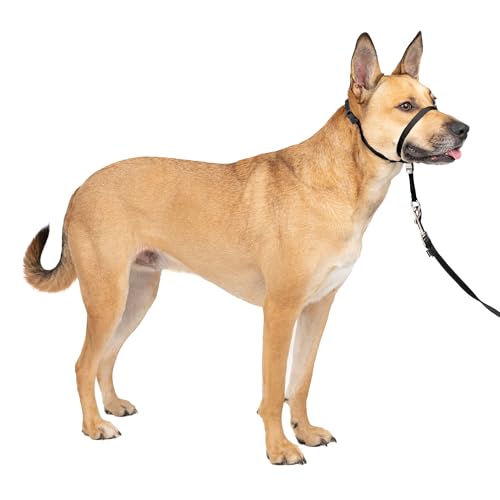
PetSafe Gentle Leader Headcollar
A head collar gives you the most leverage of anything here because steering the head steers the dog. It is the practical answer for a large dog that walks a smaller handler, and owners report a noticeable difference on the first outing. The tradeoff is acclimation, since most dogs paw at the nose loop for the first few sessions and need short positive introductions.
Pros
- Most leverage of any pick for large dogs
- Redirects lunging at other dogs effectively
- Padded nose loop reduces rubbing
Cons
- Needs several short sessions before dogs accept it
- Poor fit on very short muzzled breeds

Starmark Pro-Training Clicker
A clicker marks the exact moment the dog does the right thing, which is the part most owners get wrong when they rely on saying good boy a second too late. The Starmark version uses a raised button rather than a metal tongue, so it is easier to press without looking and quieter than a box clicker. A wrist coil keeps it accessible while your other hand handles treats.
Pros
- Sharpens reward timing more than any other item here
- Quiet enough for sound sensitive pets
- Works one handed without looking down
Cons
- Only useful if you also carry treats
- Small enough to misplace easily

PetSafe Treat Pouch Sport
Training falls apart when the reward arrives four seconds late because you were digging in a pocket. This pouch has a hinged opening that stays open while you work and snaps shut to keep smells contained between sessions. A belt clip, an adjustable waist strap and a small zip pocket for keys and bags mean you can leave the house with just this.
Pros
- Rewards land fast enough to actually mark behaviour
- Two carry options suit different clothing
- Washable so it does not turn permanently greasy
Cons
- Waist strap is bulky for short walks
- Not sealed against very wet treats

Outward Hound Nina Ottosson Dog Brick Puzzle
Training is not only leash work, and a dog that gets problem solving time is easier to live with indoors. This puzzle uses sliding blocks and removable bone shaped covers to hide treats at a level two difficulty, which suits dogs that have outgrown a snuffle mat. Owners report it buys a useful stretch of quiet on rainy days when a proper walk is not happening.
Pros
- Gives real mental work indoors
- Sturdier than most cardboard style puzzles
- Wipes clean between uses
Cons
- Determined chewers will damage the covers
- Some dogs solve it quickly and lose interest

Mendota Products Snap Check Cord
A long check cord is the safe middle step between a six foot leash and full off leash freedom, letting a dog range while you keep the option to stop them. Mendota uses solid braid poly rope with a waxed finish, so it slides over grass rather than snagging and does not soak up water. It is a field training staple that translates well to parks and quiet trails.
Pros
- Waxed rope slides instead of snagging in grass
- Bridges the gap to reliable off leash recall
- Brass hardware resists corrosion
Cons
- Rope burn risk if you grab it bare handed
- Needs open space, unusable on busy pavements

Bil-Jac Little Jacs Liver Training Treats
Reward value drives everything in training, and a soft liver treat outperforms a dry biscuit for most dogs. These are small and soft enough to swallow instantly, which keeps sessions moving instead of pausing while the dog chews. They can also be pinched into halves for long sessions, which matters if you are running dozens of repetitions.
Pros
- High reward value for most dogs
- Soft and small so sessions keep moving
- Easy to split to control intake
Cons
- Leaves a strong smell on hands and pouches
- Not suitable for dogs on restricted protein diets
Before you buy
Fit is the difference between a tool and a fight Almost every complaint about training harnesses and head collars traces back to sizing. A chest strap that sits too low rubs behind the front legs, and a head collar that hangs loose slips over the nose within minutes. Measure your dog rather than guessing from weight, check the fit while they are standing naturally, and expect to readjust once after the first two walks as the webbing settles.
Mark the behaviour, then reward it A clicker or a consistent marker word works because it identifies the exact instant your pet got it right, then the treat confirms it. Without that marker, the reward often lands after the dog has already moved on and it reinforces the wrong thing. Pair the clicker with treats for a few dozen repetitions before you use it in real training so the sound has meaning.
Introduce new equipment gradually Head collars and harnesses both work better if the first exposure happens indoors with treats and no leash attached. Owners report that dogs who are given three or four short positive sessions accept a head collar far faster than dogs who meet it for the first time at the front door. Ten minutes spread over a few days saves weeks of resistance.
Match the accessory to the actual problem Pulling on a lead, poor recall and destructive boredom are three different problems and need three different tools. A front clip harness will not improve recall, and a long line will not stop a dog lunging at other dogs on a pavement. Based on specifications and common use, pick one accessory per problem rather than buying a bundle and hoping something helps.
How they compare
| # | Model | Attachment | Best for | Score | Price |
|---|---|---|---|---|---|
| 1 | PetSafe Easy Walk Dog Harness | Front chest ring with martingale loop | Best overall | 9.4 | Check price |
| 2 | PetSafe Gentle Leader Headcollar | Nose loop with neck strap, leash clips under chin | Best for strong pullers | 9.2 | Check price |
| 3 | Starmark Pro-Training Clicker | Button clicker with raised action | Best budget | 9.0 | Check price |
| 4 | PetSafe Treat Pouch Sport | Hinged opening that stays open or snaps shut | Best for reward delivery | 8.8 | Check price |
| 5 | Outward Hound Nina Ottosson Dog Brick Puzzle | Level two intermediate | Best for mental work | 8.6 | Check price |
| 6 | Mendota Products Snap Check Cord | Available from twenty to fifty feet | Best for recall training | 8.3 | Check price |
| 7 | Bil-Jac Little Jacs Liver Training Treats | Soft liver training treats | Best training treats | 8.0 | Check price |
Good to know
Do front clip harnesses actually stop pulling?
They reduce it immediately by redirecting the dog sideways rather than letting them lean forward into the leash. They are a management tool rather than a cure, so most owners pair one with loose leash training so the dog eventually walks well on any equipment.
Is a head collar cruel?
No, when fitted and introduced properly it works on the same principle as a halter on a horse and applies no pressure to the throat. The important parts are correct sizing, short positive introduction sessions and never jerking the leash, since the head is more sensitive than the body.
What age can training accessories be introduced?
Clickers, treat pouches and puzzle feeders suit puppies from the point they are eating solid food. Harnesses and head collars should wait until the puppy is big enough for the smallest size to fit correctly, and growth means you will likely resize at least once in the first year.
How long should a training session be?
Short and frequent beats long and occasional. Five to ten minutes a few times a day holds attention better than one long session, and owners report faster progress with that pattern. Always finish while the pet is still succeeding rather than pushing until they get frustrated.
Do clickers work for cats?
Yes. Marker training works with any animal that can associate a sound with a reward, and cats respond well to clicker work for targeting, carrier training and stopping counter surfing. Use a softer clicker and smaller food rewards than you would with a dog.
How long should a training long line be?
Twenty to thirty feet suits most park and trail recall work, while fifty feet is for wide open fields. Longer lines give more freedom but tangle more and are harder to gather quickly, so start shorter and extend as the recall improves.
Will treats make my dog overweight?
Only if you do not adjust the rest of their food. Training treats should come out of the daily food allowance rather than on top of it, and small soft treats can be halved to stretch further. Puzzle feeders are useful here because they use the regular meal as the reward.
Can I use these accessories on a rescue dog with unknown history?
Yes, but introduce everything slowly and watch body language. A rescue dog may have negative associations with certain equipment, so start with the least restrictive option such as a front clip harness and a clicker, and involve a qualified trainer if you see fear or defensive reactions.
The bottom line
Most owners get the biggest improvement from the PetSafe Easy Walk Dog Harness paired with the Starmark Pro-Training Clicker, since one manages pulling immediately while the other fixes reward timing. Larger or stronger dogs are better served by the PetSafe Gentle Leader Headcollar, provided you give it a few gentle introduction sessions. Add the Mendota Products Snap Check Cord once basic leash manners are in place and you are ready to work on recall.


