Saddle Accessories Worth Adding to Your Tack Room
The Cashel Tush Cushion is our top saddle accessory for riders who want immediate seat comfort. The Professional’s Choice SMx Air Ride Saddle Pad does the most for the horse’s back, and the Tough 1 Deluxe Nylon Saddle Bag is the pick for carrying essentials on the trail.
If you are adding one thing to your saddle, the Cashel Tush Cushion is our top pick because it changes how a long ride feels without altering the saddle’s fit. The Professional’s Choice SMx Air Ride Saddle Pad is the accessory that does the most for the horse, and the Tough 1 Deluxe Nylon Saddle Bag handles water, snacks and tools on the trail.
Saddle accessories are a mixed category, covering everything a rider straps on for comfort, protection or carrying, so ranking them means comparing across quite different jobs. We compared materials and padding construction, how each item adjusts to different saddle types, cleaning requirements and the durability owners report, then ranked seven accessories that between them cover rider comfort, horse comfort, tack protection and gear carrying. Anything that changes saddle fit should be checked with a qualified saddle fitter.
The shortlist, ranked

Cashel Tush Cushion Saddle Seat Cover
This foam seat cover straps over the saddle seat and takes the edge off long rides, particularly on hard western seats. It fits without changing how the tree sits on the horse, which is why it is such a common first upgrade. Owners report it is worth removing after wet rides so the foam dries fully.
Pros
- Noticeable comfort gain on long rides
- Does not alter saddle fit on the horse
- Fits a wide range of seat sizes
Cons
- Foam holds moisture if left wet
- Raises the rider slightly in the seat

Professional’s Choice SMx Air Ride Saddle Pad
The Air Ride construction spreads pressure across the horse’s back rather than concentrating it under the bars, which is the single biggest comfort factor for the animal. The wool blend top and contoured shape sit well under western saddles. It is heavier than a plain blanket, which some riders notice when tacking up.
Pros
- Spreads pressure across a wider area
- Contoured shape stays in place
- Durable enough for daily riding
Cons
- Heavier than a simple pad
- Needs proper cleaning to stay effective
Tough 1 Deluxe Nylon Saddle Bag
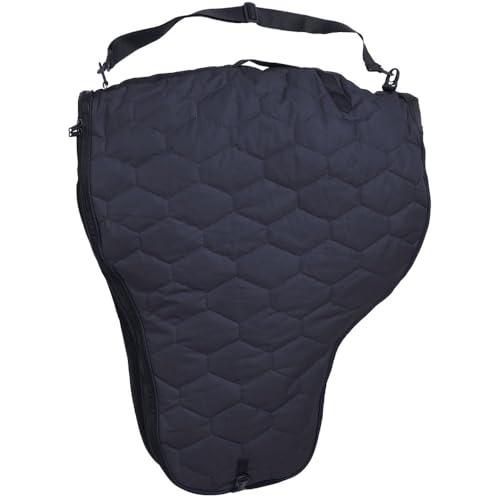
Straps behind the cantle and holds water, a phone, snacks and basic first aid without swinging around at the trot. The nylon shell sheds light rain and wipes clean after a muddy ride. Owners report checking the strap tension partway through a long ride keeps it from creeping.
Pros
- Enough capacity for a full day out
- Water resistant and easy to clean
- Fits most western and trail saddles
Cons
- Straps need retightening on long rides
- Not suited to overnight loads

Weaver Leather Smart Cinch Roper Cinch
The roller buckle design makes tightening far easier and distributes pressure more evenly than a plain cinch. The wide centre helps prevent pinching behind the elbow on horses that are sensitive there. Correct sizing matters enormously with cinches, so measure before ordering.
Pros
- Roller buckles ease tightening
- Even pressure reduces girth sores
- Available in several materials
Cons
- Getting the length right takes measuring
- Neoprene versions need frequent rinsing

Classic Equine BioFit Correction Saddle Pad
Shim pockets let you adjust the pad’s thickness front and back to compensate for a saddle sitting slightly low or high. That flexibility helps with horses whose shape changes seasonally with work and condition. It supplements a well fitted saddle rather than fixing a badly fitting one.
Pros
- Adjusts as the horse’s shape changes
- Wear leathers protect high friction areas
- Contoured to reduce spine pressure
Cons
- Shims must be set correctly to help
- No substitute for a professional fitting

Toklat Woolback Saddle Pad
Real wool backing wicks sweat away from the horse’s back and stays comfortable in both hot and cold weather. Wool also compresses to the horse’s shape over time, which improves contact. It needs careful washing, since hot water and harsh detergent will felt the fibres.
Pros
- Excellent sweat management
- Moulds to the horse over time
- Works across seasons
Cons
- Requires careful cool washing
- Costs more than synthetic pads

Intrepid International Nylon Saddle Cover
A simple cover that keeps dust, sunlight and barn debris off leather between rides, which is the cheapest way to extend a saddle’s life. The elasticated edge holds it in place on a rack or a trailer hook. Keep it off wet leather, since a cover over damp tack traps moisture.
Pros
- Cheapest way to protect expensive leather
- Stays put on a rack or trailer hook
- Folds small enough for a tack bag
Cons
- Traps moisture over wet tack
- Thin fabric offers no impact protection
Before you buy
Fix the horse’s comfort before your own A seat cushion makes the ride feel better for you, but a pad that spreads pressure properly changes how the horse moves and how willingly it works. If the budget only stretches to one accessory, put it under the saddle rather than on top of it. Then add rider comfort once you know the horse is happy.
Remember that accessories change saddle fit Anything you add between the saddle and the horse alters the fit, sometimes for the better and sometimes not. A thicker pad on an already snug saddle can create pressure points exactly where you were trying to relieve them. Shim systems help you tune this, but a qualified saddle fitter should confirm the result on your specific horse.
Choose materials for your climate and washing routine Wool wicks sweat and regulates temperature superbly, but it must be washed cool and dried flat or it felts. Neoprene and synthetic fleece rinse off in minutes and suit riders who tack up daily and want low maintenance. Owners report that the pad they actually clean regularly outperforms the technically superior one that sits dirty.
Check straps and hardware regularly Saddle bags, cushions and cinches all rely on straps and buckles that loosen with movement and wear with sweat and grit. Build a habit of checking tension at the halfway point of a long ride, and inspect stitching and hardware before every outing. Replacing a worn cinch or strap is far cheaper than the alternative.
How they compare
| # | Model | Type | Best for | Score | Price |
|---|---|---|---|---|---|
| 1 | Cashel Tush Cushion Saddle Seat Cover | Saddle seat cushion | Best overall | 9.4 | Check price |
| 2 | Professional’s Choice SMx Air Ride Saddle Pad | Air Ride pressure dispersing core | Best for the horse’s back | 9.2 | Check price |
| 3 | Tough 1 Deluxe Nylon Saddle Bag | Twin pocket cantle bag | Best for carrying gear | 9.0 | Check price |
| 4 | Weaver Leather Smart Cinch Roper Cinch | Roper style cinch | Best cinch upgrade | 8.7 | Check price |
| 5 | Classic Equine BioFit Correction Saddle Pad | Adjustable shim pockets | Best for fit adjustment | 8.5 | Check price |
| 6 | Toklat Woolback Saddle Pad | Genuine wool fleece | Best for moisture control | 8.2 | Check price |
| 7 | Intrepid International Nylon Saddle Cover | Coated nylon | Best budget | 8.0 | Check price |
Frequently asked questions
Which saddle accessory makes the biggest difference?
For the horse, a properly constructed pad that spreads pressure. For the rider, a seat cushion on long rides. If your saddle already fits well and rides comfortably, a saddle bag that carries water and first aid is the most practically useful addition.
Will a thicker pad fix a saddle that does not fit?
No. A thicker pad on a saddle that is too narrow makes the fit worse, much like a thick sock in a tight shoe. Shim pads can fine tune an otherwise good fit, but genuine fit problems need a qualified saddle fitter.
How often should saddle pads be washed?
Rinse or brush after most rides and do a full wash whenever sweat and hair build up, which for regular riders is every week or two. A stiff, sweat caked pad loses its cushioning and can rub.
Are seat cushions safe to use?
They are widely used, though they raise the rider slightly and can reduce the feel of contact with the saddle. Choose one that straps securely and check it does not shift under you, especially at faster gaits.
What size cinch do I need?
Measure from a few inches below the horse’s spine on one side, under the barrel, to the same point on the other, then select the nearest standard length. The buckles should sit clear of the elbow and below the saddle’s rigging.
Can I use a western pad with an English saddle?
The shapes are different, so a western pad will usually be too large and wrongly contoured. Buy pads designed for your saddle type so the panels are supported correctly along their length.
Is wool worth the extra cost over synthetic?
Wool manages sweat and temperature better and moulds to the horse over time, which many riders find worth it. Synthetics are cheaper and far easier to wash, which matters if you ride daily and want low maintenance kit.
How should saddles be stored between rides?
On a proper rack that supports the tree, in a dry place away from direct sunlight, with a cover over it once the leather is dry. Never cover a saddle that is still damp, since trapped moisture encourages mould.
Our pick
The Cashel Tush Cushion is the accessory most riders notice immediately, taking the sting out of long hours in a hard seat without disturbing saddle fit. Spend on the Professional’s Choice SMx Air Ride Saddle Pad first if the horse’s comfort is the priority, and add the Tough 1 Deluxe Nylon Saddle Bag once you start riding far enough to need water and supplies with you.