Getting a Crisp Base at Home: Pizza Stones Ranked
The Unicook Heavy Duty Cordierite Stone is the sensible default for home ovens, the Old Stone Oven Rectangular Stone gives more usable surface for bread as well as pizza, and the NerdChef Steel Stone transfers heat fastest for anyone chasing a true leopard spotted base.
For most home ovens the Unicook Heavy Duty Cordierite Stone is the right first buy, the Old Stone Oven rectangular slab suits anyone baking bread as well as pizza, and the NerdChef Steel Stone is the upgrade if your base is still pale after ten minutes.
Pizza stones look interchangeable, but material dictates almost everything about how they behave. Cordierite is cheap and forgiving, steel conducts heat several times faster, and cast iron sits between the two while adding weight. We compared published thickness and material specifications alongside what owners report about cracking, warping and release.
The best picks, ranked
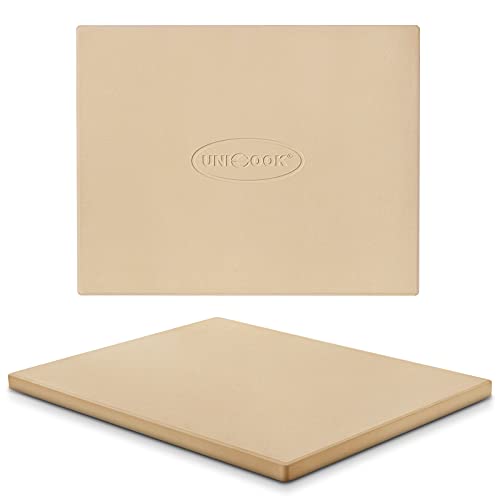
Unicook Heavy Duty Cordierite Pizza Stone
Cordierite handles heat swings better than ordinary ceramic, which is why this survives being loaded with a cold dough ball in a hot oven. The porous surface pulls moisture from the base to give a dry, crisp crust. A plastic scraper is included, and you will use it.
Pros
- Strong resistance to thermal shock
- Porous surface crisps the base well
- Affordable for the performance
Cons
- Stains permanently and cannot be washed with soap
- Slower to reheat between pizzas than steel

Old Stone Oven Rectangular Pizza Stone
A thick rectangular slab with feet that raise it slightly, improving airflow underneath and making it far easier to lift out of the oven. The rectangle uses more of a standard oven rack than a round stone does. It doubles as a hearth for artisan loaves.
Pros
- Feet make it easy to handle
- Rectangular shape maximizes rack use
- Excellent for sourdough and baguettes
Cons
- Very heavy to move in and out
- Feet reduce clearance on shallow ovens

NerdChef Steel Stone Baking Steel
Steel conducts heat far faster than stone, so the base sets and browns before the toppings overcook. That is the whole argument for it, and it is a convincing one for anyone whose home oven tops out around 550 F. It is heavy and needs seasoning like cast iron.
Pros
- Fastest base browning of any option here
- Will not crack or shatter
- Doubles as a griddle plate
Cons
- Extremely heavy to handle
- Needs oiling to prevent surface rust

Emile Henry Flame Top Pizza Stone
The glazed ceramic surface is the outlier here, because it wipes clean instead of absorbing oil and cheese like unglazed stone. It handles direct flame as well as oven heat, so it works on a grill. Bases come out crisp, though slightly less dry than on porous cordierite.
Pros
- Glaze makes cleaning genuinely easy
- Built in handles for safer transfer
- Rated for direct flame on a grill
Cons
- Premium price for a ceramic stone
- Glazed surface absorbs less moisture than bare stone

Lodge Pro-Logic Cast Iron Pizza Pan
Pre seasoned cast iron will never crack, works on a grill or a campfire, and delivers a genuinely crisp base once fully preheated. Handles on each side make it far less alarming to move than a bare slab. It heats more slowly than steel but holds temperature well.
Pros
- Effectively unbreakable
- Handles make transfer safe
- Works over open fire as well as in an oven
Cons
- Needs seasoning maintenance
- Smaller usable surface than a rectangular slab

Cuisinart CPS-445 3-Piece Pizza Grilling Set
A cordierite stone paired with a folding peel and a cutting wheel, aimed squarely at people cooking pizza on a gas grill. Having the peel included removes the usual problem of getting the pizza onto a screaming hot surface. The stone is mid thickness rather than a heavy slab.
Pros
- Peel and cutter included
- Sized for common gas grills
- Good value as a starter set
Cons
- Thinner stone than dedicated slabs
- Folding peel flexes with heavy pizzas

Hans Grill Pizza Stone
A rectangular cordierite stone bundled with a wooden peel, which covers the two things a beginner needs in one purchase. Thickness is moderate, so it takes a full preheat to perform. Owners report good results provided it is given the recommended time to come up to temperature.
Pros
- Peel included at a low price
- Rectangular shape fits standard racks
- Handles both oven and grill
Cons
- Thinner than premium stones
- Peel is better for serving than launching
Compared at a glance
| # | Model | Material | Best for | Score | Price |
|---|---|---|---|---|---|
| 1 | Unicook Heavy Duty Cordierite Pizza Stone | Cordierite | Best overall | 9.4 | Check price |
| 2 | Old Stone Oven Rectangular Pizza Stone | Lead free clay composite | Best for bread and pizza | 9.2 | Check price |
| 3 | NerdChef Steel Stone Baking Steel | Solid steel plate | Best for crisp bases | 9.0 | Check price |
| 4 | Emile Henry Flame Top Pizza Stone | Glazed Flame ceramic | Best for release | 8.8 | Check price |
| 5 | Lodge Pro-Logic Cast Iron Pizza Pan | Pre seasoned cast iron | Best cast iron option | 8.6 | Check price |
| 6 | Cuisinart CPS-445 3-Piece Pizza Grilling Set | Cordierite stone | Best for grilling | 8.3 | Check price |
| 7 | Hans Grill Pizza Stone | Cordierite | Best budget | 8.0 | Check price |
What matters most
Material decides how the base browns Cordierite and clay stones hold heat and wick moisture, giving a dry, crisp base over eight to twelve minutes. Steel conducts heat many times faster, so it drives the base to color in a fraction of that time, which is what home ovens need to imitate a pizzeria deck. Cast iron sits in between, adding the advantage that it will never crack and can go over a fire.
Preheat far longer than feels necessary The single most common reason a stone disappoints is that it was not fully heated. A thick cordierite slab needs forty five minutes to an hour at your oven’s maximum, and a baking steel needs at least that despite conducting heat quickly, because the mass has to saturate. Put the stone in a cold oven, then heat both together to avoid thermal shock.
Never wash a porous stone with soap Unglazed cordierite and clay absorb whatever you put on them, and detergent is no exception, which is how a stone ends up flavoring pizza with soap. Scrape off residue with a plastic blade, wipe with a damp cloth and let any remaining marks stay. Dark staining is normal and does not affect performance.
Get the launch right or none of it matters A perfect stone will not save a pizza that arrives folded. Use a peel dusted with semolina rather than flour, build the pizza on the peel rather than moving it there, and shake it before you approach the oven to confirm it slides. Parchment underneath is a reliable compromise while you learn.
Good to know
How long should I preheat a pizza stone?
Allow forty five minutes to an hour at your oven’s highest setting for a thick stone or steel. Shorter preheats leave the center cooler than the edges, which is where pale, soggy middles come from.
Why did my pizza stone crack?
Almost always thermal shock, caused by putting a cold stone into a hot oven, adding cold dough to an underheated stone, or washing a hot stone with water. Heating the stone from cold with the oven prevents nearly all cracking.
Is a baking steel better than a stone?
For crisping the base quickly in a domestic oven, yes, because steel conducts heat far faster. Stone is lighter, cheaper and better at absorbing moisture, which suits bread. Steel also cannot crack.
How do I clean a pizza stone?
Let it cool completely, scrape residue with a plastic scraper, then wipe with a barely damp cloth. Never use soap on unglazed stone and never submerge it in water.
Can I leave the stone in the oven all the time?
Many people do, and it evens out oven temperature for other baking. The trade offs are slower preheating for everything else and reduced airflow, so remove it if you roast a lot.
Do I need a pizza peel?
It makes launching far easier, though a rimless baking sheet or a flat cutting board works. Parchment paper under the pizza is the most forgiving option while you build confidence.
What temperature should I cook pizza at?
As hot as your oven goes, usually 500 to 550 F for a domestic model. Neapolitan style dough wants far more heat than that, which is why dedicated pizza ovens exist.
Should I use flour or semolina on the peel?
Semolina works better because the coarse grains act like tiny ball bearings and burn less readily than flour. A light, even dusting is enough; too much makes the base gritty.
Our pick
The Unicook Heavy Duty Cordierite Pizza Stone is the right buy for most kitchens, since it resists cracking, crisps bases well and costs little enough to justify the shelf space. Move to the NerdChef Steel Stone if you want faster browning, or the Old Stone Oven slab if bread matters as much as pizza.