Which Grow Light Actually Fits Your Tent or Windowsill?
Based on specifications, the Mars Hydro TS 1000 leads for full-size grow tents with strong PPFD and wide canopy coverage. Spider Farmer’s SF-1000 pairs Samsung diodes with better efficiency, while VIVOSUN’s VS1000 gives budget-conscious growers a dimmable full-spectrum panel without cutting diode quality.
Grow tent panels, desktop clip-ons, and screw-in bulbs solve different lighting problems, not the same one. For a standard 2×2 tent, the Mars Hydro TS 1000 currently balances coverage and output better than most rivals. Smaller budgets or single plants call for an entirely different fixture.
Wattage printed on the box rarely matches actual power draw, which makes comparing listings tricky without checking specifications directly. We compared actual draw, PPFD range, coverage area, and mounting style across current Amazon listings, then matched each fixture to a specific use case instead of ranking by price alone.
The shortlist, ranked

Mars Hydro TS 1000
Full spectrum SMD diodes span a rectangular panel built for 2×2 foot tents. Owners report even canopy coverage through both veg and flower stages. A passive heat sink keeps the fixture silent, since it runs without fans.
Pros
- Light spreads evenly across the canopy
- Fanless design stays silent
- Rope hangers simplify installation
Cons
- No built-in dimmer switch
- Best suited to smaller tents only

Spider Farmer SF-1000
Samsung LM301B diodes paired with a Meanwell driver deliver steady output at a lower actual draw than many panels. A dimming knob lets growers adjust intensity through seedling and flowering stages. A daisy chain port lets multiple lights run off one outlet.
Pros
- Samsung diodes improve overall efficiency
- Dimmer allows stage-specific intensity
- Daisy chain wiring links multiple units
Cons
- Coverage shrinks at higher hang heights
- Driver box adds to the overall footprint
VIVOSUN VS1000
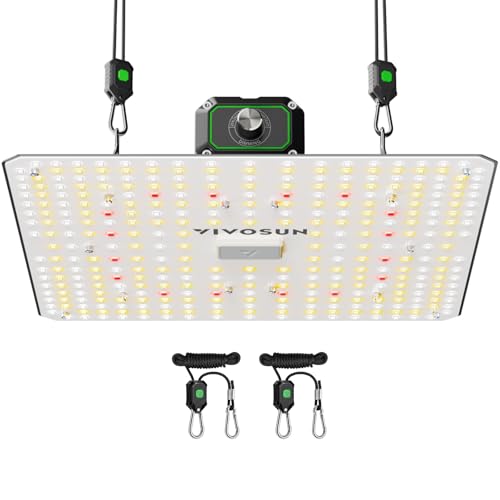
A diamond-shaped reflector pushes light toward the edges of the canopy, pairing with full spectrum diodes across the panel. Output adjusts from 25 percent to full power through a dial dimmer. VIVOSUN lists Samsung diodes on this model alongside a Meanwell driver for steady current.
Pros
- Diamond reflector improves edge coverage
- Dial dimmer adds stage flexibility
- Diode quality competes with pricier panels
Cons
- Hanging kit feels thin compared to rivals
- No daisy chain port on this model

Phlizon 2023 Newest 1000W LED Grow Light
Dual-chip diodes spread across a wider panel aimed at 3×3 and 4×4 foot tents. Separate veg and bloom switches let growers cut output during early growth stages. A cooling fan runs alongside the heat sink to manage the added wattage.
Pros
- Wider coverage fits larger tents
- Veg and bloom switches simplify staging
- Fan cooling handles the higher wattage
Cons
- Fan adds audible noise versus passive units
- Bulkier housing needs more hanging clearance

Barrina T5 4FT Grow Light
6500K daylight spectrum diodes run along a 4 foot linear bar built for shelving and propagation racks. An integrated switch plus daisy chain outlet make it easy to line up several bars end to end. Low heat output lets it sit close to seed trays without scorching new growth.
Pros
- Low heat allows close placement to seedlings
- Daisy chain wiring links multiple bars
- Slim profile fits tight shelf spacing
Cons
- Single spectrum lacks red wavelengths for flowering
- Coverage width stays limited for wide trays
GooingTop LED Grow Light Clip-on
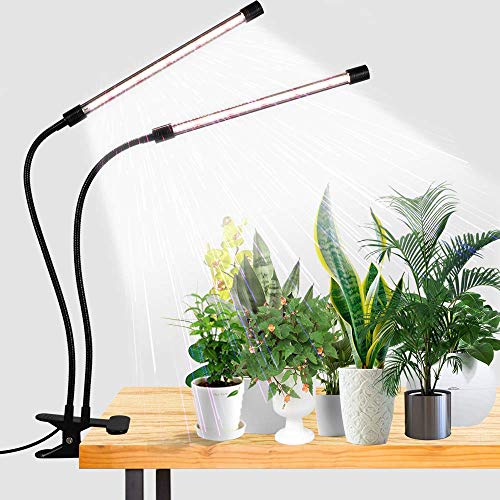
A flexible gooseneck arm and clamp base attach this fixture to a desk, shelf, or small tent frame. Three light heads combine red, blue, and white diodes into a compact full spectrum source. A built-in timer cycles the light on for 4, 8, or 12 hours automatically.
Pros
- Clamp mount fits desks and small shelves
- Built-in timer removes manual switching
- Adjustable heads target individual plants
Cons
- Coverage drops off quickly at longer distances
- Plastic clamp feels less sturdy than tent hangers

SANSI 36W LED Grow Light Bulb
Shaped like a standard A21 bulb, this fixture screws into any E26 socket for houseplants or a single pot. Ceramic housing pulls heat away from the diodes instead of relying on a fan. SANSI lists full spectrum output aimed at both leafy growth and light flowering.
Pros
- Screws into any standard lamp or fixture
- Ceramic cooling needs no fan
- Compact size suits single houseplants
Cons
- Output falls short for a full tent
- No dimmer or timer included
Side by side
| # | Model | Power Draw | Best for | Score | Price |
|---|---|---|---|---|---|
| 1 | Mars Hydro TS 1000 | 150W actual | Best overall for grow tents | 9.4 | Check price |
| 2 | Spider Farmer SF-1000 | 100W actual | Best value for full spectrum coverage | 9.2 | Check price |
| 3 | VIVOSUN VS1000 | 100W actual | Best budget quantum board panel | 8.9 | Check price |
| 4 | Phlizon 2023 Newest 1000W LED Grow Light | 185W actual | Best for large tents and multiple plants | 8.7 | Check price |
| 5 | Barrina T5 4FT Grow Light | 20W per bar | Best for seedlings and propagation | 8.4 | Check price |
| 6 | GooingTop LED Grow Light Clip-on | 75W across three heads | Best for small spaces and desktop gardens | 8.2 | Check price |
| 7 | SANSI 36W LED Grow Light Bulb | 36W actual | Best for single houseplants and succulents | 8.0 | Check price |
What matters most
How Do You Choose a Grow Light for Your Setup? Coverage area and PPFD matter more than wattage alone, since two fixtures with matching wattage can output very different light intensity. Start by measuring the footprint that needs covering, whether that’s a 2×2 foot tent or a single windowsill pot. Mounting height changes both coverage and intensity, so check each fixture’s listed hang range. Dimmable panels add flexibility across seedling, veg, and flower stages.
Full Spectrum vs Red-Blue Spectrum: Which Grows Better? Full spectrum fixtures mix warm and cool diodes to mimic natural daylight across the whole growth cycle. Red-blue panels concentrate energy in the wavelengths plants use most for photosynthesis and flowering. Mixed houseplant collections tend to suit full spectrum better, while dedicated tent growers chasing yield often prefer targeted red-blue setups. Either spectrum supports vegetative growth, but flowering plants benefit from extra red wavelengths.
Which Light Size Fits a 2×2 Tent vs a 4×4 Tent? A 2×2 foot tent needs a different fixture than a 4×4 foot tent, even when growing the same species. Quantum board panels like the TS 1000 or SF-1000 suit small to mid-size tents efficiently. Larger dual-chip units with fans handle 3×3 and 4×4 foot spaces but add noise and height requirements. Shelf growers propagating seedlings usually do better with slim linear T5 bars than a full panel.
What’s the Best Grow Light for Seedlings, Houseplants, or Succulents? Seedlings need lower intensity light placed close to the tray, favoring low-heat T5 bars over high-output panels. Houseplants scattered around a room often do better under a screw-in bulb than a dedicated panel. Succulents need bright, close light but can scorch under high PPFD panels meant for flowering crops. Clip-on fixtures with adjustable arms suit desks and mixed plant shelves where a full panel would waste light.
Common questions
What PPFD is best for indoor grow lights?
Most vegetative growth does well between 200 and 400 micromoles, while flowering plants benefit from 400 to 600 or higher, based on specifications from these listings and common grow guides.
How many watts do I need to grow plants indoors?
Actual power draw, not the marketed equivalent wattage, matters most here. Roughly 30 to 50 actual watts per square foot covers most vegetative and flowering setups.
Are LED grow lights better than fluorescent tubes?
LEDs run cooler, last longer, and use less electricity for the same light output. Fluorescent T5 tubes stay useful for low-heat seedling trays where intensity needs stay low.
Can grow lights stay on 24 hours a day?
Most plants still need a dark period to complete their growth cycle. A 12 to 18 hour on cycle with a timer works better than continuous light for most species.
Is full spectrum worth it for houseplants?
Full spectrum diodes cover the wavelengths houseplants use for both leaf growth and occasional flowering, making them a practical single-fixture choice for mixed collections.
What color light works best for plant growth?
Red and blue wavelengths drive the most photosynthesis, but plants also use green and far red light for canopy penetration and flowering signals. That’s why full spectrum panels remain popular.
How far should a grow light hang above plants?
Hang height depends on fixture wattage and PPFD, typically 12 to 24 inches for quantum board panels and closer for low-heat T5 bars, per each manufacturer’s listed range.
Do succulents need a special grow light?
Succulents need bright, close light but less overall intensity than flowering crops, so a compact bulb or clip-on fixture usually works better than a full tent panel.
Mars Hydro TS 1000 vs Spider Farmer SF-1000: which one wins?
The TS 1000 draws more actual power and covers a slightly larger footprint, while the SF-1000 runs cooler with Samsung diodes and a built-in dimmer. Growers chasing raw coverage lean toward the TS 1000, and those wanting stage-by-stage control lean toward the SF-1000.
Final word
Mars Hydro’s TS 1000 remains the strongest overall pick for a standard grow tent, with the Spider Farmer SF-1000 close behind on value. Larger tents or specific needs like seedlings, houseplants, or desktop setups point toward a different match further down this list, since coverage area and spectrum matter more than wattage alone. Check price on Amazon before deciding based on the actual tent or shelf space involved.