Podcast Starter Kits for Clear Audio on a Budget
The Maono DGM20S casts the widest net for beginners: it bundles a podcast microphone, boom arm, pop filter, and shock mount, yet it omits an audio interface, so you need a computer with a USB port. Its main advantage is the complete accessory set at a low entry cost, but its main limitation is the lack of hardware gain control, which means you adjust levels in software.
Starting a podcast involves more than just hitting record. You need a microphone that captures clear voice, accessories to reduce noise, and a way to connect it all to your computer or recorder.
A starter kit bundles these essentials so you can begin without piecing together gear. We compared seven real kits currently sold on Amazon, focusing on what each includes and who it fits best.
The top picks, ranked

Maono DGM20S USB Podcast Microphone Kit
The Maono DGM20S is a dynamic USB microphone that comes with a sturdy boom arm, pop filter, and shock mount. It connects directly to your computer via USB, so no audio interface is needed. Owners report clear voice reproduction with minimal background noise for a home setup.
Pros
- Plug-and-play USB connection
- Includes premium accessories
- Good noise rejection
Cons
- No hardware gain control
- Requires a computer for recording
FIFINE T669 USB Microphone Kit
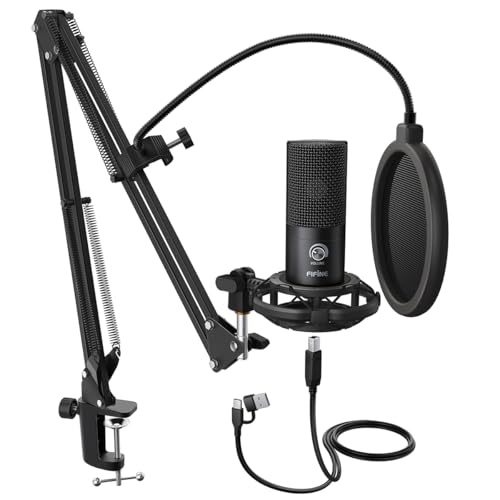
The FIFINE T669 is a condenser USB microphone that includes a shock mount, pop filter, and a small tripod stand. It offers a cardioid pickup pattern that focuses on your voice. While it lacks a boom arm, its low price makes it a popular entry point.
Pros
- Very affordable
- Easy setup
- Decent sound for the price
Cons
- Tripod stand is less flexible
- May pick up room echo

Behringer U-Phoria UM2 Audio Interface with MXL 990
This bundle combines the Behringer UM2 audio interface with the MXL 990 condenser microphone. The interface provides a preamp and XLR input, allowing you to use a wider range of microphones in the future. It includes a carrying case but no stand or cables.
Pros
- XLR setup offers upgrade path
- Interface has gain control
- Solid build quality
Cons
- No stand or cables included
- Phantom power must be enabled manually

Audio-Technica ATR2100x-USB Kit
The Audio-Technica ATR2100x-USB is a dynamic microphone that offers both USB and XLR outputs, giving you flexibility to start with USB and move to an interface later. This kit includes a tripod stand, cables, and a pouch. It is known for its clear, warm sound.
Pros
- Dual USB and XLR outputs
- Excellent sound quality
- Includes cables
Cons
- Tripod stand is less stable
- No boom arm

Rode NT-USB Mini Studio Kit
The Rode NT-USB Mini is a compact condenser microphone with a built-in pop filter and magnetic mount. This studio kit adds a desktop stand and a ring light for video podcasting. It delivers professional sound in a small footprint.
Pros
- Very compact design
- Integrated pop filter
- Includes ring light
Cons
- No boom arm
- Ring light may be unnecessary
MXL 990 Podcasting Kit with Audio Interface
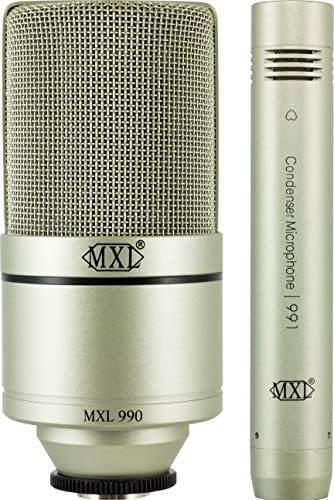
This kit includes the MXL 990 condenser mic, a boom stand, pop filter, and a simple audio interface. It provides everything you need to record into your computer with XLR gear. The boom stand is adjustable and sturdy.
Pros
- Complete XLR package
- Boom stand included
- Good value for the gear
Cons
- Interface is basic
- Setup requires more steps

Blue Snowball iCE USB Microphone Kit
The Blue Snowball iCE is a condenser USB microphone with a retro design. This kit includes a pop filter and a scissor arm stand. It has a cardioid setting that works well for solo recordings, but it requires a shock mount for best results.
Pros
- Iconic design
- Simple plug-and-play
- Scissor arm included
Cons
- No shock mount
- Sound may be less clear than dynamic mics
Before you buy
How they compare
| # | Model | Microphone Type | Best for | Score | Price |
|---|---|---|---|---|---|
| 1 | Maono DGM20S USB Podcast Microphone Kit | Dynamic | Beginners wanting a complete accessory set with a USB mic | 9.4 | Check price |
| 2 | FIFINE T669 USB Microphone Kit | Condenser | Solo podcasters on a tight budget | 8.7 | Check price |
| 3 | Behringer U-Phoria UM2 Audio Interface with MXL 990 | Condenser | Growers who plan to upgrade microphones later | 8.5 | Check price |
| 4 | Audio-Technica ATR2100x-USB Kit | Dynamic | Podcasters who want both USB and XLR options | 9.1 | Check price |
| 5 | Rode NT-USB Mini Studio Kit | Condenser | Remote podcasters who need compact gear | 8.4 | Check price |
| 6 | MXL 990 Podcasting Kit with Audio Interface | Condenser | Podcasters who want a traditional XLR setup with a stand | 8.2 | Check price |
| 7 | Blue Snowball iCE USB Microphone Kit | Condenser | Casual podcasters who prioritize style | 8.0 | Check price |
Common questions
Do I need an audio interface for podcasting?
Not necessarily. If you use a USB microphone, it connects directly to your computer with no interface. If you choose an XLR microphone, you need an interface or mixer to convert the signal. Many starter kits with XLR mics include an interface, so you don’t have to buy one separately.
What is the difference between dynamic and condenser microphones?
Dynamic microphones are rugged and reject background noise well, making them good for untreated rooms. Condenser microphones are more sensitive and capture higher frequencies, but they also pick up more ambient sound. For podcasts, dynamic mics are often recommended for home studios.
Can I use a podcast starter kit for video calls?
Yes. Most USB microphones work with video conferencing apps. The audio quality will be much better than your computer’s built-in mic. Some kits even include a ring light for improved video, like the Rode NT-USB Mini Studio Kit.
How do I connect multiple microphones for a podcast?
To connect multiple XLR microphones, you need an audio interface with multiple inputs. USB microphones each require a separate USB port, and some software can combine them, but this can be tricky. A multi-input interface is the standard solution for in-person multi-person podcasts.
What is a pop filter and why do I need one?
A pop filter is a screen placed in front of the microphone to reduce plosive sounds like ‘p’ and ‘b’ that cause popping. It also helps minimize breath noise. Many starter kits include a pop filter, but you can also buy one separately.
Do I need a boom arm or a stand?
A boom arm or stand positions the microphone at the right height and distance. A boom arm is more flexible and saves desk space, while a tripod stand is compact and portable. Some kits include one or the other, but you can always upgrade later.
Can I record a podcast with just a laptop and a USB mic?
Absolutely. With a USB microphone and free recording software like Audacity or GarageBand, you can produce a quality podcast. The starter kits we compared include USB mics that are perfect for this setup.
What is the best way to reduce echo in my recordings?
Echo comes from sound bouncing off hard surfaces. To reduce it, add soft materials like rugs, curtains, or foam panels. Position the microphone close to your mouth and away from walls. A dynamic microphone also helps because it picks up less room sound.
The bottom line
For most beginners, the Maono DGM20S offers the best combination of price, accessories, and sound quality. If you plan to grow your setup, the Audio-Technica ATR2100x-USB provides versatility with both USB and XLR outputs. Choose the Maono if you want a complete kit right now; choose the Audio-Technica if you want to start simple but have room to upgrade.