8 Pogo Sticks Built for Different Ages and Weights
Flybar’s Super Pogo 2 covers riders from 80 to 160 pounds with a dual spring and steel frame, our top overall pick. Flybar’s Foam Maverick suits younger kids with foam padding and a lower weight floor. Advanced jumpers chasing height should go straight to the air powered Vurtego V4 Pro.
Flybar’s Super Pogo 2 covers the widest rider range and handles adult weight, making it the pick for most households. Younger jumpers need the foam wrapped Maverick instead, which starts at a much lower weight floor. Serious height belongs to the air powered Vurtego V4 Pro.
Getting the choice wrong here is not just disappointing, it can be unsafe: a stick rated above a child’s weight barely compresses, and one rated below it bottoms out hard. We compared published rider weight ranges, spring or air mechanism, foam coverage on the frame, and grip and footpeg design. Owner reports on bent shafts and worn foot pegs shaped the final order.
The top picks, ranked

Flybar Super Pogo 2 Pogo Stick
Dual spring compression gives this stick the travel needed for riders between 80 and 160 pounds, covering most teenagers and many adults. A heavy gauge steel frame resists the bending that kills cheaper sticks after a season. Non slip foot pegs stay grippy in damp morning conditions, which matters on driveway concrete.
Pros
- Weight range covers teens and adults
- Steel frame tolerates hard landings
- Grippy pegs work on damp concrete
Cons
- Too stiff for riders under 80 pounds
- Heavier to carry than foam kids models

Flybar Foam Maverick Pogo Stick
Foam sleeves wrap the shaft and handles, so knocks to shins and chins during learning hurt far less. A rider range of roughly 40 to 80 pounds targets children around five to nine years old. A rubber tip grips paving and grass without the metallic clatter of a bare steel foot.
Pros
- Foam reduces bruising during learning
- Quiet rubber tip suits paved drives
- Light enough for a nine year old to carry
Cons
- Foam tears if dragged on rough tarmac
- Bottoms out for riders near the upper limit

New Bounce Pogo Stick for Kids
New Bounce keeps the parts count low and the price accessible, suited to a child who may lose interest within a month. A single spring covers roughly 40 to 80 pounds rather than the dual setup pricier sticks use. Rubber handle grips and a padded shaft give enough protection for driveway practice.
Pros
- Low commitment for a first pogo stick
- Light enough for a child to carry
- Assembles in minutes
Cons
- Single spring gives shorter hop height
- Spring noise increases as it wears

Flybar My First Flybar Bouncer
An inflated rubber ball inside a wide plastic base replaces the spring here, so a small child cannot tip off a narrow pole. Balance demands drop sharply, which suits three to six year olds who lack the coordination for a real stick. A squeak on each bounce gives instant feedback that keeps toddlers going.
Pros
- Wide base is far more stable than a pole
- Safe for indoor use on carpet
- Very low learning curve
Cons
- Not a true pogo stick, so no hop height
- Squeaker gets tiresome indoors

Vurtego V4 Pro Pogo Stick
A compressed air piston replaces the steel spring, tuned with a bike pump to match rider weight and target height. Experienced jumpers clear heights no spring stick reaches. The learning curve runs steep, so this is a poor first purchase despite the engineering behind it.
Pros
- Air pressure tunes to rider and skill level
- Reaches heights springs cannot
- Aluminium keeps weight down for tricks
Cons
- Steep learning curve for beginners
- Needs a pump and pressure checks before riding
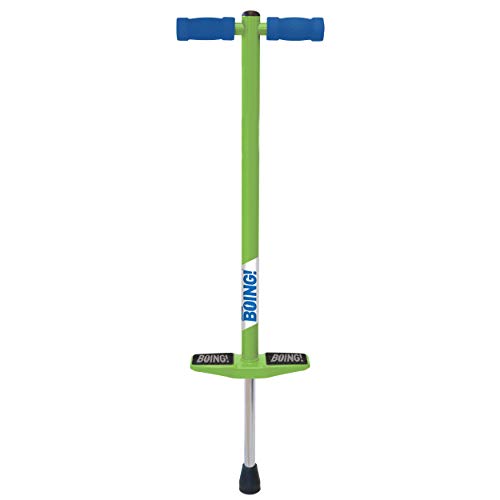
Geospace Jumparoo Boing! Air Pogo Stick
An air cylinder swaps in for a spring here, dropping noise almost to nothing on a hard drive. Bounce feels softer than steel, so hard landings jar less through the knees. Rider range runs roughly 40 to 160 pounds depending on which model size you choose.
Pros
- Almost silent on concrete
- Softer landings than steel springs
- Several sizes for different rider weights
Cons
- Air cylinder can lose pressure over seasons
- Lower maximum height than spring pro models

Flybar Master Pogo Stick
This model sits between the foam kids sticks and the Super Pogo, covering roughly 80 to 160 pounds with a single heavy spring. Steel construction with a padded handlebar handles the awkward first weeks of learning. Wide foot pegs give bigger shoes a stable platform, which foam models often lack.
Pros
- Bridges the gap from kids to adult sticks
- Wide pegs suit larger feet
- Simple mechanism with little to maintain
Cons
- Less rebound than the dual spring Super Pogo
- Paint chips on the shaft with regular use
How to pick the right one
What should you check first on any pogo stick? Rider weight range decides safety and performance more than any other figure. Too light for the stick and the spring will not compress, so nothing happens. Too heavy and the spring bottoms out, sending shock straight into the ankles. Foam coverage on the shaft and handles matters next, along with foot peg width and tip material. Rubber tips grip paving and stay quiet, while bare steel bites into grass but chews up a driveway.
Which pogo stick suits your child’s age? Under six, skip the spring entirely and use a wide base bouncer like My First Flybar, since balance on a narrow pole is beyond most preschoolers. From about five to nine years and 40 to 80 pounds, foam wrapped sticks such as the Foam Maverick sit at the right tier. Teenagers above 80 pounds need the adult range, because a kids stick bottoms out and feels dead within a few jumps.
Spring vs air powered: which pogo stick mechanism wins? Steel springs are cheap, simple and need no maintenance, which is why almost every kids model uses one. Air compression trades that simplicity for tuning, letting you set pressure with a pump to match rider weight and target height. Vurtego builds the enthusiast version, while Geospace applies the same idea more gently for children. Air models run quieter and land softer, but they lose pressure over time and need checking before each session.
What surfaces and gear keep pogo jumping safe? Flat concrete or asphalt gives the consistent rebound a pogo stick needs, while grass absorbs energy and gravel turns genuinely dangerous. A helmet is the minimum, and wrist guards plus knee pads make sense during the first weeks. Check three things monthly: shaft straightness, foot peg bolts and tip wear. A worn rubber tip causes most slipping, and it is the cheapest part to replace.
How they compare
| # | Model | Rider weight | Best for | Score | Price |
|---|---|---|---|---|---|
| 1 | Flybar Super Pogo 2 Pogo Stick | 80 to 160 pounds | Best overall | 9.4 | Check price |
| 2 | Flybar Foam Maverick Pogo Stick | 40 to 80 pounds | Best value | 9.2 | Check price |
| 3 | New Bounce Pogo Stick for Kids | 40 to 80 pounds | Best budget | 9.0 | Check price |
| 4 | Flybar My First Flybar Bouncer | Up to 250 pounds | Best for toddlers | 8.8 | Check price |
| 5 | Vurtego V4 Pro Pogo Stick | Adjustable air compression piston | Best for extreme jumping | 8.6 | Check price |
| 6 | Geospace Jumparoo Boing! Air Pogo Stick | Air cylinder compression | Best air powered for kids | 8.3 | Check price |
| 7 | Flybar Master Pogo Stick | 80 to 160 pounds | Best for teen beginners | 8.0 | Check price |
Questions worth asking
What weight do you need for a pogo stick?
Each model publishes a range. Kids foam sticks typically cover 40 to 80 pounds, while adult models such as the Flybar Super Pogo 2 run 80 to 160 pounds.
What age can a child start using a pogo stick?
Around five for a foam wrapped spring stick. Younger children do better on a wide base bouncer, where balance demands are much lower.
Are pogo sticks safe for kids?
They are reasonably safe on flat pavement with a helmet and a correctly weight matched stick. Most injuries come from using a stick outside its rated range or riding on gravel.
Which pogo stick jumps the highest?
Air powered models reach the greatest heights. The Vurtego V4 Pro lets riders tune pressure upward as skill improves, well past what a steel spring delivers.
Can adults use a pogo stick?
Yes, provided the rating covers your weight. Adult capable options include the Flybar Super Pogo 2 and the pressure adjustable Vurtego V4 Pro.
Spring or air pogo stick: which is better?
Springs are simpler and cheaper with nothing to maintain. Air models bounce more quietly, land softer and tune to the rider, but they need pressure checks before use.
What surface should you use a pogo stick on?
Flat concrete or asphalt works best. Grass absorbs the rebound, and loose gravel causes the tip to slide out from under the rider.
How long does a pogo stick last?
Steel framed models last several seasons with regular use. Rubber tips wear first and are usually replaceable, while foam sleeves tear if the stick is dragged.
Do toddlers need a different pogo stick than older kids?
Yes. Toddlers and preschoolers should use a wide base bouncer with no spring at all, since balancing on a narrow pole needs coordination most children under five do not yet have.
Final word
Flybar’s Super Pogo 2 is the stick most households should buy, since its 80 to 160 pound range grows with a teenager and its steel frame survives hard landings. Younger children need the Foam Maverick instead, and preschoolers are safer on the wide base bouncer. Save the Vurtego for once basic hopping is second nature.


