Tomato Cages Strong Enough to Hold a Heavy Crop
The K-Brands Tomato Cage Ultimate is our overall pick for its heavy gauge steel and folding storage. The Gardener’s Blue Ribbon Ultomato adjusts as the plant grows, and GROWNEER Plant Support Cages are the value multipack for a whole bed.
If your tomato cages collapse under a full crop every August, the K-Brands Tomato Cage Ultimate is the one to buy, with the Gardener’s Blue Ribbon Ultomato adapting better to how a plant actually grows and GROWNEER Plant Support Cages covering a whole bed cheaply.
Tomato cages are one of the few garden products where the standard version is genuinely inadequate, because the tapered wire cone sold everywhere is sized for a determinate plant and buckles under a mature indeterminate one. Height, wire gauge and how the cage anchors into soil are the specifications that matter. We compared gauge, height, base diameter and what owners report at the end of a season to rank the seven below.
The top picks, ranked

K-Brands Tomato Cage Ultimate
A heavy gauge steel cage that is genuinely tall enough for an indeterminate plant and folds flat for winter storage, which is where most sturdy cages become a nuisance. The square profile sits stably in a bed and stakes into soil properly. Owners report it is the cage that ends the annual cycle of buying and discarding flimsy cones.
Pros
- Heavy gauge holds a fully loaded plant
- Folds flat so storage is not a problem
- Square base stays stable in loose soil
Cons
- Costs several times what wire cones do
- Assembly needed at the start of each season

Gardener’s Blue Ribbon Ultomato Tomato Plant Cage
Three vertical stakes joined by arms that clip on at any height, so you add support where the plant actually needs it rather than where a fixed ring happens to sit. That flexibility suits sprawling and unevenly branched plants. Owners report it is the most adaptable design here, and that setting up several takes longer than dropping cones over seedlings.
Pros
- Support goes exactly where the plant needs it
- Disassembles compactly for storage
- Suits sprawling and uneven growth
Cons
- Slower to set up than a one piece cage
- Plastic arms become brittle after several seasons
Glamos Wire Products Heavy Duty Tomato Cage
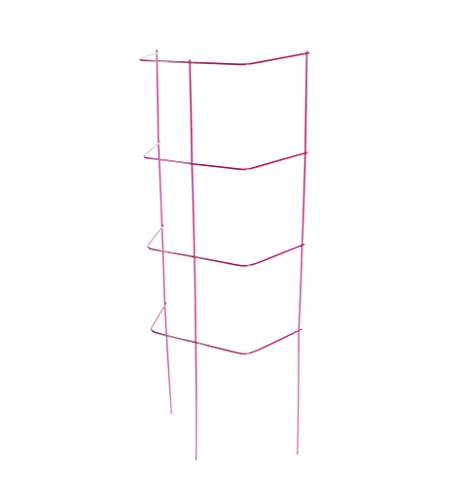
A traditional cone shape built from noticeably thicker wire than the standard garden centre version, with a galvanised coating that resists rust through repeated seasons outdoors. It is the familiar design done properly. Owners report the same cages still in use many years later, which is the whole argument for buying gauge rather than price.
Pros
- Thick wire resists bending under load
- Galvanised coating survives seasons outdoors
- Simple design with nothing to assemble
Cons
- Cone shape does not stack or store flat
- Tapered top is narrow for a mature plant

Panacea Products Tomato Cage
A powder coated steel cage in the familiar three ring form, available in several heights so you can match determinate and indeterminate varieties. The coating keeps it looking presentable in an ornamental bed. Owners report it sits between the flimsy cones and the heavy duty designs, which suits determinate varieties well.
Pros
- Range of heights for different varieties
- Coating looks tidy in ornamental beds
- Widely available and easy to replace
Cons
- Not stiff enough for large indeterminate plants
- Cones nest awkwardly for storage

GROWNEER Plant Support Cages
Sold in packs sized to cover a whole bed rather than a single plant, which is the realistic way most people buy supports. They are lighter than the heavy duty options and suit peppers, bush tomatoes and other medium plants. Owners report they work well within their limits and bend under a large indeterminate crop.
Pros
- Covers a whole bed at low cost
- Assembles without tools
- Fine for peppers and determinate tomatoes
Cons
- Bends under fully loaded indeterminate plants
- Coating chips where rings join

Legigo Tomato Cages for Garden
Sectional cages that stack to add height as the plant grows, so you are not committing to a full height cage over a seedling. That also makes storage easier since the sections nest. Owners report the stacking joints are the weak point and benefit from a cable tie once the plant is loaded.
Pros
- Height grows with the plant
- Sections nest for winter storage
- No tools needed to assemble
Cons
- Stack joints flex under heavy load
- Needs cable ties to feel truly secure

MTB Garden Tomato Cage
A plain coated wire cage sold cheaply enough to buy in quantity, suited to determinate tomatoes, peppers and flowers rather than a sprawling heirloom vine. Owners report it does the job for smaller plants and confirm that the limitation is load capacity rather than build quality at the level.
Pros
- Cheap enough to support a whole vegetable bed
- Fine for peppers and bush varieties
- Light and easy to move around
Cons
- Too light for indeterminate tomatoes
- Wire bends permanently once overloaded
What to look for
Determinate and indeterminate need different cages This is the distinction that decides everything. Determinate tomatoes grow to a set size, produce their crop and stop, so a standard garden cage is genuinely adequate. Indeterminate varieties keep growing all season and can exceed head height, carrying a substantial weight of fruit and foliage. A cage sized for a determinate plant will buckle under one. Check the seed packet or plant label before buying supports rather than after.
Gauge matters more than height A tall cage made of thin wire simply bends further before it falls over. The wire thickness, or gauge, is what carries the load, and it is the specification manufacturers are least likely to advertise. If you can flex a cage noticeably by hand in the shop, a mature plant will flatten it in a storm. Heavier gauge cages cost several times as much and last many seasons, which works out cheaper than replacing cones annually.
Anchor the cage, do not just rest it Most cage failures are the whole cage tipping rather than the wire bending, usually in wind once the plant is tall and heavy. Push the legs well into the soil, and on tall cages drive a stake alongside and tie the cage to it. In loose or sandy soil, ground staples or a length of rebar make a considerable difference. Set the cage when you plant, since installing one over a mature plant damages roots and breaks stems.
Think about storage before you buy Traditional cone cages do not stack neatly, do not fold, and occupy a corner of a shed all winter while catching on everything. Folding and sectional designs solve this and are the main practical reason to prefer them over an equally strong fixed cage. If storage is genuinely not an issue, heavy galvanised cones left outdoors will last for years and cost less.
The lineup, side by side
| # | Model | Material | Best for | Score | Price |
|---|---|---|---|---|---|
| 1 | K-Brands Tomato Cage Ultimate | Heavy gauge coated steel | Best overall | 9.4 | Check price |
| 2 | Gardener’s Blue Ribbon Ultomato Tomato Plant Cage | Three stakes with adjustable clip on arms | Best adjustable | 9.2 | Check price |
| 3 | Glamos Wire Products Heavy Duty Tomato Cage | Heavy gauge galvanised wire | Best for durability | 9.0 | Check price |
| 4 | Panacea Products Tomato Cage | Powder coated steel | Best classic design | 8.8 | Check price |
| 5 | GROWNEER Plant Support Cages | Multipacks covering several plants | Best value multipack | 8.5 | Check price |
| 6 | Legigo Tomato Cages for Garden | Stackable sections for increasing height | Best for stacking height | 8.2 | Check price |
| 7 | MTB Garden Tomato Cage | Coated steel wire | Best budget | 8.0 | Check price |
Frequently asked questions
What size cage do tomatoes need?
Determinate varieties are generally well served by a standard cage of around three to four feet. Indeterminate varieties keep growing all season and often need five feet or more, plus a stake for anchoring. Base diameter matters too, since a mature plant needs room to bush out rather than being squeezed into a narrow cone.
Are the cheap wire cone cages any good?
They are adequate for peppers, determinate tomatoes and flowers, which is what they were designed for. They are not adequate for a mature indeterminate tomato, which will bend the wire and tip the cage over. Most disappointment with them comes from using them on the wrong type of plant.
When should I put cages on tomato plants?
At planting time, or shortly after, while the plant is small. Installing a cage over a mature plant means forcing branches through the rings and disturbing the root zone, which sets the plant back. Setting supports early also trains growth upward from the start.
Cage or stake, which is better?
Cages need no ongoing work and suit plants left to bush out naturally. Stakes take less storage space and less money, but require tying the plant in every week or two and usually pruning to a single or double stem. Cages suit gardeners who want low maintenance, stakes suit those who prune anyway.
How do I stop cages blowing over?
Push the legs deep into the soil at planting time, and on tall cages drive a separate stake alongside and tie the cage to it. Ground staples help in loose soil. Positioning the bed out of the prevailing wind, or grouping cages so they support each other, also reduces the risk.
Can I use tomato cages for other plants?
Yes, widely. They work well for peppers, eggplants, bush beans, peonies and other perennials that flop when they flower. Lighter multipack cages are often better suited to these plants than to tomatoes, since the loads involved are much smaller.
Do galvanised cages rust?
Galvanising delays rust considerably but does not prevent it forever, especially at cut ends and where the coating is scratched. Storing cages under cover over winter extends their life significantly. Powder coated cages look tidier but chip more easily, and rust starts at the chips.
How many cages do I need per plant?
One per plant is standard. Very vigorous indeterminate varieties sometimes benefit from a cage plus an adjacent stake, or from stacking a second section on a sectional cage as the plant outgrows the first. Two cages around one plant is unusual and generally means the cage was undersized.
The verdict
The K-Brands Tomato Cage Ultimate is worth the higher outlay because heavy gauge steel and a folding design solve both problems at once, holding a loaded indeterminate plant and then storing flat all winter. The Gardener’s Blue Ribbon Ultomato is the better choice for plants that grow unevenly, and GROWNEER multipacks are perfectly adequate for peppers and determinate varieties.