Best Polarizing Filters for Rich, Saturated Photos
The Hoya HD3 Circular Polarizer is our top pick for most photographers because it delivers strong glare reduction and color saturation with a durable build, but it is pricey and can be tough to clean.
A polarizing filter is essential for landscape and outdoor photography. It cuts reflections, deepens blue skies, and makes foliage pop. But not all polarizers are equal. Glass quality, coating, and build vary widely.
This guide breaks down seven popular models. We looked at specifications, owner reports, and value. Whether you shoot landscapes, travel, or video, there is a filter here for you.
Before you buy
The shortlist, ranked

Hoya HD3 Circular Polarizer
The Hoya HD3 is built with a lightweight aluminum frame and high-transmission glass. It reduces glare effectively and maintains sharpness. Photographers report it handles flare well thanks to the 8-layer coating. It is also scratch resistant and water repellent.
Pros
- Excellent light transmission
- Durable and waterproof coating
- Very slim, avoids vignetting
Cons
- Price is higher than many
- Coating can smudge easily

B+W 77mm XS-Pro Kaesemann Circular Polarizer
B+W is known for high-end filters. The XS-Pro Kaesemann uses a thin polarizing film that boosts color without shifting tones. It has a brass ring that prevents binding on lenses. Owners like the smooth rotation and low flare. It is a favorite among landscape pros.
Pros
- Superb color saturation
- Brass ring prevents jamming
- High contrast and low flare
Cons
- Expensive
- No front cap included on some sizes
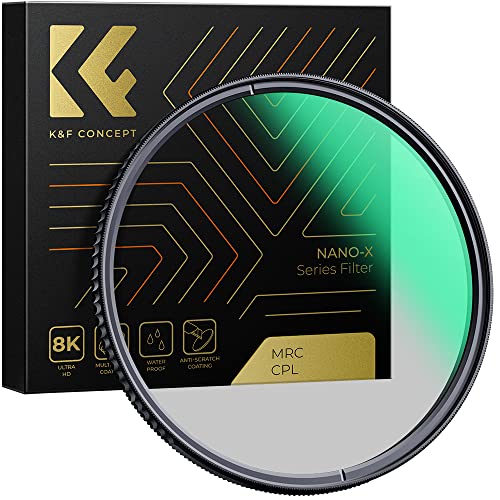
K&F Concept Nano-X Series Circular Polarizer
The K&F Concept Nano-X offers great value. It has 28-layer multi-coating that reduces reflections and is easy to clean. The aluminum frame is sturdy but light. Users report it improves sky and water contrast noticeably for the price.
Pros
- Very affordable
- Lightweight and slim
- Decent color enhancement
Cons
- Build feels less premium
- Slight color cast in some shots

Tiffen 62mm Circular Polarizer
Tiffen has been making filters for decades. This standard polarizer reduces glare and improves saturation without altering color balance. It is made with water white glass and a simple black aluminum ring. It is a workhorse filter that gets the job done.
Pros
- Trusted brand
- Accurate colors
- Good price
Cons
- Thicker frame may vignette on wide angles
- Not as scratch resistant

Zeiss T* Circular Polarizer
Zeiss T* filters are famous for their anti-reflective coatings. This polarizer delivers extremely accurate color with no warm or cool cast. The brass frame is robust and the rotation is smooth. Photographers note it is one of the sharpest filters available.
Pros
- Neutral color rendition
- Outstanding sharpness
- Durable brass construction
Cons
- Very expensive
- Limited sizes available

Marumi DHG Super Circular Polarizer
Marumi DHG Super CPL is a slim filter that avoids vignetting on wide angle lenses. It features 8-layer coatings and a black rim that reduces internal reflections. Owners report it is great for travel because it is lightweight and comes with a handy case.
Pros
- Slim, no vignetting
- Lightweight
- Good contrast improvement
Cons
- Frame can be hard to grip
- No front cap on some sizes

Polaroid 58mm Circular Polarizer
The Polaroid 58mm CPL is an inexpensive way to start using polarizers. It reduces reflections and increases saturation, though not as dramatically as premium models. The build is simple but functional. It is a good choice for hobbyists or those testing the waters.
Pros
- Very low price
- Does the job
- Good for learning
Cons
- Image quality may be lower
- Plastic ring on some models
Side by side
| # | Model | Glass | Best for | Score | Price |
|---|---|---|---|---|---|
| 1 | Hoya HD3 Circular Polarizer | High-transmission optical glass | Best overall for durability and optical clarity | 9.4 | Check price |
| 2 | B+W 77mm XS-Pro Kaesemann Circular Polarizer | Schott glass, multi-coated | Best for maximum contrast and color saturation | 9.2 | Check price |
| 3 | K&F Concept Nano-X Series Circular Polarizer | Optical glass, multi-coated | Best budget option with solid performance | 8.7 | Check price |
| 4 | Tiffen 62mm Circular Polarizer | Water white optical glass | Best for classic, trusted reliability | 8.5 | Check price |
| 5 | Zeiss T* Circular Polarizer | High-grade optical glass | Best premium for zero color shift | 9.0 | Check price |
| 6 | Marumi DHG Super Circular Polarizer | Multi-coated optical glass | Best for wide angle lenses (slim profile) | 8.8 | Check price |
| 7 | Polaroid 58mm Circular Polarizer | Optical glass | Best for beginners on a tight budget | 8.0 | Check price |
Common questions
What does a polarizing filter do?
It reduces glare and reflections from non-metallic surfaces. It also darkens blue skies and increases color saturation. The effect is achieved by filtering polarized light.
Are polarizing filters worth it?
Yes, for landscape and outdoor photography. They improve contrast and color in a way that cannot be replicated in post-processing. They are especially useful for skies and water.
What is the difference between circular and linear polarizers?
Circular polarizers work with modern cameras’ autofocus and metering. Linear polarizers can interfere with these systems. For most photographers, circular is the right choice.
How do I know which size filter to buy?
Check the front of your lens for the diameter in millimeters (e.g., 58mm, 77mm). It is often printed on the lens cap or barrel. You need a filter that matches that size.
Can I stack a polarizer with other filters?
Yes, but it may cause vignetting on wide angles. Some polarizers have front threads to attach other filters. However, stacking can reduce image quality and increase flare.
Does a polarizer reduce light?
Yes, it typically reduces light by about 1 to 2 stops. This can slow your shutter speed. You may need to adjust ISO or use a tripod in low light.
Why do my skies look uneven with a polarizer?
Uneven polarization occurs with ultra-wide lenses. The effect varies across the field of view. To avoid this, avoid using a polarizer on very wide angles or adjust the rotation.
Is a more expensive polarizer worth it?
Higher-end filters have better glass, coatings, and build quality. They produce less flare, better color accuracy, and are more durable. For professional work, they are worth the investment.
Can a polarizer be used indoors?
Yes, it can reduce reflections from windows and glossy surfaces. It can also enhance colors in still life photography. However, the effect is less dramatic indoors.
How do I clean a polarizing filter?
Use a blower to remove dust, then a microfiber cloth with a little lens cleaner if needed. Avoid touching the glass with fingers. Store it in a case to protect it.
Our pick
For most photographers, the Hoya HD3 Circular Polarizer offers the best balance of performance and durability. If budget is tight, the K&F Concept Nano-X is a surprising value. For professionals who demand absolute neutral color, the Zeiss T* is the ultimate, but the B+W XS-Pro gives similar quality at a slightly lower cost. Choose based on your lens size and shooting needs.