Portable Golf Rangefinders Worth Carrying in Your Bag
Bushnell’s Tour V5 Shift leads this comparison, switching between slope-adjusted practice yardages and tournament-legal readings. Precision Pro’s NX9 Slope backs it up as the value pick, and the Nikon Coolshot 50i suits competitive rounds with no slope to disable. Selection came down to range, pin-lock speed, slope legality, and optical clarity.
Bushnell’s Tour V5 Shift suits golfers who want slope-adjusted yardages for practice and a tournament-legal reading with one switch. Slope Switch Technology and JOLT vibration confirm the pin lock fast. It costs more than several capable rivals here, the main tradeoff for that flexibility.
Rangefinders vary widely in pin-lock speed, magnification, and whether slope mode can be switched off for sanctioned play. Side-by-side specs are hard to judge from listing pages alone. We compared published range and magnification figures, owner feedback on locking speed, and how each model fits casual rounds, competitive play, or a tighter budget.
The shortlist, ranked

Bushnell Tour V5 Shift
A physical Slope Switch lets golfers toggle between slope-adjusted practice yardages and tournament-legal readings on one unit. JOLT vibration confirms the pin lock through Bushnell’s PinSeeker technology, and 6x magnification keeps distant flags easy to frame. Reflective targets range past 1300 yards, though flagsticks lock most reliably inside 400 yards.
Pros
- Slope Switch toggles legal tournament mode instantly
- JOLT vibration confirms pin lock without checking the display
- 6x optics stay clear in bright fairway light
Cons
- Costs more than most rivals in this comparison
- No cart mount or carrying case included

Precision Pro Golf NX9 Slope
Pulse Vibration Technology pairs with a slope toggle switch, giving golfers a legal on-course mode and an adjusted practice mode in one housing. Precision Pro backs it with a lifetime battery replacement program, a rare perk among cheaper competitors. Flag range tops out near 400 yards under normal conditions.
Pros
- Pulse Vibration confirms lock in under half a second per the listing
- Lifetime battery replacement lowers long-term ownership cost
- Slope toggle keeps it usable in sanctioned events
Cons
- Housing feels less rugged than the Bushnell or Leupold
- No image stabilization for users with an unsteady hand

TecTecTec VPRO500
Slope and other extras are stripped out here to keep the price down, while pin-sensor technology and 6x magnification remain. It suits golfers who want a simple, tournament-legal tool with no subscription or companion app. Reflective range reaches 540 yards, though flag lock stays most consistent inside 200 yards.
Pros
- Lowest price point among the seven models compared
- Tournament legal out of the box with no slope to disable
- Simple single-button operation with no menus to learn
Cons
- Flag lock grows less reliable past 200 yards per owner reports
- No vibration confirmation, only an on-screen flag icon

Nikon Coolshot 50i
Slope mode is absent entirely here, making this unit compliant for sanctioned play without a switch to manage. Nikon’s First Target Priority algorithm favors the closer flag reading when trees or hills sit behind the green, and an IPX4 rating handles wet mornings. It weighs under half a pound, among the lightest units compared.
Pros
- First Target Priority reduces false readings near background hazards
- IPX4 water resistance handles morning dew and light rain
- Compact, lightweight body slips into a smaller bag pocket
Cons
- No slope mode at all, even for casual practice rounds
- Shorter effective flag range than the Bushnell or Leupold

Callaway 300 Pro
PinLock Vibration buzzes twice on a locked flag, giving new golfers clear confirmation without reading a small screen. A slope switch covers practice rounds, and an oversized eyepiece is easier to align than smaller competitors. Callaway lists reflective range up to 1000 yards.
Pros
- PinLock Vibration gives an unmistakable double buzz on lock
- Larger eyepiece makes target acquisition easier for new users
- Slope switch keeps one unit usable for both practice and comp rounds
Cons
- Bulkier housing than the Nikon or TecTecTec
- Slope switch must be manually reset each round for tournament use
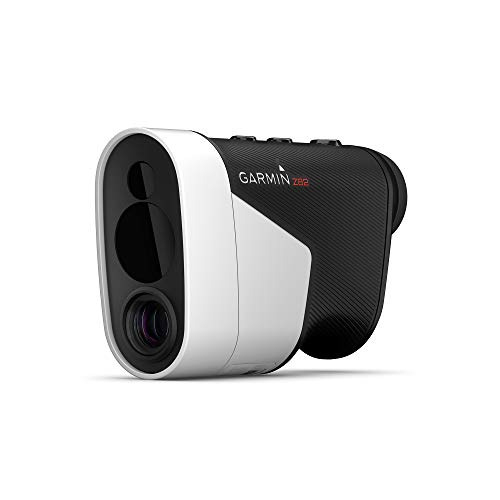
Garmin Approach Z82
Laser distances overlay onto a touchscreen course map covering more than 41,000 preloaded courses, showing hazards and layup distances alongside the flag reading. PinPointer technology highlights the pin location automatically once ranged. A rechargeable battery powers it, unlike the CR2 cells every other model here uses.
Pros
- Combines laser precision with full-color GPS course mapping
- PinPointer marks the flag automatically after ranging
- Preloaded worldwide course database needs no separate app purchase
Cons
- Highest price point of the seven models compared
- Rechargeable battery needs charging rather than a quick cell swap
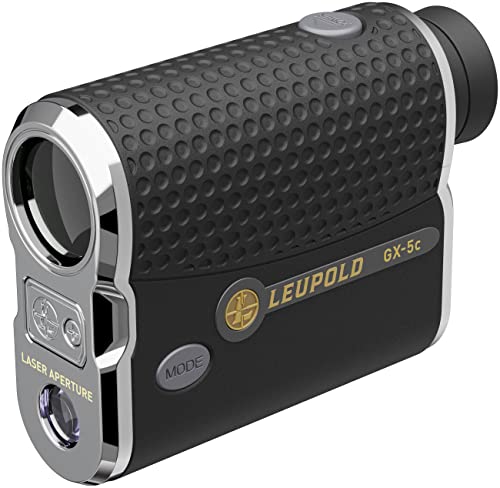
Leupold GX-5i3
PinHunter 3 technology separates the flag from background clutter at long range, a feature low handicap players lean on around tightly guarded greens. A True Golf Range switch flips between slope-adjusted and tournament-legal modes. Leupold’s DNA processing engine lists reflective range beyond 1600 yards.
Pros
- PinHunter 3 isolates the flag against trees and bunkers reliably
- Longest listed flag range among the seven models compared
- True Golf Range switch satisfies tournament rules committees
Cons
- Premium price close to the Garmin Approach Z82
- Menu system takes longer to learn than the Callaway or TecTecTec
Compared at a glance
| # | Model | Max Flag Range | Best for | Score | Price |
|---|---|---|---|---|---|
| 1 | Bushnell Tour V5 Shift | 400+ yards | Best overall | 9.4 | Check price |
| 2 | Precision Pro Golf NX9 Slope | 400 yards | Best value | 9.1 | Check price |
| 3 | TecTecTec VPRO500 | 200 yards consistent lock | Best budget | 8.8 | Check price |
| 4 | Nikon Coolshot 50i | 250 yards consistent lock | Best tournament-legal compact | 8.5 | Check price |
| 5 | Callaway 300 Pro | 300 yards consistent lock | Best for beginners | 8.3 | Check price |
| 6 | Garmin Approach Z82 | 400 yards | Best GPS and laser hybrid | 8.1 | Check price |
| 7 | Leupold GX-5i3 | 450 yards | Best for low handicap and tournament players | 8.0 | Check price |
What matters most
What to Look for Before You Buy Every golf rangefinder measures flag distance with a laser, but effective range, slope adjustment, magnification, and pin-lock confirmation matter most. Reflective range numbers on the box describe hitting a barn wall, not a thin flagstick, so treat the flag-lock distance as the realistic figure. Pin-lock technology, such as Bushnell’s JOLT vibration or Callaway’s PinLock buzz, confirms the laser found the stick instead of the background. Magnification around 6x is the current standard, keeping the flag steady even with an unsteady hand.
Slope Mode vs Tournament Legal Rangefinders Slope function adjusts yardage for elevation change, helping club selection during a casual round, but it breaks USGA and R&A rules once left active in competition. Models like the Nikon Coolshot 50i and TecTecTec VPRO500 skip slope entirely, so there is nothing to forget before a sanctioned round. Others, including the Bushnell Tour V5 Shift, Precision Pro NX9 Slope, Callaway 300 Pro, Garmin Approach Z82, and Leupold GX-5i3, include a physical switch that disables slope for tournament play. Rules officials can disqualify a player for an active slope reading mid-round, so regular competitors should double check the switch before teeing off.
Matching a Rangefinder to Skill Level and Budget Beginners generally benefit more from a clear lock confirmation than from long range, since most approach shots inside 150 yards do not need laser precision at all. Callaway’s 300 Pro double vibration and oversized eyepiece suit that learning curve well. Low handicap players facing tighter pins and longer approach shots get more value from the Leupold GX-5i3’s extended flag range and background rejection. Golfers on a tighter budget can skip slope and vibration extras entirely with the TecTecTec VPRO500 and still get a legal, functional tool.
Low Light Performance and Weatherproofing Dawn tee times and overcast greens push a rangefinder’s optics harder than midday sun, and dim LCD readouts can be hard to read against a gray sky. Water resistance also varies across models here. Nikon’s Coolshot 50i carries an IPX4 rating that shrugs off morning dew and drizzle, while several other models in this comparison list only general water resistance without a formal rating. Early risers and golfers in coastal, rain-prone regions should weigh listed water resistance alongside range and slope features.
Good to know
How does a golf rangefinder measure distance?
It fires a laser pulse at the flag and times the reflection back to the unit, converting that time into yardage. Pin-lock features like JOLT vibration or PinLock buzzing confirm the laser found the stick rather than the background.
What is slope function and is slope legal in tournaments?
Slope adjusts the reading for elevation change between you and the green. It is not legal to use during USGA or R&A sanctioned play, which is why models like the Bushnell Tour V5 Shift and Precision Pro NX9 Slope include a switch to disable it.
Which golf rangefinder is best for beginners?
Callaway’s 300 Pro suits new golfers well, thanks to its double vibration pin confirmation and larger eyepiece that make target acquisition easier than smaller, minimalist models.
Rangefinder vs GPS watch, which is better for golf?
A laser rangefinder gives an exact distance to the specific flag you aim at, while a GPS watch estimates distance to the center of the green from preloaded course maps. The Garmin Approach Z82 combines both functions in one device.
Can you use a rangefinder with slope during tournament play?
No, an active slope reading during a sanctioned round can lead to disqualification. Models with a slope switch, such as the Leupold GX-5i3 or Callaway 300 Pro, must have that feature turned off before competitive rounds.
What magnification do I need in a golf rangefinder?
6x magnification is the current standard across most models in this comparison and is enough to frame a flag clearly at 150 to 250 yards without a shaky, hard-to-hold image.
Is a laser rangefinder worth it for casual golfers?
For golfers who mainly play recreational rounds, a budget model like the TecTecTec VPRO500 still delivers accurate flag distances without paying for slope switches or vibration extras aimed at competitive players.
How accurate are budget rangefinders like the TecTecTec VPRO500?
Owner feedback and the published specifications show consistent flag lock inside 200 yards, which covers the large majority of approach shots most golfers actually face.
Do golf rangefinders need a subscription?
No. Every model compared here works standalone once purchased, though the Garmin Approach Z82 relies on preloaded GPS course maps instead of a laser-only design.
How long does a golf rangefinder battery last?
Most units here run on a single CR2 lithium cell that lasts roughly a season of regular rounds. The Garmin Approach Z82 uses a rechargeable battery instead, rated for about 9 hours of continuous use.
Final word
Bushnell’s Tour V5 Shift earns the top spot here, since its slope switch, JOLT vibration, and 6x optics cover both practice rounds and tournament play in one unit. Golfers who compete often but want to spend less should look at the Precision Pro NX9 Slope for its lifetime battery program. Anyone who wants a no-frills, tournament-legal tool should choose the TecTecTec VPRO500.


