Which Life Jacket Actually Gets Worn on the Water?
Onyx MoveVent Dynamic leads for kayakers and paddlers who need full arm motion alongside Coast Guard Type III buoyancy. Stohlquist Fit suits smaller frames wanting a closer, low-bulk fit. Onyx Belt Pack stays flat until inflated, the top pick for anyone prioritizing minimal bulk over constant flotation.
Onyx MoveVent Dynamic uses cut-away foam panels that keep Coast Guard Type III buoyancy without blocking a paddle stroke. Kayakers and paddleboarders gain the most from that mobility, though the foam runs warmer in direct heat than a mesh vest. Anyone chasing the smallest possible pack size should skip ahead to the Onyx Belt Pack instead.
Foam adds bulk, and cutting that bulk without losing certified flotation is where these seven designs differ most. We compared Coast Guard approval type, foam placement, adjustment range and how each one packs down for storage or travel, weighing owner feedback on fit alongside listed specifications.
What we recommend

Onyx MoveVent Dynamic Life Jacket
Segmented foam panels flex with arm movement, which affects paddle efficiency during kayaking and paddleboarding. US Coast Guard Type III approval covers near-shore recreational use. Riverside and lake paddlers often choose it over bulkier fishing-style vests for all-day comfort.
Pros
- Segmented foam allows a full paddling motion
- Type III approval covers most recreational water use
- Multiple adjustment points fit a range of torso sizes
Cons
- Adds more bulk than inflatable belt packs
- Runs warm in high heat due to foam coverage
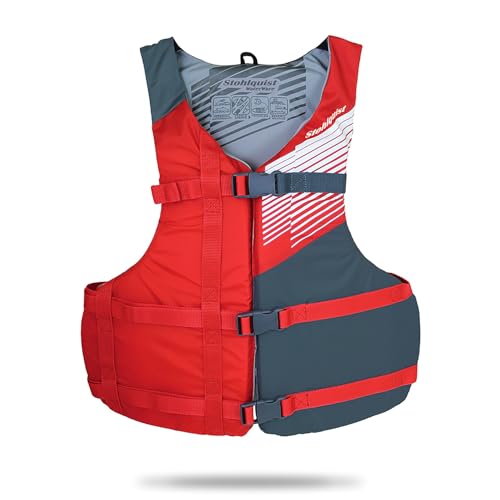
Stohlquist Fit Life Jacket
A shorter torso design and adjustable side panels fit smaller and female-specific body shapes more closely than unisex vests. Front zip closure paired with side straps stops the jacket from riding up while paddling. Narrower-shouldered owners report it stays in place better than looser alternatives.
Pros
- Shorter torso design suits smaller frames
- Side straps prevent riding up during use
- Front zip adds quick on-and-off convenience
Cons
- Sizing runs smaller than standard unisex vests
- Carries less foam coverage than heavier-duty vests

Onyx Belt Pack Inflatable Life Jacket
Worn as a slim belt until a manual pull inflates it, this design adds almost no visible bulk while paddling or standing on a board. Coast Guard Type V approval applies only when worn and activated correctly. Stand-up paddleboarders favor it since it stays out of the way during balance-dependent moves.
Pros
- Nearly invisible bulk when not inflated
- Comfortable enough for all-day wear
- Rearmable after use with a replacement cartridge
Cons
- Needs manual activation, not automatic
- Not rated for whitewater or rough water

O’Neill Superlite USCG Life Vest
Mesh side panels improve airflow compared with solid foam vests, useful across long, hot days on the water. Coast Guard Type III approval covers general recreational boating and paddling. Wakeboarders and other towed-sport riders favor its lighter, more athletic cut.
Pros
- Mesh panels improve airflow in hot weather
- Athletic cut suits towed watersports
- Lighter overall build than foam-heavy vests
Cons
- Less foam coverage than paddling-specific designs
- Mesh wears faster than solid foam over years

Full Throttle Rapid-Dry Life Jacket
Rapid-Dry fabric sheds water faster than standard nylon covers, useful during repeated entries and exits in one outing. Type III approval covers general recreational use. Owners taking frequent swim breaks avoid sitting in a soaked vest between dips.
Pros
- Fast-drying fabric suits repeated water entry
- Adjustable at shoulder and side for a secure fit
- Reasonable buoyancy for general recreational use
Cons
- Bulkier profile than paddling-specific vests
- Less breathable than mesh-panel designs in direct sun

MTI Adventurewear Life Jacket
Front pockets hold small tackle, a phone or a whistle, useful for anglers who want gear access without a separate bag. Type III approval covers recreational fishing and general boating. Kayak anglers often name the pocket storage as the deciding factor over plainer vests.
Pros
- Front pockets add practical gear storage
- Solid buoyancy for general fishing and boating
- Adjustable fit works across moderate size ranges
Cons
- Pockets add bulk versus minimalist paddling vests
- Not built for high-mobility whitewater paddling

Airhead Livery Life Vest
A simple, no-frills build resembles rental-fleet vests, aimed at basic coverage rather than sport-specific features. Type III approval covers standard recreational water activities. Families needing several affordable vests for guests favor its low per-unit cost.
Pros
- Lower cost makes buying several practical
- Simple design needs no special care
- Adequate buoyancy for casual recreational use
Cons
- Less comfortable for all-day wear than sport vests
- Fewer adjustment points than premium designs
What matters most
What Coast Guard approval types mean for portability Type III vests, the most common design here, suit calm to moderate water and general recreational use. Type V inflatable belt packs, like the Onyx Belt Pack, only count as approved flotation when worn and activated correctly. Checking for a real approval type matters more than assuming any vest-shaped product qualifies. Labels list the type directly on an inside tag.
Foam vests vs inflatable belt packs Foam vests provide constant flotation with no action required, which matters if someone ends up unconscious in the water. Inflatable belt packs pack far smaller but need a manual pull before they work. Whitewater paddling and other higher-impact situations favor foam over inflatables for that reason. Calm lakes and slow rivers carry lower stakes if inflation gets delayed.
Which life jacket fits your water activity Kayaking and canoeing benefit from cut-away foam designs, like the Onyx MoveVent, that allow a full paddle stroke. Towed sports such as wakeboarding favor an athletic cut, as seen on the O’Neill Superlite. Fishing trips often gain more from pocket storage, found on the MTI Adventurewear, than from a minimal profile. Casual family outings rarely need any of these specialized features.
Getting a secure, correct fit A properly fitted vest should not ride up when someone raises both arms overhead, a check worth doing before any trip. Side and shoulder straps together, as on the Full Throttle Rapid-Dry, generally secure better than side straps alone. Smaller frames often fit better in a vest cut shorter through the torso, like the Stohlquist Fit, than in a standard unisex size. Loose straps mean the size is wrong, not that the vest is defective.
Compared at a glance
| # | Model | Coast Guard approval | Best for | Score | Price |
|---|---|---|---|---|---|
| 1 | Onyx MoveVent Dynamic Life Jacket | Type III | Best overall | 9.3 | Check price |
| 2 | Stohlquist Fit Life Jacket | Type III | Best for smaller frames | 9.0 | Check price |
| 3 | Onyx Belt Pack Inflatable Life Jacket | Type V, must be worn and activated | Best for minimal bulk | 8.7 | Check price |
| 4 | O’Neill Superlite USCG Life Vest | Type III | Best for warm weather comfort | 8.5 | Check price |
| 5 | Full Throttle Rapid-Dry Life Jacket | Type III | Best for quick drying | 8.3 | Check price |
| 6 | MTI Adventurewear Life Jacket | Type III | Best for fishing and multi-use | 8.1 | Check price |
| 7 | Airhead Livery Life Vest | Type III | Best budget | 8.0 | Check price |
Good to know
What is the most portable type of life jacket?
Inflatable belt packs like the Onyx Belt Pack are the most compact, worn flat until manually inflated. Among constant-flotation designs, foam vests with cut-away panels, like the Onyx MoveVent, pack the smallest. Whether constant flotation or minimal bulk matters more depends on the activity.
Are inflatable life jackets as safe as foam ones?
They carry approval for specific activities, but they need a manual pull to inflate, unlike foam that floats automatically. Someone unconscious or unable to activate the cartridge faces more risk with an inflatable. Foam vests stay the safer default in higher-risk water conditions.
How do you know if a life jacket fits correctly?
Fasten every strap, then have someone pull up on the shoulders. A correctly fitted vest should not ride up over the chin or ears. A vest that rides up needs a smaller size or tighter adjustment.
Can you wear a portable life jacket while kayaking all day comfortably?
Yes, paddling-specific designs like the Onyx MoveVent and Stohlquist Fit are built for extended wear, with cut-away panels that allow a full stroke. Standard fishing or general boating vests can feel more restrictive over many hours. Comfort during long wear is what separates sport-specific vests from basic models.
Do children need a different type of portable life jacket?
Yes, children need vests sized for their weight range rather than a scaled-down adult design. Coast Guard approval for children’s vests follows separate weight-based categories. Checking the weight range on the label matters more than guessing by age.
Is a Type III life jacket enough for open water?
Type III covers calm to moderate inland and near-shore water, not open ocean or extreme conditions. Offshore or rough-water activities usually call for a higher-rated flotation design built for those conditions. Matching the approval type to the actual water you paddle keeps the choice simple.
How often should a life jacket be replaced?
Foam vests need replacing once the foam feels compressed, cracked or waterlogged, since that reduces buoyancy. Inflatable models need a new cartridge after every activation, plus a periodic check of the inflation mechanism. Most manufacturers recommend reviewing condition each season instead of waiting for visible damage.
Can a portable life jacket work for swimming and casual water play?
Yes, general recreational vests like the Airhead Livery or Full Throttle Rapid-Dry handle casual swimming and family outings fine. Sport-specific paddling vests work too, but they add features a casual swimmer doesn’t need. A basic Type III vest covers most casual water play.
What is the difference between a life vest and a life jacket?
The terms get used interchangeably across most Coast Guard-approved recreational gear, including everything compared here. Some brands reserve vest for lower-profile designs and jacket for bulkier foam builds, but no official distinction separates them. Checking the approval type matters more than which word appears on the label.
Final word
Paddlers who want certified flotation without sacrificing mobility should choose the Onyx MoveVent Dynamic, since its cut-away foam supports a full paddle stroke. Smaller-framed paddlers are better served by the Stohlquist Fit, thanks to its closer, more secure fit through the torso. Anyone prioritizing minimal bulk above all else can consider the Onyx Belt Pack, but only on calm water where manual inflation carries less risk.


