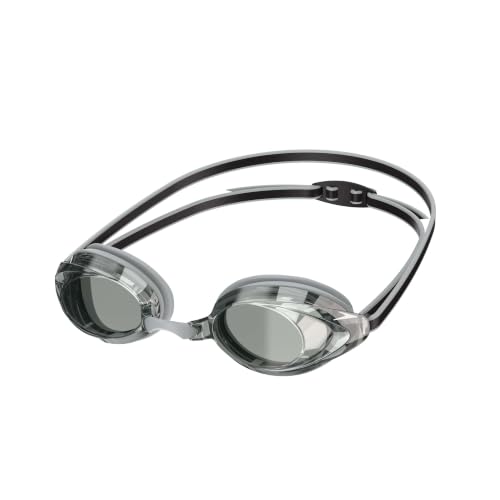
Ski Goggles Built to Survive a Packed Suitcase
OutdoorMaster’s Pro Ski Goggles pack the flattest thanks to a slim magnetic lens system. Zionor’s Lagopus goggles offer the best value for occasional travelers. Skiers who wear prescription glasses should choose the Bolle React OTG for its over-glasses fit and extended foam gasket.
OutdoorMaster’s Pro Ski Goggles pack the flattest of this group. A magnetic lens system lets the frame compress slightly in a case without cracking. Zionor’s Lagopus works well for occasional travelers on a budget, and glasses wearers should look at the Bolle React OTG instead.
Goggles that fit fine in a gear bag at home can crack in an overhead bin. We compared case type, lens swap design, and frame flexibility across seven current listings, weighing travel durability alongside owner feedback rather than price alone.
How to choose
Fixed lens or interchangeable lens for a ski trip A single fixed lens keeps a goggle lighter and simpler to pack. That works fine for trips with predictable weather. Magnetic or tool-free swap systems, like OutdoorMaster’s or Smith’s, add versatility for days that swap between sun and flat light. The tradeoff is packing a spare lens too.
How case type affects survival in a packed bag Hard cases, like Anon’s M4, protect goggles best against a crushed backpack. That protection adds bulk and weight. Soft pouches pack flatter and suit skiers who carry goggles in a jacket pocket rather than checked luggage. Semi-rigid cases split the difference for most travelers.
What to look for in OTG goggles for glasses wearers Thicker glasses frames need a deep-fit goggle with an extended foam gasket, like Bolle’s React OTG. Standard OTG frames fit slimmer glasses without pinching the temples. Skiers with wide or wraparound glasses should try a goggle on before packing, since fit varies by frame width.
Do photochromic lenses save space in a travel bag A self-adjusting lens, like Julbo’s Aerospace, removes the need to carry a second tinted lens. That matters most on multi-day trips packed into one small bag. Photochromic lenses cost more upfront than a basic fixed lens, but they cut overall pack weight.
The best picks, ranked

OutdoorMaster Pro Ski Goggles
Magnets release the lens in seconds, so the frame and lens pack separately for a slimmer case. A semi-rigid case adds shock protection during transit. Owners report the flexible TPU frame bends without cracking inside a packed bag.
Pros
- Magnetic lens detaches for slimmer packing
- Flexible TPU frame resists cracking under pressure
- OTG fit works over most glasses
Cons
- Magnetic mount can loosen after repeated swaps
- Semi-rigid case does not fully block crush damage
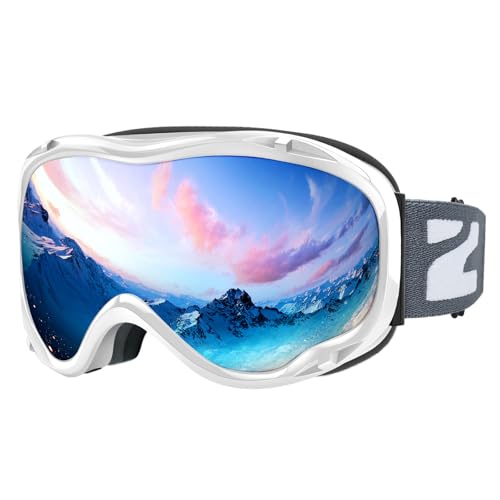
Zionor Lagopus Ski Goggles
A soft microfiber pouch replaces the hard case, keeping the packed footprint small enough for a carry-on side pocket. Zionor skips swap hardware entirely with a single fixed lens, which lowers cost. One tint has to cover every light condition on the mountain.
Pros
- Soft pouch packs smaller than rigid cases
- Lower cost than lens-swap competitors
- Wide-view lens improves peripheral vision
Cons
- No interchangeable lens for shifting light
- Soft pouch gives less impact protection

Bolle React OTG Ski Goggles
Bolle extended the frame depth so it clears prescription glasses without pinching the temples. A foam gasket compresses evenly around glasses frames for a sealed fit. The included case uses a firmer shell than most soft pouches in this group.
Pros
- Deep frame clears glasses without pinching
- Firmer case protects better than soft pouches
- Foam gasket seals against cold drafts
Cons
- Bulkier profile than slimmer OTG models
- Single lens limits light-condition versatility

Smith Squad Ski Goggles
A tool-free release built into the frame swaps lenses faster than magnets that can misalign under pressure. Smith ships this goggle with a microfiber bag instead of a hard case. Travelers wanting more crush protection may need to add their own case.
Pros
- Tool-free lens swap skips magnets entirely
- Wide lens coverage aids peripheral vision
- Lighter frame than deep-fit OTG models
Cons
- Soft bag offers minimal crush protection
- Mechanical release adds moving parts to fail

Anon M4 Toric Ski Goggles
Anon pairs a magnetic lens system with an optional magnetic facemask, useful for skiers who also want cold-weather face coverage. The toric lens shape reduces distortion at the edges. Its rigid hard case trades pack size for stronger crush resistance than the softer cases here.
Pros
- Compatible with magnetic facemask attachments
- Rigid case gives strong crush protection
- Toric lens shape cuts edge distortion
Cons
- Hard case takes up more luggage space
- Costs more than single-lens alternatives
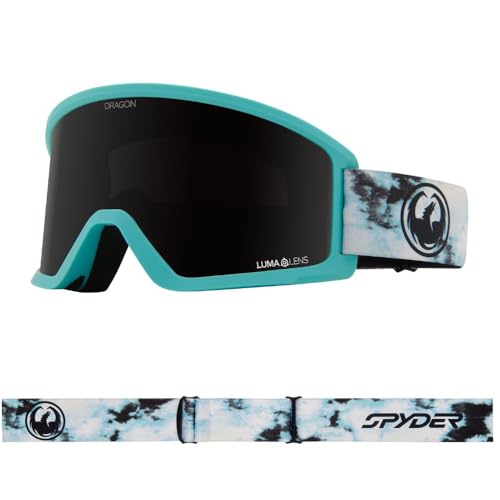
Dragon Alliance DX3 OTG Ski Goggles
Dragon widened the lens shape on the DX3 for a broader field of view. It still fits over most glasses frames without extra bulk. A soft drawstring bag keeps the whole kit light enough to stuff into a jacket pocket between runs.
Pros
- Wide lens improves peripheral field of view
- Drawstring bag packs lighter than hard cases
- Comfortable fit over most glasses styles
Cons
- No lens swap for changing light conditions
- Drawstring bag offers little impact protection

Julbo Aerospace Ski Goggles
Julbo’s photochromic lens darkens or lightens automatically as conditions shift on the mountain. That removes the need to pack a second lens for a multi-day trip. Venting channels cut fogging, though the included pouch offers only basic protection.
Pros
- Photochromic lens adapts to changing light
- Venting channels reduce lens fogging
- Skips packing a second lens for the trip
Cons
- Frame is not built to fit over glasses
- Soft pouch offers less crush protection
The lineup, side by side
| # | Model | Lens system | Best for | Score | Price |
|---|---|---|---|---|---|
| 1 | OutdoorMaster Pro Ski Goggles | Magnetic quick-swap | Best overall | 9.2 | Check price |
| 2 | Zionor Lagopus Ski Goggles | Fixed single lens | Best value | 9.0 | Check price |
| 3 | Bolle React OTG Ski Goggles | Fixed single lens | Best for glasses wearers | 8.8 | Check price |
| 4 | Smith Squad Ski Goggles | Tool-free mechanical swap | Best for interchangeable lenses | 8.6 | Check price |
| 5 | Anon M4 Toric Ski Goggles | Magnetic quick-swap | Best for frequent travelers | 8.4 | Check price |
| 6 | Dragon Alliance DX3 OTG Ski Goggles | Fixed single lens | Best for wide OTG vision | 8.2 | Check price |
| 7 | Julbo Aerospace Ski Goggles | Photochromic, self-adjusting | Best photochromic lens for travel | 8.0 | Check price |
Questions worth asking
What makes ski goggles good for travel?
A slim case, a flexible frame, and a lens system that survives light pressure all matter. Fixed lenses skip swap hardware and stay simple. Tool-free or magnetic swaps add versatility without needing extra tools.
Can ski goggles get crushed in a suitcase?
Yes, especially rigid frames packed without a case. A semi-rigid or hard case, like those bundled with OutdoorMaster or Anon, cuts that risk substantially.
Do OTG ski goggles fit over any glasses?
Most OTG goggles fit standard to medium glasses frames. Thicker or wider frames often need a deep-fit design, like Bolle’s React OTG, for a comfortable seal.
Are magnetic lens ski goggles reliable long term?
Based on manufacturer specifications, yes, though magnets can weaken slightly after years of repeated swaps. A snug case still matters so the lens does not pop loose in transit.
How should I pack ski goggles in a carry-on?
Store the goggle in its included case with the lens facing up. Avoid stacking heavy items on top of it. A padded section of the bag works better than a loose side pocket.
What is a photochromic ski goggle lens?
It is a lens that automatically darkens or lightens as ambient light shifts. One lens then covers sunny, overcast, and flat-light runs without a swap.
Which is better for a ski trip, single lens or interchangeable lens goggles?
Single lens goggles pack lighter for predictable weather. Interchangeable systems suit longer trips that cross sunny and overcast days, at the cost of carrying a spare lens.
Do budget ski goggles work as well as premium brands for travel?
Budget options like Zionor’s Lagopus cover the basics well for occasional skiers. Premium frames tend to use tougher materials and better anti-fog coatings for frequent use.
OutdoorMaster Pro versus Zionor Lagopus, which travels better?
OutdoorMaster’s magnetic lens system packs the flatter case of the two. Zionor’s fixed lens costs less and still handles occasional trips fine.
Our pick
OutdoorMaster’s Pro Ski Goggles earn the top spot because the magnetic lens and flexible frame survive packing pressure better than rigid alternatives. Occasional travelers who want to save money should pick the Zionor Lagopus instead. Anyone wearing prescription glasses under their goggles should choose the Bolle React OTG for its deeper fit.