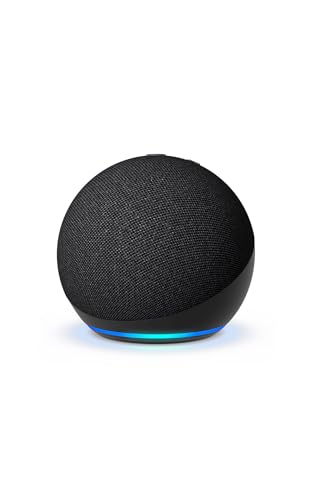
Portable Smart Speaker Batteries Compared for Runtime and Fit
Based on specifications and owner feedback, the GGMM Battery Base for Amazon Echo Dot delivers the strongest overall mix of capacity and build quality. The VOTMELL base matches much of that runtime for less money. The Ohuhu base covers light, occasional cordless use on a tighter budget.
Reach for the GGMM Battery Base for Amazon Echo Dot when overall capacity and build quality matter most. Budget conscious households do nearly as well with the VOTMELL base, while the Ohuhu base suits occasional cordless use without much outlay.
Compatibility narrows quickly here, since most bases fit only one speaker generation while capacity claims vary widely between brands. Picks below came from comparing listed capacity, charging standards and device compatibility, alongside patterns in owner feedback across travel, everyday and extended runtime use.
Our top picks
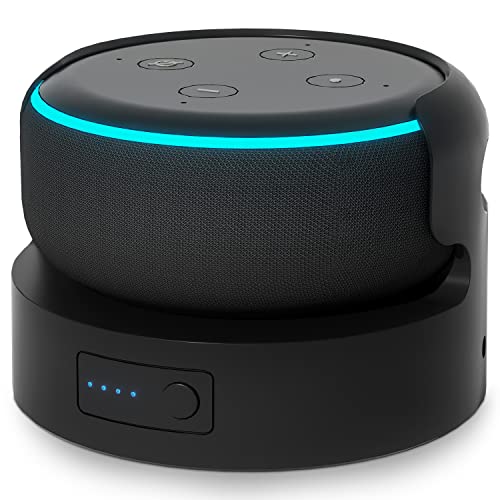
GGMM Battery Base for Amazon Echo Dot (3rd Gen)
A 5200mAh cell slides beneath the Echo Dot 3rd Generation and lines up its power pins automatically. A small LED shows remaining charge without opening the Alexa app. Pass through charging keeps the speaker running while the base itself recharges.
Pros
- Long runtime relative to its size
- LED indicator shows charge level at a glance
- Solid, wobble free fit under the Dot
Cons
- Fits only the 3rd Generation Echo Dot
- No carrying handle included
VOTMELL Battery Base for Amazon Echo Dot (3rd Gen)
A 5000mAh cell pairs with a textured, non slip underside that keeps the speaker steady on smooth countertops. Rubber feet cut vibration during louder playback. Setup only requires seating the Dot into the molded cradle.
Pros
- Lower cost than comparable capacity bases
- Non slip rubber feet add stability
- Simple, tool free setup
Cons
- Micro-USB charges slower than USB-C
- No battery level indicator
Ohuhu Battery Base for Amazon Echo Dot (3rd Gen)
A lightweight plastic shell wraps a 4500mAh cell built for occasional cordless use rather than all day runtime. Its lower weight keeps desk footprint down compared to metal reinforced rivals. A single color LED confirms charging status without extra detail.
Pros
- Most affordable option in this comparison
- Lightweight for easy repositioning
- Straightforward one step setup
Cons
- Shorter runtime than higher capacity bases
- Plastic housing feels less rigid than reinforced models

GGMM D6 Battery Base for Google Home Mini and Nest Mini
Built specifically for Google’s compact speakers, this base runs a 5200mAh cell inside a fabric wrapped ring matching the Home Mini and Nest Mini design. USB-C input recharges faster than older Micro-USB bases. A recessed cutout keeps the speaker centered during use.
Pros
- Fabric finish matches Nest Mini design
- USB-C input charges faster than Micro-USB
- Long runtime for a compact base
Cons
- Not compatible with any Amazon Echo device
- Costs more than basic Nest Mini bases
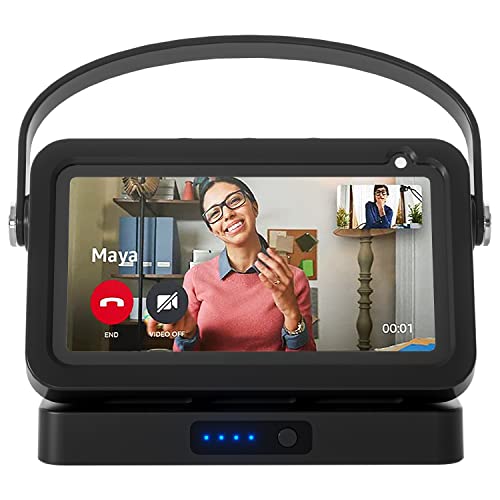
Wasserstein Battery Base for Amazon Echo Show 5 (2nd Gen)
A 5200mAh cell sized for the extra power an Echo Show 5 display draws sits inside this base. A molded handle lets the whole screen move between rooms without unplugging anything. An angled cradle keeps the display tilted for comfortable viewing.
Pros
- Built in handle simplifies carrying the display
- Angled cradle preserves the screen viewing angle
- Cell sized for the Show’s higher power draw
Cons
- Heavier overall than Dot sized bases
- Limited to the Echo Show 5 2nd Generation
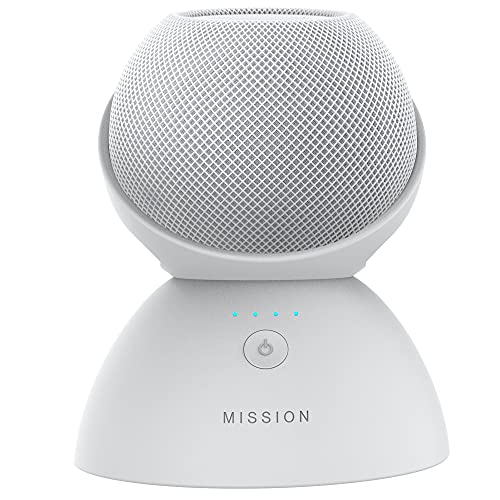
Mission Cables Battery Base for Google Home Mini
A slim 5200mAh base barely changes the Google Home Mini’s original footprint, so it slides into a bag pocket easily. A rubberized underside grips patio tables and countertops during outdoor listening. Micro-USB charging keeps the overall design simple.
Pros
- Compact size suits travel bags
- Rubberized base grips outdoor surfaces
- Keeps the speaker’s original footprint
Cons
- Micro-USB charges slower than newer USB-C bases
- Built for the original Home Mini only

COOLEAD Rechargeable Battery Base for Amazon Echo Dot
A 6000mAh cell gives this base the largest capacity in the comparison, stretching playback well past a single charge cycle. A secondary USB pass through port doubles it as a small power bank for other devices. USB-C input speeds up recharging when the base itself runs low.
Pros
- Largest battery capacity in this comparison
- Pass through USB port charges other devices
- Fast USB-C recharging
Cons
- Bulkier footprint than smaller capacity bases
- Full recharge takes longer given the larger cell
What matters most
What does a smart speaker battery base actually do? A battery base is a charging cradle that slides underneath an Echo Dot, Echo Show or Nest Mini and supplies power from an internal cell instead of a wall outlet. Capacities in this comparison range from roughly 4000mAh to 6000mAh, enough for several hours away from a plug. Speakers sit in a molded cutout that lines up their charging pins with contacts on the base. Once drained, the base itself recharges separately through its own USB-C or Micro-USB port.
Is a battery base better than a generic power bank? Generic power banks connect by cable and sit apart from the speaker, which works but leaves cords exposed and adds bulk. A purpose built base integrates directly underneath, keeping the footprint close to the speaker’s original size. Compatibility differs too, since a base is molded for one specific device while a power bank works with almost anything accepting USB input. Runtime on a base is fixed by its built in cell, while a power bank can simply be swapped for a larger one.
How do you match a battery base to your exact speaker? Echo Dot 3rd Generation bases, including the GGMM and VOTMELL models, are molded around that speaker’s rounded shape and will not fit a 4th or 5th Generation Dot. Google Home Mini and Nest Mini share a nearly identical footprint, which is why bases like the GGMM D6 list both as compatible. Echo Show devices draw more power for their screens, so a base built for the Show, like the Wasserstein model, typically carries a larger cell than a Dot base. Checking the exact generation printed on a speaker’s underside before buying prevents a base that looks right but does not seat correctly.
Which battery base suits travel, outdoor use or extended runtime? Frequent travelers benefit from a compact, lighter base like the Mission Cables model, which adds less bulk to a bag than higher capacity options. Outdoor gatherings favor a bigger cell, since speakers often run for hours with no outlet nearby. USB-C charging, found on newer bases like the GGMM and COOLEAD models, recharges faster than the Micro-USB ports still used on some budget designs. Runtime chasers should prioritize capacity over compact size, since the two usually trade off against each other.
How they compare
| # | Model | Capacity | Best for | Score | Price |
|---|---|---|---|---|---|
| 1 | GGMM Battery Base for Amazon Echo Dot (3rd Gen) | 5200mAh | Best overall | 9.4 | Check price |
| 2 | VOTMELL Battery Base for Amazon Echo Dot (3rd Gen) | 5000mAh | Best value | 9.1 | Check price |
| 3 | Ohuhu Battery Base for Amazon Echo Dot (3rd Gen) | 4500mAh | Best budget | 8.8 | Check price |
| 4 | GGMM D6 Battery Base for Google Home Mini and Nest Mini | 5200mAh | Best for Google Nest Mini | 8.6 | Check price |
| 5 | Wasserstein Battery Base for Amazon Echo Show 5 (2nd Gen) | 5200mAh | Best for Echo Show | 8.4 | Check price |
| 6 | Mission Cables Battery Base for Google Home Mini | 5200mAh | Best for travel and outdoor use | 8.2 | Check price |
| 7 | COOLEAD Rechargeable Battery Base for Amazon Echo Dot | 6000mAh | Best for extended runtime | 8.0 | Check price |
Questions worth asking
What does a battery base do for a smart speaker?
It swaps the wall adapter for a rechargeable internal cell, letting an Echo Dot, Echo Show or Nest Mini keep playing music and responding to commands away from an outlet.
Can an Amazon Echo Dot run on battery power without a wall outlet?
Yes, once it sits in a compatible base such as the GGMM or VOTMELL model, an Echo Dot can run for several hours before the base needs recharging.
How long does a smart speaker battery base last on one charge?
Runtime varies with capacity, and most bases in this comparison rate between roughly 7 and 12 hours of typical playback before the base itself needs a recharge.
Is a battery base or a power bank better for a smart speaker?
A battery base fits directly under the speaker and hides the connection, while a power bank works with more devices but leaves a visible cable running to the speaker.
Does a battery base work with Google Nest Mini and Home Mini?
Some, including the GGMM D6 and Mission Cables bases, list both Google Home Mini and Nest Mini as compatible, though confirming the exact generation first is worth doing.
Can an Echo Show run on a battery base with the screen on?
Yes, bases built for the Echo Show, like the Wasserstein model for the Echo Show 5 2nd Generation, use a larger cell to cover the extra power the display draws.
How do you charge a smart speaker battery base?
Most current bases charge through USB-C, though some budget and older models still use Micro-USB, and the base recharges separately from the speaker sitting on it.
Is a battery base worth buying for travel?
For anyone who regularly moves a speaker between rooms or takes short trips, a lightweight base like the Mission Cables model removes the need to hunt for an outlet.
The bottom line
Most households land on the best mix of capacity and fit with a dedicated base like the GGMM model matched to their exact Echo Dot or Nest Mini generation. Travelers and outdoor setups do better with a lighter, compact option such as the Mission Cables base, while extended runtime favors a higher capacity pick like the COOLEAD base. Checking the exact speaker generation before buying remains the single biggest factor in getting a proper fit.