Smart Plant Sensors Compared for Indoor and Outdoor Growing
RAINPOINT’s Smart Digital Wireless Plant Moisture Meter leads for real-time WiFi alerts once paired with its hub. ECOWITT’s WH51 Soil Moisture Sensor delivers the strongest value for multi-zone gardens on a single gateway. iLight’s Smart Plant Soil Moisture Meter suits a first Bluetooth sensor at low cost.
Soil sensors split into three connectivity types today: WiFi hub kits, Zigbee smart home add-ons, and standalone Bluetooth stakes. Each fits a different setup, so the right pick depends on plant count and whether a hub already runs at home.
Specs alone rarely tell the full story, since a sensor built for a weather console behaves nothing like a sprinkler bypass switch. We compared listed specifications, owner feedback on Amazon, and fit for specific cases like multi-zone gardens, single houseplants, and lawn irrigation.
What we recommend

RAINPOINT Smart Digital Wireless Plant Moisture Meter
A capacitive probe pairs with a RainPoint WiFi hub, sold separately, to push readings into the RainPoint Home app. Once connected, it samples soil automatically every three minutes. Press the button on its LCD for an instant reading without the app, rated accurate to within five percent.
Pros
- Works standalone via LCD or remotely through the app
- Samples soil automatically every three minutes once paired
- Can trigger a RainPoint water timer for hands-off watering
Cons
- Remote app alerts require buying the WiFi hub separately
- Only supports 2.4GHz WiFi, not 5GHz networks

ECOWITT WH51 Soil Moisture Sensor
An Ecowitt GW1100 or GW1200 gateway links to this probe over 915 MHz, and a single gateway handles up to eight sensors across a yard. Moisture data arrives within about 72 seconds of full insertion. Readings appear on separate labeled channels inside the Ecowitt app or WS View Plus software.
Pros
- Scales to eight zones on one gateway for whole-yard coverage
- Reaches farther than Bluetooth-only stakes thanks to 915 MHz radio
- Logs and exports data for tracking soil trends over a season
Cons
- Shows nothing on its own without a separate gateway
- Takes more setup steps than a plug-and-play Bluetooth stake

iLight Smart Plant Soil Moisture Meter
Bluetooth links this stake straight to the iLight app for a one-button moisture reading. Its listing cites lab-calibrated sensing and roughly six months of battery life per cycle. A built-in plant library covers care notes for more than a thousand species.
Pros
- Costs less than most hub-based sensors on this list
- Delivers a one-button reading with nothing to configure
- Weatherproof enough to survive outdoor pots
Cons
- Loses remote access once your phone leaves Bluetooth range
- App history covers only about a week, per owner reports
THIRDREALITY Smart Soil Moisture Sensor
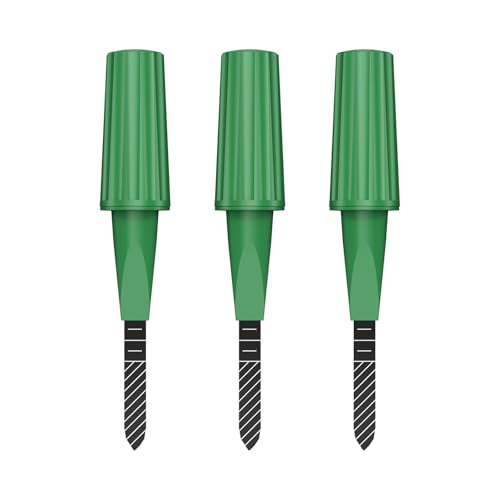
Zigbee radio, not Bluetooth or WiFi, drives this sensor, so it needs a hub such as SmartThings, Hubitat, Home Assistant, or Homey. Its capacitive probe tracks soil moisture alongside soil temperature. Reliability tends to climb as more Zigbee devices join the same mesh network.
Pros
- Slots directly into an existing Zigbee smart home setup
- Capacitive probe resists the drift common on resistive designs
- Sold in multi-packs for monitoring several plants at once
Cons
- Does nothing without a Zigbee hub already installed
- Skips a standalone display, readings live only in the hub app
Ambient Weather WH31SM Soil Moisture Sensor
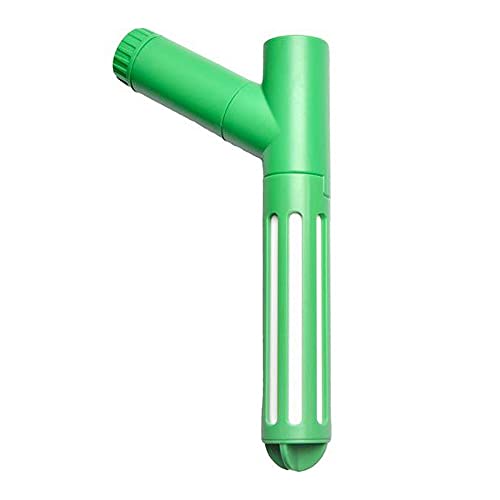
Ambient Weather’s WS-2000, WS-4000, WS-5000, and WS-1965 consoles pair with this IP66 sensor through a ceramic cap that lets moisture reach the internal probe. It transmits over 915 MHz roughly every 71 seconds. One console can track up to eight of these sensors on separate channels, and it ships as a two-pack.
Pros
- Fits directly into an existing Ambient Weather console setup
- IP66 housing withstands repeated outdoor watering cycles
- Feeds the same AmbientWeather.net dashboard as other sensors
Cons
- Needs an Ambient Weather console, purchased separately
- Overkill for a household with only one or two houseplants

WANFEI Soil Test Kit Plants Monitor
One stake reads soil moisture, light intensity, fertility, and temperature in a single pass, then sends results over Bluetooth to a companion app. A coin-cell battery powers it, with no hub or gateway needed. Growers wanting more than a moisture number get a fuller health picture here.
Pros
- Tracks four plant health metrics instead of moisture alone
- Skips the extra hub purchase other systems require
- Small stake design fits into decorative pots easily
Cons
- Bluetooth range keeps readings limited to near the plant
- Fertility numbers are relative estimates, not lab-grade soil tests

Rain Bird SMRT-Y Soil Moisture Sensor Kit
Wiring, not an app, connects this kit to an existing irrigation timer. A buried probe measures soil moisture and interrupts the sprinkler cycle once the ground holds enough water. Lawns and garden beds on automatic systems benefit most, rather than individual houseplants.
Pros
- Cuts unnecessary watering cycles with zero app setup
- Works with most existing sprinkler timer brands
- Buried probe withstands continuous underground exposure
Cons
- Skips an app, so nothing shows up on a phone
- Poor fit for single potted houseplants indoors
Before you buy
How do smart plant sensors actually work? A probe goes into the soil and measures moisture through capacitive or resistive sensing. That reading then travels over Bluetooth, WiFi, or Zigbee to a phone, hub, or console. Capacitive designs resist corrosion better, since no current passes directly through the soil. Some models add light, temperature, or fertility data on top of moisture, while others track moisture alone and lean on a paired app for history.
WiFi hub vs Zigbee vs Bluetooth: which connectivity fits your setup? WiFi hub systems like RAINPOINT and Ecowitt send data to an app from anywhere with internet, but a separate gateway must be bought first. Zigbee sensors such as THIRDREALITY only make sense when a hub like SmartThings or Home Assistant already runs at home. Bluetooth stakes skip the hub entirely and pair straight with a phone. Setup stays simple, though monitoring only works within range of the plant.
Best smart plant sensor for multiple garden zones vs a few houseplants Several raised beds or a large yard call for gateway-based coverage, since one Ecowitt GW1100 or Ambient Weather console manages up to eight sensors on separate channels. Two or three windowsill plants rarely need that scale. A single Bluetooth stake like the iLight meter, or a 4-in-1 tracker like the WANFEI kit, covers that case without extra hardware.
Which sensor fits sprinkler systems and weather stations? Homes already running an automatic sprinkler timer fit the Rain Bird SMRT-Y kit, built to skip watering cycles after rain. An existing Ambient Weather console gets the most value from the WH31SM sensor, since it slots directly into channels the console already supports. Neither choice suits a single desk plant, where a basic Bluetooth stake remains simpler.
How they stack up
| # | Model | Connectivity | Best for | Score | Price |
|---|---|---|---|---|---|
| 1 | RAINPOINT Smart Digital Wireless Plant Moisture Meter | WiFi via RainPoint Hub HWG023/HWG040 | Best overall | 9.4 | Check price |
| 2 | ECOWITT WH51 Soil Moisture Sensor | 915 MHz, up to 8 sensors per gateway | Best value | 9.1 | Check price |
| 3 | iLight Smart Plant Soil Moisture Meter | Bluetooth, phone-range only | Best budget | 8.8 | Check price |
| 4 | THIRDREALITY Smart Soil Moisture Sensor | Zigbee, hub required | Best for Zigbee smart home hubs | 8.5 | Check price |
| 5 | Ambient Weather WH31SM Soil Moisture Sensor | 915 MHz, up to 300 ft line of sight | Best for weather station integration | 8.3 | Check price |
| 6 | WANFEI Soil Test Kit Plants Monitor | Moisture, light, fertility, temperature | Best for multi-parameter plant health tracking | 8.1 | Check price |
| 7 | Rain Bird SMRT-Y Soil Moisture Sensor Kit | Wired bypass, no app or Bluetooth | Best for automatic sprinkler shutoff | 8.0 | Check price |
Frequently asked questions
What can a smart plant sensor track besides moisture?
Soil moisture forms the core reading on nearly every model. Many also add soil temperature, light intensity, and a fertility or conductivity estimate. A capacitive or resistive probe sits a few inches into the soil near the root zone to collect that data.
Do smart soil sensors need WiFi to work?
Not always. Bluetooth stakes like the iLight meter or WANFEI kit pair directly with a phone, no WiFi required. RAINPOINT and Ecowitt need a separate gateway for remote app access, while Zigbee sensors rely on a compatible smart home hub instead.
Bluetooth vs WiFi plant sensors: which is better for a garden?
Bluetooth sensors cost less and set up faster, but only report readings when a phone sits nearby. WiFi hub systems cost more upfront because of the gateway, yet let owners check moisture from anywhere and get alerts before a plant dries out.
Can one hub run multiple soil moisture sensors at once?
Yes. An Ecowitt GW1100 gateway supports up to eight WH51 sensors. An Ambient Weather console such as the WS-2000 or WS-5000 manages up to eight WH31SM sensors on separate channels, useful for gardens with several beds.
Are smart plant sensors accurate across different soil types?
Capacitive probes generally hold accuracy better across soil types than older resistive designs, since salinity and mineral content affect them less. Figures like the RAINPOINT meter’s five percent rating come from manufacturer specifications, not independent lab testing on every soil type.
What is the best smart plant sensor for a vegetable garden?
A gateway-based system such as the ECOWITT WH51 or Ambient Weather WH31SM suits a multi-bed vegetable garden better than a single Bluetooth stake. One gateway covers up to eight zones with individually labeled channels.
Does a smart soil sensor work with an existing sprinkler system?
The Rain Bird SMRT-Y kit is built for exactly that. It splices into an existing 24VAC irrigation timer and interrupts the watering cycle once its buried probe detects enough soil moisture, with no app involved.
How long do plant sensor batteries typically last?
Battery life depends on connectivity type. The iLight meter’s listing cites roughly six months per cycle. Coin-cell Zigbee and Bluetooth sensors often run several months on one CR2032-style cell, while gateway-based sensors vary with how often they transmit.
Is a Zigbee plant sensor worth it without a smart home hub already?
Not really. A Zigbee sensor like the THIRDREALITY model depends entirely on a hub such as SmartThings, Hubitat, Home Assistant, or Homey. Without one already running, a Bluetooth or WiFi sensor gets set up with far less hassle.
The bottom line
RAINPOINT’s Smart Digital Wireless Plant Moisture Meter balances standalone LCD readings with optional app alerts through its WiFi hub, making it the strongest all-around pick. Gardeners covering several beds get more from the ECOWITT WH51’s eight-sensor gateway capacity. Anyone starting with a single houseplant can try the lower-cost iLight or WANFEI Bluetooth stakes before committing to a hub-based system.