Top Portable Wireless Routers for Travel and Remote Work
For most travelers, the GL.iNet GL-MT300N-V2 is the best pick. It packs VPN client support, open source firmware, and a pocket friendly build. The main tradeoff is its 2.4 GHz only radio, which limits top speeds.
Portable wireless routers solve a common travel problem: weak hotel Wi-Fi, limited device connections, and security concerns. These pocket sized devices turn any Ethernet or public hotspot into your own private network.
The market offers options from simple travel routers to battery powered 4G LTE models. We compared the top sellers to help you match a device to your travel style.
Our top picks
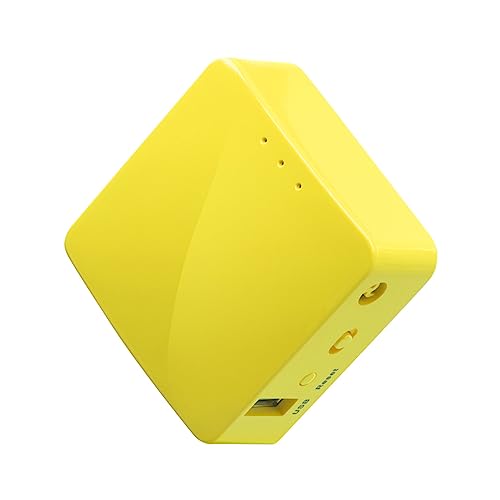
GL.iNet GL-MT300N-V2
A compact router with open source firmware and broad VPN support. It repeats, extends, and bridges Wi-Fi networks, making it a versatile travel companion.
Pros
- Supports OpenVPN and WireGuard, easy setup
- Open source firmware with frequent updates
- Can power via USB port of laptop or power bank
Cons
- Only 2.4 GHz band, no 5 GHz support
- Ethernet ports are limited to 100 Mbps

TP-Link AC750 TL-WR902AC
A dual band travel router that fits in a pocket. It offers multiple operation modes including AP, router, and range extender.
Pros
- Dual band speeds up to 733 Mbps
- Multiple modes: router, AP, extender, hotspot
- Compact and lightweight design
Cons
- No built in battery, needs USB power
- USB port only for power, not for file sharing

NETGEAR Nighthawk M1 MR1100
A mobile hotspot that also works as a router for up to 20 devices. Its long battery life and Gigabit Ethernet make it a heavy duty option.
Pros
- Battery lasts up to 24 hours on a charge
- Supports up to 20 Wi-Fi devices
- Gigabit Ethernet for wired connections
Cons
- Heavier and larger than typical travel routers
- Requires a SIM card for cellular data
GL.iNet GL-AR150
An ultra small router running OpenWrt. It is ideal for tech savvy users who want to run custom software like ad blocking or travel VPN.
Pros
- Runs OpenWrt for full control
- Two Ethernet ports may allow LAN sharing
- Very low power consumption
Cons
- Older Wi-Fi 4 technology
- No 5 GHz band
HooToo TripMate HT-TM05
A travel router with a USB port for sharing files and media across devices. It also has a 5200 mAh power bank to charge phones.
Pros
- Built in power bank charges smartphones
- USB port allows media sharing from flash drives
- Can boost weak Wi-Fi signals
Cons
- No 5 GHz support
- Larger than other travel routers
How they stack up
| # | Model | Wireless Standard | Best for | Score | Price |
|---|---|---|---|---|---|
| 1 | GL.iNet GL-MT300N-V2 | Wi-Fi 4 (802.11n) | Best overall travel router | 9.4 | Check price |
| 2 | TP-Link AC750 TL-WR902AC | Wi-Fi 5 (802.11ac) | Best for long term travel | 8.7 | Check price |
| 3 | NETGEAR Nighthawk M1 MR1100 | Wi-Fi 5 (802.11ac) | Best with built in battery | 9.1 | Check price |
| 4 | GL.iNet GL-AR150 | Wi-Fi 4 (802.11n) | Best for customization | 8.4 | Check price |
| 5 | HooToo TripMate HT-TM05 | Wi-Fi 4 (802.11n) | Best with USB sharing | 8.2 | Check price |
What to look for
Good to know
What is a portable wireless router?
A portable wireless router is a compact device that creates a local Wi-Fi network from a wired Ethernet connection, a public Wi-Fi signal, or a cellular data connection. It allows multiple devices to share one internet source securely.
How does a travel router differ from a mobile hotspot?
A travel router typically connects to an existing internet source like hotel Ethernet or Wi-Fi and rebroadcasts it. A mobile hotspot has a built in modem that uses a SIM card for cellular data. Some devices combine both functions.
Do I need a portable router if I have a smartphone hotspot?
Smartphone hotspots work for a few devices but often drain battery quickly and lack advanced features like VPN support or Ethernet input. A portable router can provide stronger signals, more connections, and better security.
Can a portable router improve hotel Wi-Fi?
Yes, many travel routers have a range extender mode. They connect to the hotel’s Wi-Fi and rebroadcast a stronger signal to your devices. They also isolate your devices from other guests on the same network.
Is a dual band travel router worth it?
Dual band routers support 5 GHz, which is less congested and offers faster speeds. If you stream video or play online games, dual band is beneficial. For basic browsing, a single band might suffice.
What is VPN support on a travel router?
VPN support lets the router establish a virtual private network connection to a VPN server. All devices connected to the router get encrypted traffic and a different IP address, enhancing privacy and bypassing geo restrictions.
Can I use a portable router with a public Wi-Fi network?
Yes, in repeater mode the router connects to a public Wi-Fi network and creates a private subnet. You log into the public network once, and all your devices share that connection securely.
How many devices can connect to a travel router?
Entry level routers support 10 to 15 devices. High end models like the Nighthawk M1 can handle up to 20. Actual performance depends on bandwidth and router processing power.
Are portable routers allowed on airplanes?
Yes, most portable routers are allowed in carry-on luggage. However, some airlines restrict cellular data usage during flight. Check airline policies for devices with SIM slots.
How do I set up a travel router?
Most travel routers have a web based setup page. You select the operation mode (router, extender, etc.), connect to your internet source, and set a Wi-Fi name and password. Many offer mobile apps for easier setup.
Our take
For most travelers, the GL.iNet GL-MT300N-V2 offers the best balance of size, VPN support, and open source flexibility. If you need dual band speeds and battery operation, the NETGEAR Nighthawk M1 is worth the extra weight. Skip USB powered routers if you often camp or stay in places without outlets.