Power Tool Batteries: Runtime, Weight and Value
The DEWALT DCB205-2 20V MAX XR 5.0Ah two pack is the best all round buy for runtime and value. Milwaukee’s 48-11-1850 M18 REDLITHIUM XC5.0 handles high draw tools best, and the Makita BL1850B is the pick for long continuous runtime on the LXT platform.
The DEWALT DCB205-2 two pack is the best value upgrade for most 20V MAX owners, the Milwaukee 48-11-1850 is the one to buy for grinders and saws, and the Makita BL1850B is the LXT battery worth standing in line for.
Battery shopping is confusing because the amp hour number on the label tells you capacity but nothing about how hard the pack can push, and a 5.0Ah battery with weak cells will sag under a circular saw where a well built 4.0Ah pack will not. We compared current packs on capacity, cell configuration, weight, charge times and what tradespeople report about pack longevity across seasons of daily use.
The shortlist, ranked

DEWALT DCB205-2 20V MAX XR 5.0Ah Battery Two-Pack
Buying these in a two pack is the standard move for anyone already on the 20V MAX platform, giving enough runtime for a full day of drilling and driving with one on the charger. The XR cells hold up better under load than the base DCB models, and the three LED fuel gauge is genuinely useful. Weight is reasonable for the capacity.
Pros
- Two packs cover a full working day
- XR cells cope with high draw tools
- Fits the whole 20V MAX and FLEXVOLT tool range
Cons
- Heavier than compact packs on overhead work
- Longer charge time than smaller batteries

Milwaukee 48-11-1850 M18 REDLITHIUM XC5.0 Battery
Milwaukee’s XC packs are the ones tradespeople reach for when running grinders, reciprocating saws and impact wrenches, because voltage holds up rather than sagging as the pack warms. The onboard electronics protect against overload and deep discharge. Cold weather performance is a consistent strength owners point to.
Pros
- Holds voltage under sustained heavy load
- Strong cold weather performance
- Works across the full M18 range including FUEL tools
Cons
- Among the more expensive packs per amp hour
- Noticeably heavy on a compact drill

Makita BL1850B 18V LXT 5.0Ah Battery
Makita’s rapid charging is the real story here, with the pack going from empty to usable faster than most rivals on the matching charger. The fuel gauge is built into the pack rather than the tool, and the shock absorbing outer case survives being dropped off a bench. A dependable pack for cordless heavy users.
Pros
- Very quick recharge on the matching charger
- Durable outer casing
- Onboard fuel gauge on the pack itself
Cons
- Requires the right charger to hit rated speeds
- Bulky on smaller LXT tools

DEWALT DCBP034 20V MAX POWERSTACK Compact Battery
Pouch cells rather than cylindrical ones let this pack deliver serious current from a very small, light body, which transforms how a compact drill balances in the hand. Capacity is modest, so it is a second battery for overhead and confined work rather than an all day pack. Charging is quick.
Pros
- Dramatically lighter for overhead work
- Delivers more current than its capacity suggests
- Improves balance on compact drills and drivers
Cons
- Low capacity means frequent swaps
- Costs more per amp hour than standard packs

Bosch GBA18V40 CORE18V 4.0Ah Battery
Bosch’s CORE18V packs use higher output cells in a compact body, offering a good compromise between runtime and weight for the price. The cooling vents in the housing help on longer runs with demanding tools. Sensible choice for anyone building out a Bosch 18V kit without overspending.
Pros
- Good runtime for the size and weight
- Cooling design helps under sustained load
- Competitive cost per amp hour
Cons
- Smaller aftermarket accessory ecosystem
- Not the longest runtime available on the platform

Ryobi P193 ONE+ 18V 4.0Ah Lithium Battery
For homeowners rather than trades, the ONE+ platform is hard to beat on value, and this 4.0Ah pack runs everything from drills to string trimmers. Backwards compatibility across the whole ONE+ range including older tools is the standout feature. It will sag sooner than professional packs under heavy continuous load.
Pros
- Excellent value per amp hour
- Compatible with a huge tool range including outdoor gear
- Widely available replacements
Cons
- Voltage sags sooner under heavy loads
- Charge times are slower than professional platforms
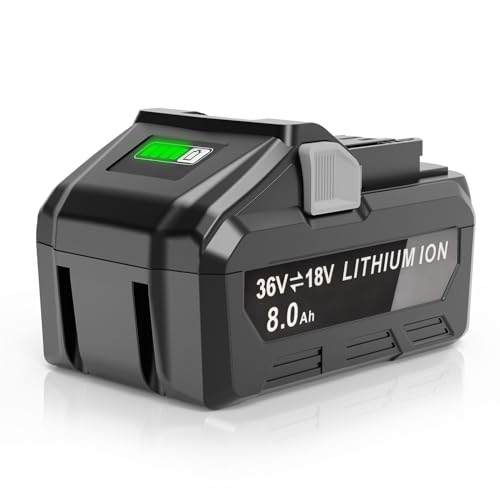
Metabo HPT 372121M MultiVolt 36V/18V Battery
This pack switches automatically between 36V and 18V depending on the tool it is fitted to, which means one battery serves both halves of the Metabo HPT range. That flexibility is genuinely useful if you own tools across both voltages. It is heavier and pricier than a single voltage pack.
Pros
- One pack covers two tool voltages
- Simplifies charging across a mixed kit
- Solid output for demanding 36V tools
Cons
- Heavier than single voltage equivalents
- Only useful within the MultiVolt ecosystem
How to choose
Amp hours measure runtime, not power A 5.0Ah pack does not make a drill stronger, it makes it run longer before recharging. What determines whether a saw bogs down is the cell’s discharge capability and the pack’s internal resistance, which manufacturers rarely publish directly. Premium lines like DEWALT XR, Milwaukee REDLITHIUM and Bosch CORE18V exist precisely because they use higher output cells.
Weight is the hidden cost of capacity Big packs are heavy, and that weight is at the base of the tool where it affects balance most. For overhead drilling and long sessions on a ladder, a compact pack with frequent swaps is far less tiring than a 6.0Ah brick. Most tradespeople end up owning a mix of compact and high capacity batteries rather than standardising on one size.
Stay on one platform wherever possible The battery decides which tools you buy for the next decade, not the other way round. Mixing platforms means duplicate chargers, more dead packs in the van and no ability to lend a battery between tools. Before adding a battery, consider whether the platform covers the outdoor equipment and specialty tools you might want later.
Storage and temperature decide how long packs last Lithium packs degrade fastest when stored fully charged in heat or left flat for months. Around half charge in a cool dry place is best for long storage, and owners report noticeably better multi year life from packs kept indoors rather than in a freezing or baking van. Let a hot pack cool before charging.
How they stack up
| # | Model | Capacity | Best for | Score | Price |
|---|---|---|---|---|---|
| 1 | DEWALT DCB205-2 20V MAX XR 5.0Ah Battery Two-Pack | 5.0Ah | Best overall | 9.4 | Check price |
| 2 | Milwaukee 48-11-1850 M18 REDLITHIUM XC5.0 Battery | 5.0Ah | Best for high draw tools | 9.2 | Check price |
| 3 | Makita BL1850B 18V LXT 5.0Ah Battery | 5.0Ah | Best runtime per charge | 9.0 | Check price |
| 4 | DEWALT DCBP034 20V MAX POWERSTACK Compact Battery | Pouch cells | Best compact | 8.8 | Check price |
| 5 | Bosch GBA18V40 CORE18V 4.0Ah Battery | 4.0Ah | Best value | 8.6 | Check price |
| 6 | Ryobi P193 ONE+ 18V 4.0Ah Lithium Battery | 4.0Ah | Best budget | 8.3 | Check price |
| 7 | Metabo HPT 372121M MultiVolt 36V/18V Battery | 36V and 18V automatic | Best dual voltage | 8.0 | Check price |
Common questions
Does a higher amp hour battery make my tool more powerful?
Not directly. It extends runtime, and in some cases the higher capacity pack uses better cells that sag less under load, which can feel like more power. The tool’s motor and electronics set the ceiling.
Are third party batteries worth the saving?
They are a gamble. Some work adequately, others use lower grade cells, lack proper protection circuitry and can void a tool warranty. For tools you rely on, genuine packs are the safer choice, particularly on high draw tools.
How long do power tool batteries last?
Typically several hundred charge cycles, which for most users is three to five years. Heat, deep discharging and storing packs fully charged all shorten that. Trade users running packs daily will see shorter service life.
Can I leave batteries on the charger?
Modern chargers stop charging when full, so it is not immediately harmful, but leaving packs on a charger indefinitely in a hot space is not ideal. For long storage, take the pack off at around half charge.
Why does my battery die faster in winter?
Cold slows the chemical reaction inside lithium cells, reducing available capacity and increasing voltage sag. Performance returns as the pack warms. Keeping spares in a warm vehicle cab rather than an unheated van bed makes a noticeable difference.
Do compact and high capacity batteries charge at the same rate?
Compact packs generally finish sooner simply because there is less to fill. Charge rate also depends heavily on the charger, and rapid chargers cut times substantially on packs designed to accept them.
Can I use an 18V battery on a 20V MAX tool?
Only within a manufacturer’s own naming conventions. DEWALT 20V MAX and other 18V class platforms are electrically similar but physically and electronically incompatible across brands. Adapters exist but often bypass safety electronics.
How should I dispose of a dead battery?
Never in household waste. Lithium packs are a fire risk in bin lorries and landfill. Most tool retailers and municipal recycling centres accept them free of charge, and many manufacturers run take back programmes.
Final word
If you are on the DEWALT platform, the DCB205-2 two pack is the most sensible single purchase here, and pairing it with a POWERSTACK compact pack covers both endurance and overhead work. Milwaukee owners running grinders and saws should buy the 48-11-1850 rather than a cheaper compact, and Makita users benefit most from the BL1850B and a rapid charger. Homeowners are well served by the Ryobi P193 without spending professional money.