Which Power Tools Do You Actually Need First?
The DEWALT DCD791D2 drill driver is the tool to buy first, because a brushless 20V drill covers more jobs than anything else in a home workshop. The Milwaukee 2853-20 impact driver is the natural second buy, and the CRAFTSMAN CMCD700C1 is the budget way in.
If you are starting from zero, the DEWALT DCD791D2 brushless drill driver is the first purchase that makes sense, followed by the Milwaukee 2853-20 impact driver for fasteners and the CRAFTSMAN CMCD700C1 if the budget is tight. Those three cover the majority of household jobs.
Power tool shopping is confusing because the battery platform matters more than the individual tool, and every brand wants that decision early. We compared published torque and speed specifications, kit contents, motor types and what owners report about real world runtime to rank the tools by how much use they actually get.
What we recommend

DEWALT DCD791D2 20V MAX XR Brushless Drill Driver Kit
This is the tool that does the most work in a typical home shop, and the brushless XR motor is the reason it keeps going where cheaper drills fade. Two speed ranges cover both high torque driving and fast drilling, and the compact head length helps inside cabinets and stud bays. The kit ships with two 2.0Ah batteries, which is enough for a full afternoon of intermittent work.
Pros
- Brushless motor extends runtime
- Compact head reaches tight spaces
- Huge 20V MAX tool range to grow into
Cons
- 2.0Ah packs are small for heavy work
- Belt hook mounts on one side only
Milwaukee 2853-20 M18 FUEL Impact Driver
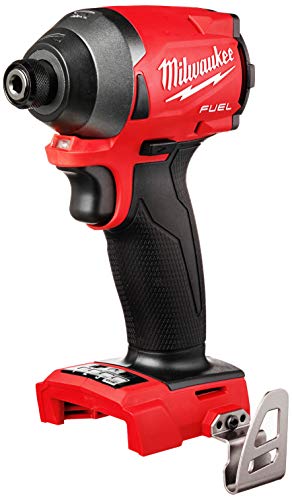
An impact driver is the tool people wish they had bought earlier, and the M18 FUEL 2853-20 is among the most capable compact models sold. Four drive modes let you dial back power for delicate screws instead of stripping them, and the short body fits between joists. It is sold as a bare tool, so it makes most sense once you are on the M18 platform.
Pros
- Enormous torque for long fasteners
- Drive modes prevent stripped screws
- Very short head length
Cons
- Bare tool needs an M18 battery
- Loud under load like all impacts

Makita XPH12Z 18V LXT Brushless Hammer Driver Drill
The XPH12Z adds a hammer setting to a well balanced brushless drill, which matters the first time you need to anchor something into brick or block. Makita keeps the ergonomics tight and the tool feels lighter in hand than the numbers suggest. Owners on the LXT platform report the electronic protection circuits keep packs healthy over years of use.
Pros
- Hammer mode handles masonry anchors
- Excellent balance and grip shape
- Battery protection circuitry
Cons
- Sold bare in this configuration
- LXT batteries cost more than rivals

BOSCH GSR12V-300B22 12V Max Brushless Drill Driver Kit
Twelve volt tools used to be a compromise, and this Bosch is the clearest sign that stopped being true. At a hair over two pounds with a battery it fits inside cabinets and under sinks where a full size drill cannot go. It will not bore large holes in framing lumber, but for assembly, hardware and repairs it is the tool you reach for constantly.
Pros
- Extremely light and compact
- Brushless efficiency in a small pack
- Two batteries included
Cons
- Not enough for large hole saws
- Smaller 12V tool lineup

CRAFTSMAN CMCD700C1 V20 Cordless Drill Driver Kit
For a first cordless drill that will hang pictures, assemble furniture and handle light repairs, the CMCD700C1 does the job without a professional price tag. The motor is brushed rather than brushless, which costs some runtime but keeps the entry price low. The V20 platform gives you somewhere to grow if the hobby sticks.
Pros
- Affordable route onto a real platform
- Light enough for overhead work
- LED work light included
Cons
- Brushed motor drains packs faster
- Single small battery in the kit
DEWALT DWE575SB 7-1/4 in Circular Saw
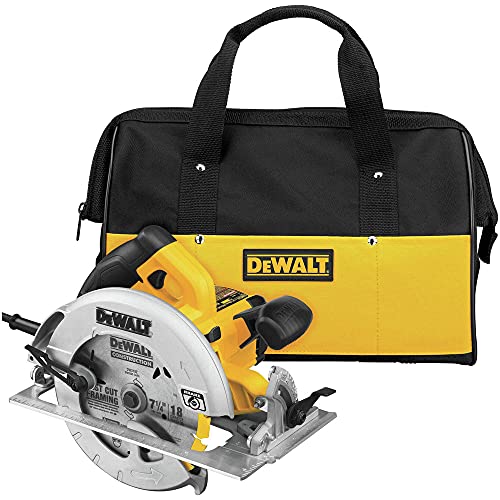
Once projects move past assembly into cutting plywood and framing lumber, a circular saw becomes essential, and the corded DWE575SB is one of the lightest full size saws available. An electric brake stops the blade quickly after the trigger releases, which is a genuine safety feature rather than a spec sheet line. Corded power means no battery planning for long cutting sessions.
Pros
- Light for a full size saw
- Electric brake improves safety
- No battery runtime limits
Cons
- Cord management on site is annoying
- Dust collection is basic

Milwaukee 2720-20 M18 FUEL SAWZALL Reciprocating Saw
A reciprocating saw is a specialist tool right up until you need to cut out old pipe, prune thick branches or take a deck apart, at which point nothing else will do. The 2720-20 pairs a brushless motor with a long stroke for fast cutting through mixed material. It sits last on this list because most people should buy it fourth or fifth, not first.
Pros
- Cuts wood, nails and pipe alike
- Tool free blade changes
- Serious speed for teardown work
Cons
- Heavy vibration during long cuts
- Least used tool for most owners
Side by side
| # | Model | Motor | Best for | Score | Price |
|---|---|---|---|---|---|
| 1 | DEWALT DCD791D2 20V MAX XR Brushless Drill Driver Kit | Brushless | Best overall | 9.4 | Check price |
| 2 | Milwaukee 2853-20 M18 FUEL Impact Driver | POWERSTATE brushless | Best for fasteners | 9.2 | Check price |
| 3 | Makita XPH12Z 18V LXT Brushless Hammer Driver Drill | Brushless | Best for masonry | 9.0 | Check price |
| 4 | BOSCH GSR12V-300B22 12V Max Brushless Drill Driver Kit | Brushless | Best for tight spaces | 8.8 | Check price |
| 5 | CRAFTSMAN CMCD700C1 V20 Cordless Drill Driver Kit | Brushed | Best budget | 8.6 | Check price |
| 6 | DEWALT DWE575SB 7-1/4 in Circular Saw | 7-1/4 in | Best for sheet goods | 8.3 | Check price |
| 7 | Milwaukee 2720-20 M18 FUEL SAWZALL Reciprocating Saw | POWERSTATE brushless | Best for demolition | 8.0 | Check price |
What to look for
Pick the battery platform before the tool Batteries and chargers are the expensive part of cordless ownership, and they do not cross brands. Choosing DEWALT 20V MAX, Milwaukee M18, Makita LXT or CRAFTSMAN V20 early means every future tool is cheaper because you buy it bare. Look at which platform has the tools you expect to add in two years, not just the one you need this weekend.
Brushless matters more on some tools than others A brushless motor runs cooler, lasts longer and squeezes more work from a charge, but the gap is widest on tools that work hard for long stretches. On a drill used for a few dozen screws a month, a brushed motor is perfectly adequate. On an impact driver or a reciprocating saw doing sustained heavy work, brushless is worth paying for.
Build the kit in order of use The order that serves most people is drill first, impact driver second, circular saw third, then oscillating or reciprocating tools as specific jobs demand them. Buying a large combo kit up front usually means paying for at least two tools that sit unused. Adding bare tools to an existing platform spreads the cost and keeps the collection honest.
Read the amp hour rating, not just the voltage Voltage sets how much power a tool can deliver, but amp hours set how long it runs before a recharge. A 2.0Ah pack is fine for drilling and driving, while sawing, sanding and grinding drain it quickly. Owners doing sustained work consistently report that stepping up to 4.0Ah or 5.0Ah packs changes the experience more than upgrading the tool.
Questions worth asking
What is the first power tool to buy?
A cordless drill driver, without much debate. It handles drilling, driving, furniture assembly and repairs, and it is the tool that stays useful no matter what direction your projects take.
Do I need both a drill and an impact driver?
They overlap but do not replace each other. A drill controls torque precisely and holds round shank bits, while an impact driver delivers far more rotational force for long screws and lag bolts without wrecking your wrist.
Is corded still worth buying?
Yes, for tools that run continuously. Circular saws, bench tools and shop vacuums benefit from unlimited runtime, and corded models often cost less for equivalent power.
What does brushless actually change?
Brushless motors remove the friction and wear of carbon brushes, which improves efficiency, extends tool life and increases runtime per charge. The tool also runs cooler under sustained load.
Can I mix batteries between brands?
No. Battery interfaces, voltages and electronics are proprietary, and third party adapters can void warranties and create safety risks. Commit to a platform instead.
Is 12V enough for home use?
For assembly, hardware, cabinetry and repairs, 12V brushless tools are genuinely capable and far easier to handle. Step up to 18V or 20V when you start boring large holes or working with framing lumber.
How many batteries do I need?
Two is the practical minimum so one charges while the other works. Owners doing longer sessions usually settle on one compact pack for light tools and one high capacity pack for saws.
Are combo kits good value?
Only if you will use every tool in the box. A drill and impact driver two piece kit is almost always worthwhile, while five and six piece kits often include a flashlight and a radio you never touch.
Our pick
Start with the DEWALT DCD791D2 and you have the tool that will see the most hours in any home workshop, on a platform with somewhere to grow. Add the Milwaukee 2853-20 when fasteners start fighting back, and choose the CRAFTSMAN CMCD700C1 if you want to test whether the hobby sticks before committing.