Premium CPUs That Justify Their Price
For most enthusiasts, the AMD Ryzen 9 7950X stands out as the best premium CPU because it combines 16 cores with excellent single-thread performance, making it ideal for both heavy multitasking and gaming. Its main limitation is high power consumption under load, requiring a robust cooling solution.
Choosing a premium CPU means balancing raw performance, core counts, and platform longevity. The market offers two main contenders: AMD’s Ryzen 7000 series and Intel’s 13th and 14th Gen Core processors.
This roundup highlights the best options for gamers, content creators, and workstation users. We focus on real-world performance and value, avoiding marketing hype.
The top picks, ranked

AMD Ryzen 9 7950X
With 16 cores and 32 threads, the Ryzen 9 7950X delivers top-tier productivity and gaming. It excels in rendering and compilation tasks, making it a favorite among creators. Its high boost clock of 5.7 GHz ensures snappy response in everyday use.
Pros
- Blazing multi-core performance
- Excellent single-thread speed
- Supports PCIe 5.0 and DDR5
Cons
- Runs hot, needs strong cooler
- Requires new AM5 motherboard

Intel Core i9-14900K
The i9-14900K features 24 cores (8 performance, 16 efficient) and reaches 6.0 GHz boost clock. It offers outstanding gaming performance and handles streaming and recording with ease. Its hybrid architecture provides a balance between power and efficiency.
Pros
- Top-tier gaming performance
- High overclocking headroom
- Compatible with existing LGA1700 boards
Cons
- High power draw under load
- Requires premium cooling
AMD Ryzen 9 7900X
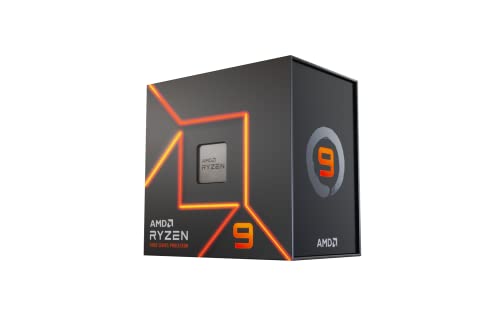
With 12 cores and 24 threads, the Ryzen 9 7900X offers nearly the same performance as the 7950X in many tasks but at a lower cost. It maintains high boost clocks and supports DDR5 and PCIe 5.0, making it a smart choice for new builds.
Pros
- Great multi-core performance
- Lower price than 7950X
- Efficient for its class
Cons
- Not as fast as 7950X in heavy workloads
- Still requires AM5 platform
Intel Core i7-14700K
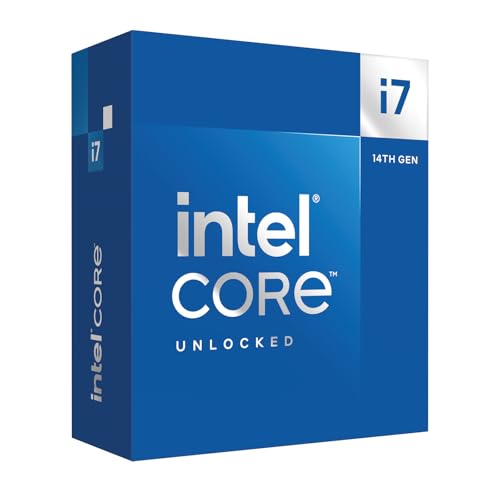
The i7-14700K offers 20 cores (8 performance, 12 efficient) and a 5.6 GHz boost. It delivers exceptional gaming performance and is more affordable than the i9. It also provides strong multi-threaded performance for productivity.
Pros
- Excellent gaming performance
- More affordable than i9
- Good efficiency cores for background tasks
Cons
- Not as powerful in heavy rendering as i9
- Requires good cooling for sustained loads

AMD Ryzen 9 7950X3D
The Ryzen 9 7950X3D combines the 16-core design with 3D V-Cache, delivering exceptional gaming performance and still handling productivity tasks with ease. It offers the best of both worlds, though it comes at a premium price.
Pros
- Unmatched gaming performance
- Strong multi-core capabilities
- Large cache reduces latency
Cons
- Expensive
- Not all applications benefit from extra cache
Intel Core i9-13900K
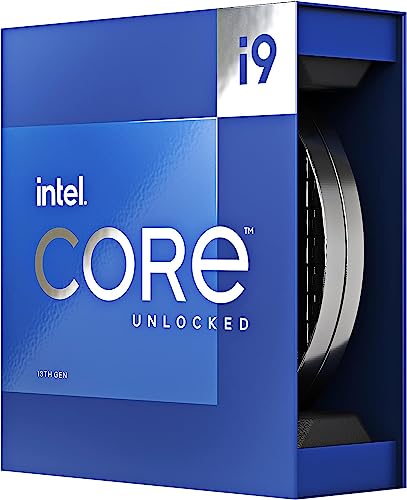
The i9-13900K remains a powerful option with 24 cores and 32 threads, reaching 5.8 GHz boost. It offers performance close to the 14900K but is now available at a reduced price, making it a great value for high-end builds.
Pros
- Excellent performance for less
- Proven reliability
- Works with LGA1700 motherboards
Cons
- Newer 14th gen offers slightly better performance
- High power draw

AMD Ryzen 7 7800X3D
The Ryzen 7 7800X3D focuses on gaming with 8 cores and 16 threads, but its 3D V-Cache gives it an edge in games that love cache. It outperforms many higher-core CPUs in gaming benchmarks while running cooler and consuming less power.
Pros
- Exceptional gaming performance
- Lower power consumption than 7950X3D
- Easier to cool
Cons
- Not as strong in multi-threaded productivity
- Limited to AM5 platform
What matters most
Compared at a glance
| # | Model | Cores/Threads | Best for | Score | Price |
|---|---|---|---|---|---|
| 1 | AMD Ryzen 9 7950X | 16/32 | Enthusiasts who need maximum multi-core performance | 9.5 | Check price |
| 2 | Intel Core i9-14900K | 24/32 | Gamers and streamers who want high clock speeds | 9.3 | Check price |
| 3 | AMD Ryzen 9 7900X | 12/24 | Creators who want strong performance without the top price | 9.0 | Check price |
| 4 | Intel Core i7-14700K | 20/28 | Gamers who want high performance without the extreme cost | 8.9 | Check price |
| 5 | AMD Ryzen 9 7950X3D | 16/32 | Gamers who also need top multi-core performance | 9.2 | Check price |
| 6 | Intel Core i9-13900K | 24/32 | Builders who want a proven flagship at a lower price | 8.7 | Check price |
| 7 | AMD Ryzen 7 7800X3D | 8/16 | Gamers who want peak gaming performance without extra cores | 9.0 | Check price |
Good to know
Do I need a premium CPU for gaming?
For most gamers, a mid-range CPU is sufficient. Premium CPUs shine in high-refresh-rate gaming or when streaming and gaming simultaneously. If you play esports titles at 1080p with a powerful GPU, a premium CPU can help push higher frame rates.
What is the difference between AMD and Intel premium CPUs?
AMD Ryzen 7000 series offers excellent multi-core performance and efficiency, with AM5 platform longevity. Intel 13th and 14th gen provide high clock speeds and strong gaming performance, but tend to consume more power. Your choice depends on your workload and platform preferences.
Should I buy a previous-gen flagship like the i9-13900K?
Yes, if you find a good deal. The i9-13900K offers performance close to the 14900K at a lower price. Just ensure your motherboard supports it and that you have adequate cooling.
How important is cache size for gaming?
Cache size can significantly impact gaming performance, especially in titles that rely on data reuse. AMD’s 3D V-Cache technology boosts gaming performance notably, making CPUs like the 7800X3D excellent for pure gaming.
What cooling solution do I need for a premium CPU?
For CPUs with TDP above 150W, a 240mm or 360mm AIO liquid cooler is recommended. High-end air coolers can also work, but they may struggle under sustained loads. Ensure your case has good airflow.
Are premium CPUs worth the cost for productivity?
If you do video editing, 3D rendering, or software development, a premium CPU with many cores will save you time. The productivity gains can justify the price for professionals.
Will a premium CPU bottleneck my GPU?
At high resolutions like 4K, the GPU is often the bottleneck, so a mid-range CPU may suffice. At 1080p with high refresh rates, a premium CPU can prevent bottlenecks and maximize frame rates.
Can I use DDR4 memory with these premium CPUs?
No, all premium CPUs listed here require DDR5 memory. AMD AM5 and Intel LGA1700 platforms support DDR5 only. Older DDR4 is not compatible.
What is the best premium CPU for a small form factor build?
The AMD Ryzen 7 7800X3D is a great choice due to its lower power consumption and easier cooling. You can use a compact liquid cooler or a high-end air cooler in a Mini-ITX case.
How long will a premium CPU last?
Premium CPUs remain relevant for 4 to 5 years. They handle future games and applications well. Upgrading to a newer platform may be needed for new features like PCIe 5.0 or DDR5, which are already included in these CPUs.
The verdict
If you seek the ultimate multi-core performance for both gaming and productivity, the AMD Ryzen 9 7950X is the best choice. For pure gaming with no compromise, the Ryzen 7 7800X3D delivers outstanding frame rates and efficiency. If you prefer Intel and want the highest clock speeds, the Core i9-14900K is a top contender. Consider your budget, cooling, and workload to pick the right flagship.