Top-Tier Graphics Cards for Enthusiasts and Creators
For most enthusiasts, the Nvidia GeForce RTX 4080 Super is the top pick, offering a balanced mix of raw performance, ray tracing, and DLSS 3. Its main limitation is the high price, but it delivers exceptional 4K gaming and solid creator performance. If you prioritize raw rasterization and value, the AMD Radeon RX 7900 XTX is a strong alternative with more VRAM.
High-end graphics cards are the heart of a premium gaming or creative PC. They deliver the frames and features that make modern games shine and speed up rendering workloads.
We compared the latest flagship and sub-flagship cards from Nvidia and AMD, focusing on performance, features, and thermal management. Here are the seven best options for those who demand the best.
How to choose
What we recommend

Nvidia GeForce RTX 4090 Founders Edition
The RTX 4090 is the fastest consumer graphics card ever made. It dominates 4K gaming with maxed settings and handles 8K in many titles. Its massive 24GB of VRAM is future-proof for heavy modding and AI tasks. However, it draws a lot of power and requires a large case.
Pros
- Unmatched rasterization and ray tracing performance
- Large VRAM for high-res textures and AI
- Excellent cooling and build quality
Cons
- Very expensive
- Power hungry and large footprint
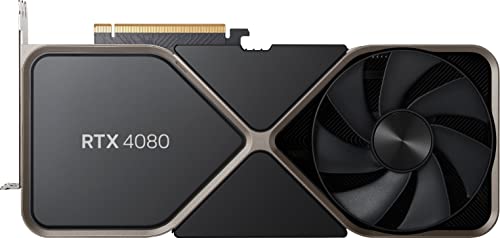
Nvidia GeForce RTX 4080 Super Founders Edition
The RTX 4080 Super offers nearly 90% of the 4090’s performance at a lower price. It excels at 4K with high refresh rates and handles ray tracing effortlessly. DLSS 3 Frame Generation provides a significant boost in supported games. It is a top choice for serious gamers.
Pros
- Excellent 4K performance with ray tracing
- DLSS 3 Frame Generation boosts fps
- More affordable than the 4090
Cons
- Still expensive
- VRAM limited for future titles at 4K

AMD Radeon RX 7900 XTX
The RX 7900 XTX is AMD’s top card, offering rasterization performance that rivals the RTX 4080 Super at a lower price. It has 24GB of VRAM, making it great for high-res textures. Ray tracing is improved but still trails Nvidia. It is a compelling option for pure rasterization power.
Pros
- Massive VRAM for texture-heavy games
- Strong 4K rasterization performance
- Lower price than Nvidia counterparts
Cons
- Ray tracing less efficient than Nvidia
- Higher power draw under load

Nvidia GeForce RTX 4070 Ti Super
The RTX 4070 Ti Super is a well-rounded card for high-refresh 1440p gaming and capable 4K. It has 16GB of VRAM and supports DLSS 3, making it a good balance of performance and price. It runs cooler and more efficiently than higher-tier cards.
Pros
- Great 1440p performance
- Efficient and cooler operation
- DLSS 3 support
Cons
- Not as future-proof for 4K as more expensive cards
- Still pricey for the performance tier
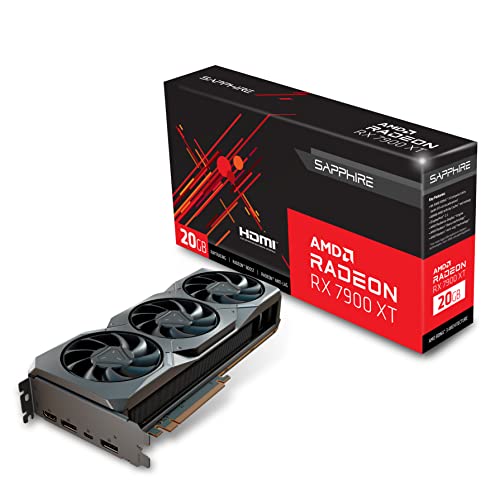
AMD Radeon RX 7900 XT
The RX 7900 XT sits below the XTX, offering strong 1440p and decent 4K performance. It has 20GB of VRAM, which is generous for the price. It is a good choice for gamers who want high frame rates in competitive titles and are not obsessed with ray tracing.
Pros
- Excellent price-to-performance
- Large VRAM amount
- Great for 1440p high-refresh gaming
Cons
- Ray tracing performance falls behind Nvidia
- Higher power consumption than some rivals

Nvidia GeForce RTX 4080 (non-Super)
The original RTX 4080 still performs admirably, offering excellent 4K and ray tracing capabilities. It is often found at discounted prices after the Super launch. It lacks the extra CUDA cores of the Super but remains powerful for gaming and creative tasks.
Pros
- Still a top-tier 4K performer
- Supports DLSS 3
- May offer better value if discounted
Cons
- Outperformed by the Super variant at similar price
- Large power requirement

AMD Radeon RX 6950 XT
Though a previous generation card, the RX 6950 XT still delivers impressive rasterization performance, often matching the RTX 4070 Ti at a lower price. It has 16GB of VRAM and is a good option for those not needing ray tracing. It is a value pick for high-refresh 1440p.
Pros
- Great price for the performance
- Strong 1440p and 4K rasterization
- Large memory pool
Cons
- No hardware ray tracing acceleration
- Lacks DLSS, FSR support is lesser in some titles
How they stack up
| # | Model | CUDA Cores | Best for | Score | Price |
|---|---|---|---|---|---|
| 1 | Nvidia GeForce RTX 4090 Founders Edition | 16,384 | Ultimate 4K and 8K gaming, AI workloads | 9.4 | Check price |
| 2 | Nvidia GeForce RTX 4080 Super Founders Edition | 10,240 | High-refresh 4K gaming, balanced performance | 9.2 | Check price |
| 3 | AMD Radeon RX 7900 XTX | 6,144 | Raw 4K performance, high VRAM, value | 9.0 | Check price |
| 4 | Nvidia GeForce RTX 4070 Ti Super | 8,448 | 1440p and entry 4K gaming, DLSS 3 | 8.8 | Check price |
| 5 | AMD Radeon RX 7900 XT | 5,376 | High-FPS 1440p gaming, budget 4K | 8.6 | Check price |
| 6 | Nvidia GeForce RTX 4080 (non-Super) | 9,728 | 4K gaming, content creation | 8.4 | Check price |
| 7 | AMD Radeon RX 6950 XT | 5,120 | 1440p ultra gaming, budget high-end | 8.0 | Check price |
Frequently asked questions
What is the best graphics card for 4K gaming?
The Nvidia GeForce RTX 4090 is the best for 4K gaming, offering maximum frame rates and ray tracing. If you want a more balanced option, the RTX 4080 Super is also excellent.
Is DLSS 3 worth it?
Yes, DLSS 3 uses AI to generate extra frames, significantly boosting FPS in supported games. It is exclusive to Nvidia 40-series cards and can make a big difference in demanding titles.
How much VRAM do I need for gaming?
For 1440p gaming, 12GB is sufficient, but 16GB is recommended for future-proofing. For 4K, aim for 16GB or more, especially if you use high-resolution texture packs.
Should I buy an AMD or Nvidia card?
Choose Nvidia for better ray tracing, DLSS, and CUDA support for creative work. Choose AMD for better rasterization value and more VRAM per dollar.
What is the difference between the RTX 4080 and RTX 4080 Super?
The RTX 4080 Super has more CUDA cores and slightly higher clock speeds, making it about 5-8% faster. It was launched as a refresh with a lower price than the original 4080.
Can these graphics cards fit in my PC case?
Most premium cards are large. Check the card’s length and your case’s maximum GPU clearance. Also ensure your power supply has the required wattage and connectors.
What is the best graphics card for 1440p high refresh rate?
The RTX 4070 Ti Super or RX 7900 XT are excellent choices, providing high frame rates in most games. They are also capable of entry-level 4K.
How long will these graphics cards last?
A high-end card like the RTX 4080 Super should remain relevant for 4-5 years, though you may need to lower settings in the most demanding future games.
Do I need to upgrade my power supply for a premium GPU?
Yes, most premium GPUs require at least a 750W power supply. Some like the RTX 4090 recommend 1000W. Check the manufacturer’s recommendation.
Are these cards good for AI and machine learning?
Nvidia cards are generally preferred for AI due to CUDA and Tensor cores. The RTX 4090 is particularly powerful for such workloads. AMD cards have limited support.
Our take
For most enthusiasts, the Nvidia GeForce RTX 4080 Super is the best choice because it delivers near-flagship performance at a more palatable price, making it the sweet spot for 4K gaming. If you are willing to spend top dollar for the absolute best, the RTX 4090 is unmatched. If you prefer value and don’t care as much about ray tracing, the AMD Radeon RX 7900 XTX is a fantastic alternative.