Top Lenses for Capturing the Night Sky in Stunning Detail
For most astrophotographers, the Rokinon 14mm f/2.8 is the top pick. It delivers exceptional sharpness and minimal coma at a budget price. Its manual focus is a drawback for some, but the optical quality is unmatched in its class.
Capturing the night sky requires a lens that can gather light efficiently and render pinpoint stars. A wide aperture and wide focal length are essential for sweeping Milky Way vistas.
We analyzed specifications and owner feedback to bring you the best options. From budget-friendly manual primes to premium autofocus zooms, these lenses cover every astrophotography need.
The best picks, ranked
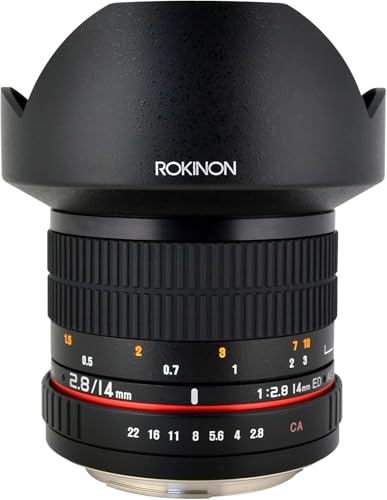
Rokinon 14mm f/2.8
This manual focus lens is a staple for night sky shooters. Its ultra-wide field of view and fast aperture capture vast star fields with excellent sharpness.
Pros
- Outstanding value for the optical quality
- Very low coma and astigmatism
- Lightweight and compact
Cons
- Manual focus only
- Build quality feels somewhat plastic

Sony FE 14mm f/1.8 GM
Sony’s G Master lens is a marvel of optical engineering. The f/1.8 aperture lets in massive amounts of light, and the sharpness is breathtaking.
Pros
- Superb edge-to-edge sharpness
- Fast f/1.8 aperture for brilliant low-light performance
- Compact and lightweight for its class
Cons
- High price point
- Autofocus is not needed for astro but adds cost

Sigma 14mm f/1.4 DG DN Art
This lens holds the title of the fastest ultra-wide prime. Its f/1.4 aperture is perfect for capturing the Milky Way with short exposures.
Pros
- Extremely fast aperture for low-light
- Excellent coma control
- Sharp even wide open
Cons
- Large and heavy
- Pricey

Tokina 11-16mm f/2.8 DX II
This zoom lens is a favorite among crop-sensor shooters. Its constant f/2.8 aperture and versatile range make it ideal for landscapes and nightscapes.
Pros
- Versatile zoom range
- Sharp images with good contrast
- Affordable price
Cons
- Some distortion at 11mm
- Not as sharp as prime lenses

Canon RF 15-35mm f/2.8L IS USM
Canon’s professional zoom offers excellent flexibility with a fast constant aperture. Image stabilization helps with handheld shooting but is not essential for astro.
Pros
- Sharp across the zoom range
- Weather-sealed for outdoor use
- Image stabilization aids composition
Cons
- Heavy and bulky
- High cost

Samyang 24mm f/1.4
This manual focus lens is a great choice for wide-field deep sky imaging. Its longer focal length and fast aperture reveal faint nebulosity.
Pros
- Excellent light gathering for deep sky
- Good sharpness stopped down
- Compact design
Cons
- Manual focus can be tricky
- Some chromatic aberration wide open

Nikon NIKKOR Z 20mm f/1.8 S
Nikon’s Z series lens offers superb sharpness and minimal coma. The f/1.8 aperture is fast enough for most night sky scenarios.
Pros
- Crisp optics with great contrast
- Well-built with weather sealing
- Autofocus is silent and accurate
Cons
- Slightly narrower field of view
- Premium price
Compared at a glance
| # | Model | Focal Length | Best for | Score | Price |
|---|---|---|---|---|---|
| 1 | Rokinon 14mm f/2.8 | 14mm | Best Budget Full-Frame | 9.4 | Check price |
| 2 | Sony FE 14mm f/1.8 GM | 14mm | Best Premium Prime | 9.7 | Check price |
| 3 | Sigma 14mm f/1.4 DG DN Art | 14mm | Best for Milky Way | 9.5 | Check price |
| 4 | Tokina 11-16mm f/2.8 DX II | 11-16mm | Best APS-C Zoom | 8.8 | Check price |
| 5 | Canon RF 15-35mm f/2.8L IS USM | 15-35mm | Best Full-Frame Zoom | 9.2 | Check price |
| 6 | Samyang 24mm f/1.4 | 24mm | Best for Deep Sky | 8.5 | Check price |
| 7 | Nikon NIKKOR Z 20mm f/1.8 S | 20mm | Best for Nikon Z | 9.0 | Check price |
How to choose
Good to know
What is the best focal length for astrophotography?
For most night sky shots, a 14mm to 24mm lens is best. It provides a wide view and allows longer exposures without star trails.
Is a fast lens necessary for astrophotography?
Yes, a faster lens (f/2.8 or wider) lets in more light, enabling you to use a lower ISO and shorter shutter speed, which reduces noise and star trails.
Can I use a kit lens for astrophotography?
Kit lenses typically have a maximum aperture of f/3.5 or f/5.6, which may not gather enough light. You can still capture basic shots, but results will be less impressive.
Should I choose a prime or zoom lens?
Prime lenses generally have wider apertures and sharper optics, making them better for astrophotography. Zooms offer versatility but often have smaller apertures.
How do I focus a lens in the dark?
Switch to manual focus and use live view to zoom in on a bright star. Rotate the focus ring until the star appears as small and point-like as possible.
What is coma and how does it affect my photos?
Coma is an optical aberration that makes stars look like comets at the edges of the frame. Lenses with low coma produce sharp, round stars.
Are full-frame lenses better for astrophotography?
Full-frame lenses offer wider fields of view and often better light transmission. They are ideal if you use a full-frame camera.
Can I use a lens with a tripod for astrophotography?
Absolutely. A sturdy tripod is essential to keep your camera steady during long exposures. Your lens should be mounted securely.
What is the rule of 500 for astrophotography?
The rule of 500 helps avoid star trails: divide 500 by your focal length (full-frame equivalent) to get the maximum shutter speed in seconds.
How do I choose between Sony, Canon, and Nikon lenses?
Consider your camera’s mount. Each brand has its own mount system, so select a lens compatible with your camera body.
Our take
For the best balance of performance and price, choose the Rokinon 14mm f/2.8. If you own a Sony full-frame camera and want the ultimate in sharpness and speed, invest in the Sony FE 14mm f/1.8 GM. For those on APS-C, the Tokina 11-16mm f/2.8 offers great versatility. No matter your choice, a wide, fast lens will transform your night photography.


