Top Portrait Lenses for Stunning Subject Separation
For most photographers, the Canon RF 85mm F1.2L USM is the top pick. It delivers exceptional sharpness and creamy bokeh. But its high price and heavy weight are real drawbacks. If you want a lighter, more affordable option, the Sony FE 85mm F1.8 is a great alternative.
Portrait photography demands lenses that render skin tones beautifully and isolate subjects with smooth bokeh. A great portrait lens can transform ordinary snapshots into striking images.
We compared leading prime lenses from Canon, Sony, Nikon, Fujifilm, and Sigma. Each lens excels in different areas, from budget-friendly to professional-grade.
What we recommend

Canon RF 85mm F1.2L USM
This lens is the gold standard for portraits. It has a fast f/1.2 aperture that creates dreamy backgrounds. Its autofocus is quick and accurate, even in low light. The build is weather-sealed and robust.
Pros
- Exceptional sharpness even wide open
- Beautiful bokeh
- Fast and silent autofocus
Cons
- Very expensive
- Heavy and bulky

Sony FE 85mm F1.8
This lens offers excellent sharpness and a fast aperture at a reasonable price. It is compact and light, making it great for travel. Autofocus is responsive and reliable.
Pros
- Great sharpness
- Lightweight
- Affordable for the quality
Cons
- No optical stabilization
- Plastic build

Nikon NIKKOR Z 85mm f/1.8 S
This lens is sharp from edge to edge. It controls chromatic aberration well. The focus ring is smooth, and the lens is weather-sealed.
Pros
- Excellent sharpness
- Fast, quiet autofocus
- Weather-sealed
Cons
- No aperture ring
- Slightly pricey

Sigma 85mm F1.4 DG DN Art
Sigma’s Art lens offers f/1.4 brightness with exceptional sharpness. It is designed for mirrorless cameras, making it lighter than older DSLR versions. It has a customizable aperture ring.
Pros
- Stunning bokeh
- Sharp at f/1.4
- Aperture ring with click/de-click
Cons
- Large filter thread
- No image stabilization

Fujifilm XF 56mm F1.2 R WR
This lens is equivalent to 85mm on full frame. It produces excellent subject separation. The new WR version is weather-resistant and has faster autofocus.
Pros
- Beautiful bokeh
- Weather resistance
- Compact for f/1.2
Cons
- Autofocus can be slow in low light
- No optical stabilization
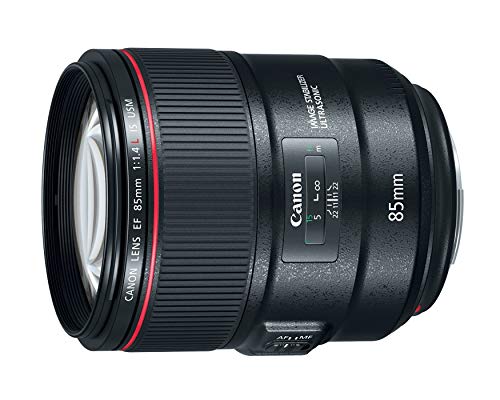
Canon EF 85mm F1.4L IS USM
This lens has image stabilization, a rarity for portrait primes. It is sharp and has fast autofocus. It works well on EF mount DSLRs and with adapters on mirrorless.
Pros
- Image stabilization
- Fast and accurate autofocus
- L-series build quality
Cons
- Heavier than f/1.8 versions
- Price is high

Rokinon SP 85mm F1.2
This manual focus lens gives you f/1.2 without a huge price tag. It has beautiful bokeh and good sharpness. It is available for many mounts, including Canon, Nikon, and Sony.
Pros
- Very affordable for f/1.2
- Great bokeh
- Solid metal build
Cons
- Manual focus only
- No autofocus
How to pick the right one
Side by side
| # | Model | Focal Length | Best for | Score | Price |
|---|---|---|---|---|---|
| 1 | Canon RF 85mm F1.2L USM | 85mm | Professional portrait photographers | 9.6 | Check price |
| 2 | Sony FE 85mm F1.8 | 85mm | Sony shooters who want a balance of price and performance | 9.0 | Check price |
| 3 | Nikon NIKKOR Z 85mm f/1.8 S | 85mm | Nikon mirrorless users seeking a high-quality prime | 9.0 | Check price |
| 4 | Sigma 85mm F1.4 DG DN Art | 85mm | Mirrorless users who want a fast aperture and modern design | 9.2 | Check price |
| 5 | Fujifilm XF 56mm F1.2 R WR | 56mm (equiv. 85mm) | Fujifilm APS-C users who want a fast portrait prime | 8.9 | Check price |
| 6 | Canon EF 85mm F1.4L IS USM | 85mm | DSLR users who need image stabilization | 9.1 | Check price |
| 7 | Rokinon SP 85mm F1.2 | 85mm | Budget-conscious shooters who want an ultra-fast aperture | 8.2 | Check price |
Common questions
What is the best focal length for portraits?
85mm is the most popular for full-frame cameras. It offers natural perspective and comfortable working distance. On APS-C, a 56mm lens gives the same field of view. 50mm can work, but 135mm is great for headshots.
Is f/1.8 good enough for portraits?
Yes. f/1.8 provides good background blur and low-light performance. Many lenses at f/1.8 are very sharp and lighter. f/1.4 and f/1.2 give more blur but are heavier and cost more.
Should I get a 50mm or 85mm portrait lens?
It depends on your space and style. A 50mm is versatile and can capture more environment. An 85mm is flattering and isolates the subject better. If you shoot indoors often, a 50mm might be more practical.
Do I need image stabilization for portraits?
Not always, but it helps. If you shoot handheld in low light, stabilization reduces blur. Many mirrorless cameras have in-body stabilization, so lens stabilization is less critical. For static subjects, a tripod can be used.
Can I use my portrait lens for other types of photography?
Yes. Many portrait lenses work well for events, street, and even some landscape shots. The fast aperture and sharpness are versatile. However, they may not have the wide angle needed for architecture.
What is the difference between EF and RF mounts?
EF is Canon’s DSLR mount, while RF is for mirrorless cameras. RF lenses are designed for shorter flange distance, often sharper. EF lenses can be adapted to RF cameras with an adapter, but autofocus may vary.
Are Sigma Art lenses good for portraits?
Yes. Sigma Art lenses are known for excellent optical quality. The 85mm F1.4 DG DN Art is sharp and has beautiful bokeh. They are often cheaper than brand-name lenses but still professional grade.
How important is weather sealing in a portrait lens?
It is useful if you shoot outdoors in dust or light rain. Weather sealing protects the lens from moisture and particles. Many professional lenses have it, but it adds cost. For studio work, you may not need it.
The bottom line
If you demand the pinnacle of sharpness and bokeh and can handle the cost and weight, buy the Canon RF 85mm F1.2L USM. For most enthusiasts, the Sony FE 85mm F1.8 offers the best mix of price, size, and image quality. It is our top recommendation for its excellent value.