Capture Tiny Worlds: Top Macro Lenses for Every Camera
The Canon RF 100mm f/2.8L Macro IS USM stands out as the top pick for full-frame mirrorless shooters, offering exceptional sharpness, built-in image stabilization, and a unique spherical aberration control. Its main limitation is the premium price, making it less accessible for hobbyists.
Macro photography opens a hidden universe of detail, from the intricate patterns on a butterfly’s wing to the delicate structure of a flower’s stamen. A dedicated macro lens is essential for capturing such images with crisp focus and life-like color.
Choosing the right macro lens depends on your camera system, budget, and shooting style. Our roundup covers a range of options, including prime lenses with true 1:1 magnification and versatile zooms that double as portrait lenses.
How to choose
The top picks, ranked

Canon RF 100mm f/2.8L Macro IS USM
This L-series lens delivers outstanding image quality with a 1.4x maximum magnification and a unique spherical aberration control ring that lets you soften backgrounds creatively. Its hybrid image stabilizer compensates for up to 5 stops of shake, making handheld close-ups easier. The autofocus is fast and silent, while the weather-sealed build is ready for outdoor shoots.
Pros
- Exceptional sharpness even at 1.4x magnification
- Built-in image stabilization for handheld shooting
- Weather-sealed for outdoor use
Cons
- Expensive
- Heavy at over 1.5 pounds

Laowa 100mm f/2.8 2x Ultra Macro APO
The Laowa 100mm f/2.8 offers a true 2:1 magnification ratio, letting you capture subjects twice life-size on the sensor. It’s a manual focus lens, which suits macro work where precise control is key. The apochromatic design minimizes chromatic aberration, and the lens is available for Canon EF, Nikon F, Sony E, and other mounts. Build quality is solid, and the price is remarkably low for the capabilities.
Pros
- High 2:1 magnification
- Low price for the feature set
- Apochromatic correction for sharp images
Cons
- Manual focus only
- No image stabilization
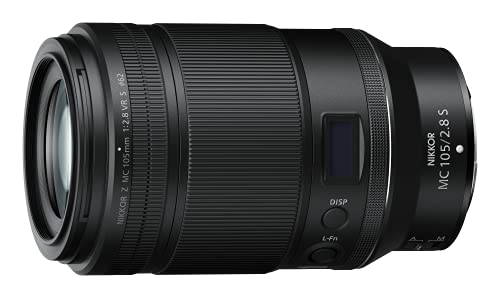
Nikkor Z MC 105mm f/2.8 VR S
Nikon’s Z MC 105mm f/2.8 VR S is a stellar performer, offering sharp optics and effective vibration reduction. It features a customizable control ring and a focus range limiter for faster autofocus. The lens is fully weather-sealed, and its nano crystal coat reduces flare. Owners report excellent color rendering and background blur, making it a favorite for both macro and portrait work.
Pros
- Superb sharpness and contrast
- Effective VR image stabilization
- Dust and drip resistant
Cons
- Pricey
- Heavier than some rivals

Sony FE 90mm f/2.8 Macro G OSS
This G-series lens from Sony delivers excellent sharpness and features built-in Optical SteadyShot, which is a boon for handheld macro work. The focus hold buttons and focus range limiter add convenience. Its bokeh is creamy, and the build quality is top-notch. Some users note that the autofocus can hunt in low light, but overall it’s a reliable choice.
Pros
- Optical image stabilization
- Sharp from edge to edge
- Customizable focus hold buttons
Cons
- Autofocus may hunt in low light
- Expensive

Canon EF 100mm f/2.8L Macro IS USM
A classic macro lens for Canon EF mount, this L-series lens offers hybrid IS for sharp handheld shots and a 1:1 magnification. The ring-type ultrasonic motor provides fast, quiet autofocus, and the lens is built to withstand tough conditions. It delivers excellent contrast and color, though it is showing its age with no weather sealing on the rear mount.
Pros
- Hybrid IS for effective stabilization
- Fast and quiet autofocus
- Pro-grade build quality
Cons
- No weather sealing on the mount
- Lacks modern lens controls

Laowa 85mm f/5.6 2x Ultra Macro APO
This tiny manual focus lens from Laowa is only about 2.2 inches long and weighs just 9.5 ounces, making it an ideal companion for hiking. Despite its size, it offers 2:1 magnification and apochromatic control for sharp, color-accurate images. The f/5.6 maximum aperture is a trade-off, but it allows for a pancake design. It’s available for many mirrorless mounts, including Sony E, Fujifilm X, and Nikon Z.
Pros
- Extremely small and light
- High 2x magnification
- Apochromatic optics
Cons
- Slow maximum aperture
- Manual focus only

Tamron 90mm f/2.8 Di III VXD
Tamron’s 90mm f/2.8 for Sony E-mount offers a bright aperture and 1:1 magnification at a competitive price. It features a linear VXD autofocus motor that is quick and quiet, and the lens is lightweight. The bokeh is pleasing, and the sharpness is impressive for the price. Some users report that the lens hood is not included, which adds extra cost.
Pros
- Fast f/2.8 aperture for low light
- Fast and accurate autofocus
- Lightweight and compact
Cons
- Lens hood sold separately
- No image stabilization
The lineup, side by side
| # | Model | Mount | Best for | Score | Price |
|---|---|---|---|---|---|
| 1 | Canon RF 100mm f/2.8L Macro IS USM | Canon RF | Canon mirrorless shooters who want the ultimate in sharpness and control | 9.6 | Check price |
| 2 | Laowa 100mm f/2.8 2x Ultra Macro APO | Canon EF, Nikon F, Sony E, and more | Budget-conscious shooters needing extreme 2:1 magnification | 9.0 | Check price |
| 3 | Nikkor Z MC 105mm f/2.8 VR S | Nikon Z | Nikon Z mount users who want a versatile macro lens | 9.4 | Check price |
| 4 | Sony FE 90mm f/2.8 Macro G OSS | Sony E | Sony E-mount shooters who need optical stabilization | 9.3 | Check price |
| 5 | Canon EF 100mm f/2.8L Macro IS USM | Canon EF | Canon DSLR users who want a proven macro performer | 9.2 | Check price |
| 6 | Laowa 85mm f/5.6 2x Ultra Macro APO | Sony E, Fujifilm X, Nikon Z, and more | Travel and nature photographers who value compactness | 8.8 | Check price |
| 7 | Tamron 90mm f/2.8 Di III VXD | Sony E | Sony shooters who want a fast-aperture macro on a budget | 8.9 | Check price |
Good to know
What is the difference between a macro lens and a regular lens?
A macro lens is designed to focus at very close distances and typically provides a magnification ratio of at least 1:1, allowing you to capture small subjects at life-size on the sensor. Regular lenses have a much shorter minimum focusing distance and cannot achieve such high magnification.
Can I use extension tubes or close-up filters instead of a macro lens?
Yes, extension tubes and close-up filters are budget-friendly alternatives that allow you to focus closer with your existing lenses. However, they have limitations such as reduced image quality, loss of light, and no autofocus or aperture control in some cases. A dedicated macro lens provides better sharpness and convenience.
What is the best focal length for macro photography?
The best focal length depends on your subject. A 60mm macro lens is compact and good for products or flat subjects, but you must be close, which can block light. A 90mm or 100mm lens offers a more comfortable working distance, making it ideal for insects and flowers. A 150mm or 180mm macro lens provides even more distance, but they are larger and heavier.
Do I need image stabilization for macro photography?
Image stabilization is helpful for handheld macro shots because it reduces the effects of camera shake. However, at high magnifications, camera shake is more pronounced, and a tripod is often recommended for critical sharpness. If you have a camera with sensor-shift stabilization, that can also work with any lens.
What does 1:1 magnification mean?
A 1:1 magnification ratio means that the image projected onto the sensor is the same size as the subject in real life. For example, a 10mm subject will cover 10mm on the sensor. Some lenses offer greater than 1:1, such as 2:1, which projects the subject at twice its actual size.
Are macro lenses good for portraits?
Yes, many macro lenses, especially those with a 90mm or 100mm focal length, are excellent for portraits because they are sharp and produce beautiful bokeh. The minimum focusing distance is not a limitation for portraits, and the fast aperture allows for good subject isolation.
What is focus breathing?
Focus breathing is a change in the angle of view when you adjust focus from infinity to the minimum distance. It can affect composition in video and some stills. Macro lenses are designed to minimize focus breathing, but some may show slight changes.
Can I use a teleconverter with a macro lens?
Yes, you can use a teleconverter to increase the focal length and magnification of a macro lens, but it reduces the maximum aperture and may degrade image quality. It is often better to get a dedicated macro lens with the desired focal length and magnification.
The verdict
For most photographers, the Canon RF 100mm f/2.8L Macro IS USM is the best choice if you shoot on Canon mirrorless and can invest in a premium lens. It offers unmatched sharpness and features. If you are on a budget, the Laowa 100mm f/2.8 2x Ultra Macro APO provides incredible value with 2x magnification. For Nikon Z users, the Nikkor Z MC 105mm f/2.8 VR S is a top performer that won’t disappoint.


