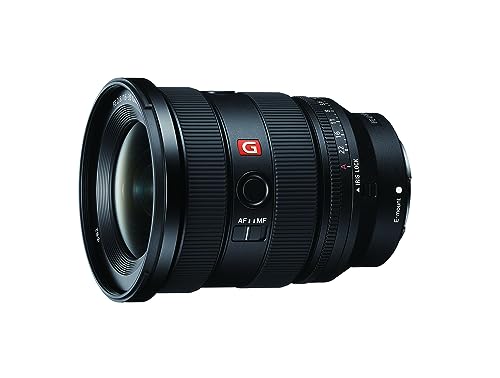
One Travel Lens That Handles Almost Everything
For all day travel the Canon RF 24-105mm f/4L IS is the most balanced walkaround lens, covering wide to short telephoto with stabilization. Sony shooters get the same versatility in the FE 24-105mm f/4 G, and the Tamron 28-200mm is the ultimate one lens do everything option.
If you want a single lens that stays on the camera from breakfast markets to sunset skylines, the Canon RF 24-105mm f/4L IS is the safe, versatile pick. Sony owners get a near identical toolset in the FE 24-105mm f/4 G, while travelers who hate swapping glass should consider the far reaching Tamron 28-200mm.
Choosing a travel lens is tricky because you are juggling range, weight, aperture and price all at once, and no single lens wins every category. We weighed real owner experiences, focal flexibility, stabilization, low light ability and how comfortably each lens carries all day, then matched picks to the mounts travelers commonly shoot.
Before you buy
Start with your camera mount A travel lens is only useful if it fits, so confirm whether you shoot Canon RF, Sony E, Nikon Z or Fujifilm X and buy native. Matching the lens to your mount keeps autofocus snappy and the package compact, which counts double when it is the one lens you carry all trip.
Deciding how much range you need A 24-105mm covers most scenes from landscapes to loose portraits, while superzooms like the Tamron 28-200mm or Canon 24-240mm add wildlife and detail reach at the cost of some sharpness. On APS-C remember the crop, so a Fuji 18-135mm frames like a 27-206mm.
Aperture, low light and blur Constant f/2.8 zooms such as the Sony 24-70mm GM II shine in dim streets and give more background separation, but they are heavier and pricier. Variable f/4 to f/6.3 travel zooms save weight and money if you mostly shoot in decent light.
Weight and stabilization for all day carry The best travel lens is the one you happily wear from morning to night, so weigh comfort against reach. Optical stabilization, common on these picks, lets you shoot slower handheld in markets, museums and dusk streets without bumping the ISO too high.
Our top picks

Canon RF 24-105mm f/4L IS USM
This L series zoom is the default travel companion for many Canon shooters because it spans wide landscapes to tight portraits with strong stabilization. Sharp, sealed and dependable, it rarely needs to come off.
Pros
- Versatile wide to short tele range
- Effective image stabilization
- Weather sealed L build
Cons
- f/4 limits background blur
- Some distortion at 24mm

Sony FE 24-105mm f/4 G OSS
A perennial favorite on Sony bodies, this G zoom keeps consistent sharpness through its whole range and focuses quickly. It is the lens many Sony owners leave mounted for entire trips.
Pros
- Consistent sharpness across the zoom
- Fast, quiet autofocus
- Well balanced on Sony bodies
Cons
- Noticeable distortion uncorrected
- Constant f/4 in dim light

Nikon Z 24-120mm f/4 S
Nikon stretches the familiar standard zoom to 120mm, giving a little extra telephoto pull for details and candid shots. Part of the S line, it stays sharp and handles beautifully.
Pros
- Handy 24-120mm range
- Sharp S line optics
- Great value for the versatility
Cons
- Slightly larger than 24-105mm rivals
- f/4 only throughout

Tamron 28-200mm f/2.8-5.6 Di III RXD
This clever zoom starts at a bright f/2.8 and stretches all the way to 200mm, so you can shoot street scenes then reach distant details without switching lenses. Ideal for light packers.
Pros
- Huge one lens focal range
- Bright f/2.8 at the wide end
- Light for its reach
Cons
- Aperture narrows quickly zoomed in
- Starts at 28mm, not 24mm

Fujifilm XF 18-135mm f/3.5-5.6 R LM OIS WR
Covering roughly 27mm to 206mm equivalent, this weather resistant Fuji zoom is a true all day travel lens for X mount shooters. Stabilization keeps handheld shots steady at the long end.
Pros
- Very broad travel range
- Weather resistant build
- Effective optical stabilization
Cons
- Variable, slower aperture
- Softer at the long extreme

Sony FE 24-70mm f/2.8 GM II
When image quality and low light matter more than reach, this constant f/2.8 GM zoom is a superb travel lens. It is remarkably compact for its class and stunningly sharp.
Pros
- Bright constant f/2.8 aperture
- Outstanding sharpness
- Compact for a pro zoom
Cons
- Shorter reach than travel zooms
- Premium price

Canon RF 24-240mm f/4-6.3 IS USM
For travelers who value reach and simplicity above outright quality, this ten times zoom goes from wide streets to distant wildlife on one barrel. Stabilization helps at full stretch.
Pros
- Enormous 24-240mm range
- Never miss a shot swapping lenses
- Built in stabilization
Cons
- Slow aperture at the long end
- Image quality dips versus prime zooms
How they stack up
| # | Model | Mount | Best for | Score | Price |
|---|---|---|---|---|---|
| 1 | Canon RF 24-105mm f/4L IS USM | Canon RF full frame | Best overall | 9.4 | Check price |
| 2 | Sony FE 24-105mm f/4 G OSS | Sony E full frame | Best for Sony | 9.3 | Check price |
| 3 | Nikon Z 24-120mm f/4 S | Nikon Z full frame | Best value | 9.2 | Check price |
| 4 | Tamron 28-200mm f/2.8-5.6 Di III RXD | Sony E full frame | Best all in one | 9.0 | Check price |
| 5 | Fujifilm XF 18-135mm f/3.5-5.6 R LM OIS WR | Fujifilm X APS-C | Best for APS-C | 8.8 | Check price |
| 6 | Sony FE 24-70mm f/2.8 GM II | Sony E full frame | Best premium | 9.1 | Check price |
| 7 | Canon RF 24-240mm f/4-6.3 IS USM | Canon RF full frame | Best superzoom | 8.6 | Check price |
Common questions
What is the best all round travel lens focal range?
A 24-105mm zoom is the classic travel range because it covers wide scenes through to short telephoto shots. If you want more reach for wildlife or details, a superzoom stretching to 200mm or beyond adds flexibility.
Is one lens really enough for a whole trip?
For most travelers, yes. A versatile 24-105mm or a superzoom keeps you covered across landscapes, street scenes and portraits without the hassle and dust risk of changing glass on the move.
Should I choose f/2.8 or f/4 for travel?
Pick f/2.8 if you often shoot in dim light or want stronger background blur and can accept extra weight. An f/4 or variable aperture zoom is lighter, cheaper and fine for daytime and well lit scenes.
Are superzooms worth the image quality trade off?
For casual travel where convenience wins, absolutely, since never missing a shot matters more than pixel level sharpness. If you print large or crop hard, a shorter range but sharper zoom serves you better.
Do travel lenses need stabilization?
It helps a lot, especially at longer focal lengths and in low light where you cannot use fast shutter speeds. Stabilization lets you shoot handheld in museums and at dusk without raising ISO excessively.
Will an APS-C travel lens cover enough range?
Yes, a lens like the Fujifilm XF 18-135mm reaches from wide to long telephoto in full frame terms. Just match it to an X mount body, as it will not fit other systems.
Is a 24-70mm too short for travel?
It can feel limiting if you want distant details, but the trade is superb quality and low light ability. Pair it with your feet for framing, or add a small telephoto if reach matters.
How heavy is too heavy for a walkaround lens?
There is no fixed number, but if a lens tempts you to leave the camera in the bag, it is too heavy for you. Try to keep the whole kit light enough to wear comfortably for hours.
Final word
For a do everything trip lens, the Canon RF 24-105mm f/4L IS and Sony FE 24-105mm f/4 G are the balanced picks that rarely leave the body. Travelers chasing maximum reach on one barrel should grab the Tamron 28-200mm or Canon RF 24-240mm, while the Sony 24-70mm GM II wins when low light and quality lead. Whatever you choose, buy native for your mount so it stays light and fast.