Horse Lead Ropes That Hold When a Horse Pulls Back
Weaver Leather’s Flat Cotton Lead Rope handles daily barn chores at a low cost with solid brass hardware. Mustang Manufacturing’s Poly Rope Lead resists fraying in wet or humid barns. Professional’s Choice Cushioned Cotton Lead adds shock absorption for young or nervous horses. Check the clip strength before length or material.
Weaver Leather’s Flat Cotton Lead Rope covers everyday leading and tying without straining a budget. Its brass bolt snap and flat weave grip hold up better than round rope over time. Professional’s Choice Cushioned Cotton Lead adds padding instead, for horses that pull back hard.
Hardware quality, not rope thickness, decides whether a spooked horse can break free, so shopping by material alone misses the real risk. We compared clip strength, material durability, and length against common barn and trailering tasks.
Our top picks

Weaver Leather Flat Cotton Lead Rope
A flat cotton weave measures 7.5 feet and pairs a solid brass bolt snap with a grip that stays soft under repeated use. Owners report this flat style holds up better over time than round rope. Daily leading, grooming ties, and general handling all fit within its bulk-free design.
Pros
- Comfortable flat weave grip
- Durable brass hardware
- Affordable for daily use
Cons
- Not ideal for horses that chew leads
- Standard length limits some groundwork exercises

Mustang Manufacturing Poly Rope Lead
Marine-grade poly rope resists fraying and mildew better than cotton in wet or humid barns. A heavy-duty bolt snap holds firm under sudden pulls from larger horses. Ten feet of length leaves extra room for round pen work.
Pros
- Resists water and mildew damage
- Extra length for groundwork
- Strong snap for large horses
Cons
- Rope texture is firmer on bare hands
- Longer length can tangle if not coiled properly

Professional’s Choice Cushioned Cotton Lead
A cushioned core inside the cotton weave softens sudden jerks, useful for young horses still learning to lead. Its panic snap releases quickly under load if a horse pulls back hard. Handlers training foals often prefer this shock absorption over stiffer rope leads.
Pros
- Cushioned core reduces jerk impact
- Panic snap releases under pressure
- Good for training young horses
Cons
- Panic snap needs replacement after heavy use
- Costs more than standard cotton leads

Weaver Leather Nylon Lead with Chain
A 30-inch chain section runs from the snap toward the halter ring, giving handlers extra control over horses that lean or pull. Nylon body resists moisture better than cotton in wash stalls. Trainers reach for chain leads during early groundwork, not casual leading.
Pros
- Chain adds control for strong horses
- Nylon resists moisture well
- Compact chain length for precision
Cons
- Requires proper technique to use safely
- Not suited for casual or young riders

Tough 1 Rope Halter and Lead Combo
This set pairs a rope halter with a matching 10-foot lead, priced for owners outfitting multiple horses. Knotted rope halter design applies pressure points useful for groundwork training. Lead and halter share the same rope diameter for a consistent feel.
Pros
- Includes matching halter
- Lower cost per set
- Good for groundwork pressure cues
Cons
- No metal snap for quick release
- Thinner rope than premium options
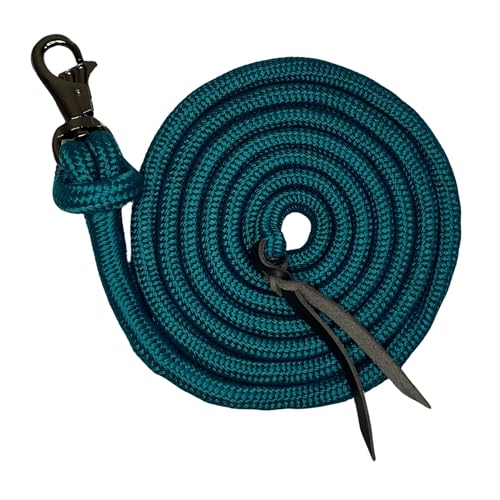
Kensington Signature Cotton Lead Rope
Kensington sells this lead in colors matched to its halter and fly sheet lines, useful for barns that coordinate gear by rider or stall. Cotton weave stays soft through repeated washing. A brass snap keeps hardware from rusting in wash areas.
Pros
- Coordinates with matching tack lines
- Brass hardware resists rust
- Soft feel after washing
Cons
- Limited to cotton’s lower load rating
- Colors fade faster than solid black hardware

Zilco Deluxe Leather Lead Rope
Zilco builds this lead from full-grain leather, favored for showmanship classes where presentation matters. Stitched panic snap hardware balances safety with a polished look. Leather needs conditioning to stay supple, unlike the synthetic rope options here.
Pros
- Polished look for showmanship
- Strong stitched hardware
- Ages well with proper care
Cons
- Needs regular leather conditioning
- Higher cost than cotton or nylon leads
Side by side
| # | Model | Material | Best for | Score | Price |
|---|---|---|---|---|---|
| 1 | Weaver Leather Flat Cotton Lead Rope | Cotton webbing | Best overall | 9.4 | Check price |
| 2 | Mustang Manufacturing Poly Rope Lead | Poly rope | Best for durability | 9.2 | Check price |
| 3 | Professional’s Choice Cushioned Cotton Lead | Cushioned cotton | Best for young or nervous horses | 9.0 | Check price |
| 4 | Weaver Leather Nylon Lead with Chain | Nylon with chain | Best for strong pullers | 8.7 | Check price |
| 5 | Tough 1 Rope Halter and Lead Combo | Poly rope | Best value | 8.4 | Check price |
| 6 | Kensington Signature Cotton Lead Rope | Cotton | Best for barn aesthetics | 8.2 | Check price |
| 7 | Zilco Deluxe Leather Lead Rope | Full-grain leather | Best premium leather option | 8.0 | Check price |
Before you buy
What to look for in a horse lead Hardware is the first thing to check, since a weak bolt snap is the most common failure point under a sudden pull. Material affects grip and water resistance, with cotton feeling softest and poly rope handling wet conditions better. Length should match the task, running 7 to 8 feet for daily leading and up to 10 feet for groundwork.
Which material suits your barn conditions? Cotton leads like the Weaver Flat Cotton stay comfortable for daily handling but hold moisture longer in wash stalls. Poly rope options such as the Mustang lead resist mildew and dry faster, better suited to humid climates. Leather adds a polished look for shows but needs conditioning to avoid cracking.
Leads for young horses versus strong pullers Foals and green horses benefit from cushioned or panic-snap leads that absorb sudden jerks without straining their neck. Older or stronger horses that lean into pressure may need a chain lead for added control during training. Match the lead to a horse’s training stage, not just its size.
Choosing length and hardware for specific tasks Standard leading and tying works fine with a 7 to 8 foot lead and a solid brass snap. Groundwork exercises like lunging in a round pen benefit from the extra reach of a 10-foot lead. Trailer loading often calls for a quick-release snap in case a horse panics inside.
Good to know
What length lead rope is best for horses?
A 7 to 8 foot lead suits everyday leading and tying, while 10 feet or longer works better for groundwork exercises like lunging.
Cotton vs nylon lead rope, which lasts longer?
Nylon and poly rope resist moisture and mildew better than cotton, making them more durable in humid or wet barn conditions.
Are chain leads safe for beginners?
Chain leads require proper technique and suit experienced handlers working with strong or pulling horses more than beginners.
What hardware is strongest for a horse lead?
Solid brass or heavy-duty steel bolt snaps hold up best under sudden pulls, compared to lighter clips on inexpensive leads.
Do panic snaps actually release under pressure?
Yes, panic snaps release when a horse pulls back hard, cutting injury risk compared to standard bolt snaps.
Is leather or rope better for a lead rope?
Leather gives a polished look for showmanship, while rope materials handle daily wear and moisture with less upkeep.
Can I use the same lead for tying and leading?
Most standard 7 to 8 foot cotton or nylon leads work for both tasks, though dedicated trailer-tie leads sometimes add a quick-release end.
How often should a horse lead be replaced?
Inspect stitching and snap hardware every few months, and replace the lead once fraying, cracking, or a loose snap shows up.
What is a rope halter and lead combo used for?
A rope halter and lead combo applies pressure-point cues during groundwork training, and works well for owners outfitting several horses at once.
Do horse leads need a chain for control?
Only horses that lean or pull hard typically need a chain section; most horses lead safely on a plain cotton or nylon lead.
Final word
Weaver Leather’s Flat Cotton Lead Rope suits most barns with its balance of comfort, brass hardware, and cost for daily handling. Owners training foals or nervous horses should choose the Professional’s Choice Cushioned Lead instead for its shock-absorbing core. Skip chain leads unless you already have experience controlling a horse that leans hard into pressure.


