Do These Premium Reptile Lights Deliver Real UVB Output?
Arcadia’s ProT5 Kit leads on measured UVB output for basking species. Zoo Med’s ReptiSun T5 HO follows closely at a lower cost. The Solarmeter 6.5 UVB meter pairs with either fixture for owners who want to verify actual output instead of trusting the label.
Arcadia’s ProT5 Kit tests highest for sustained UVB output among the fixtures compared here. Zoo Med’s ReptiSun T5 HO comes close at a friendlier price. Keepers who want certainty instead of guesswork should add a Solarmeter 6.5 to measure real output at the basking spot.
UVB bulbs degrade well before their visible light dims, so a fixture that looked fine last month can leave a reptile short on vitamin D3 today. We compared independently reported UVB percentages, reflector designs that affect usable output, and how long each bulb holds effective output before replacement.
The shortlist, ranked

Arcadia ProT5 Reptile UV Lighting Kit
This T5 HO fixture pairs a reflective canopy with Arcadia’s 6 percent or 12 percent UVB tubes, chosen by species need. Its reflector pushes more usable UVB to the basking area than open fixtures do. Keepers of desert species report stronger basking behavior after switching from compact UVB bulbs.
Pros
- High usable UVB thanks to reflector design
- Available in output levels for desert or forest species
- Holds consistent output through most of its rated life
Cons
- Costs more upfront than compact UVB kits
- Needs more enclosure clearance for the T5 fixture

Zoo Med ReptiSun T5 HO Terrarium Lamp Fixture
This fixture accepts Zoo Med’s T5 HO ReptiSun bulbs, a widely used standard for bearded dragons and other basking lizards. Lightweight housing mounts easily to mesh screen tops. Owners running multiple enclosures cite it as the easiest fixture to source replacement bulbs for.
Pros
- Replacement bulbs are easy to find
- Mounts easily to screen top enclosures
- Solid balance of output and price
Cons
- Housing plastic feels less premium than Arcadia’s
- Reflector spreads output slightly less efficiently

Solarmeter 6.5 UVB Meter
Rather than trust a bulb’s rated percentage, this handheld meter measures actual UVB reaching the basking spot in microwatts. Keepers use it to track bulb degradation over months and know exactly when to replace one. Reptile veterinarians reference readings from this meter in husbandry guidance.
Pros
- Removes guesswork on real UVB delivery
- Works with any brand of UVB bulb
- Times replacement before output drops too low
Cons
- Adds cost on top of the lighting fixture itself
- Requires knowing the target UVB index for your species

Zoo Med PowerSun UV Mercury Vapor Bulb
A single mercury vapor bulb supplies UVA, UVB and basking heat together, cutting fixture clutter in larger enclosures. It suits bigger basking species like monitors and larger dragons that need strong heat alongside UVB. Owners note it needs a ceramic socket rated for the higher wattage and heat.
Pros
- Combines heat and UVB in one bulb
- Suits larger basking species well
- Reduces the number of fixtures needed
Cons
- Requires a ceramic, heat rated socket
- Cannot dim separately from its UVB output
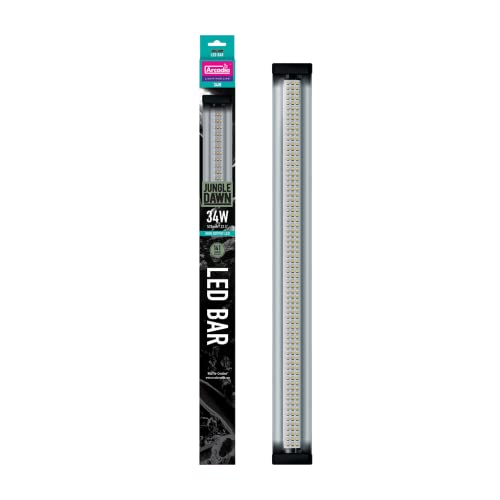
Arcadia Jungle Dawn LED Bar
This LED bar delivers strong visible light tuned for planted or forest style enclosures, without a separate UVB tube built in. It supports live plant growth alongside chameleons and other arboreal reptiles. Keepers running bioactive setups pair it with a separate low output UVB tube for full coverage.
Pros
- Strong visible spectrum supports live plants
- Long LED lifespan compared with fluorescent tubes
- Low heat output near the enclosure
Cons
- Supplies no UVB on its own
- Needs a separate UVB fixture for reptile needs

Zilla UVB100 Fluorescent Bulb Fixture
This compact fixture suits smaller terrariums where a full length T5 fixture will not fit comfortably. Zilla’s UVB100 bulb reaches moderate output appropriate for many forest and semi arboreal species. Owners of smaller gecko and snake enclosures favor its smaller footprint.
Pros
- Fits smaller terrarium dimensions well
- Costs less than full size T5 fixtures
- Delivers adequate output for lower UVB need species
Cons
- Holds effective output for a shorter span than T5 HO options
- Falls short for high UVB need desert species
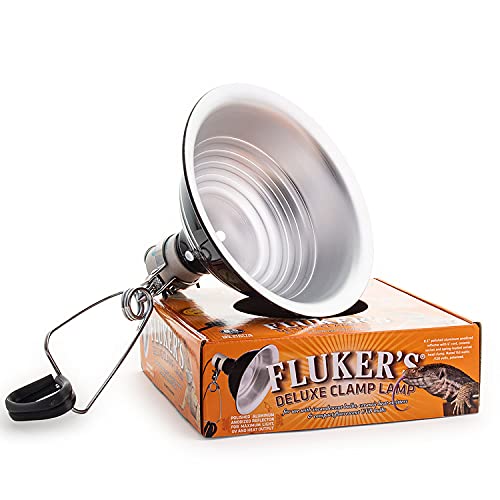
Fluker’s Clamp Lamp with Dome
This simple clamp fixture holds any standard screw in UVB or basking bulb, offering flexibility at low cost. Its aluminum dome reflects light downward reasonably well for the price. Owners use it as a backup fixture or for smaller supplemental basking spots.
Pros
- Works with a wide range of bulb types
- Adds a second basking spot cheaply
- Adjustable clamp fits many enclosure edges
Cons
- Reflector is less efficient than dedicated T5 fixtures
- Bulb quality depends entirely on what you install
How they compare
| # | Model | Bulb type | Best for | Score | Price |
|---|---|---|---|---|---|
| 1 | Arcadia ProT5 Reptile UV Lighting Kit | T5 HO fluorescent | Best overall | 9.4 | Check price |
| 2 | Zoo Med ReptiSun T5 HO Terrarium Lamp Fixture | T5 HO fluorescent | Best value | 9.1 | Check price |
| 3 | Solarmeter 6.5 UVB Meter | UVB irradiance in microwatts per square centimeter | Best for verifying output | 8.9 | Check price |
| 4 | Zoo Med PowerSun UV Mercury Vapor Bulb | Mercury vapor, self ballasted | Best for combined heat and UVB | 8.6 | Check price |
| 5 | Arcadia Jungle Dawn LED Bar | Full spectrum LED bar | Best for forest and arboreal species | 8.4 | Check price |
| 6 | Zilla UVB100 Fluorescent Bulb Fixture | T8 fluorescent | Best for smaller enclosures | 8.2 | Check price |
| 7 | Fluker’s Clamp Lamp with Dome | Clamp lamp with dome | Best budget fixture | 8.0 | Check price |
What to look for
What premium reptile lighting actually needs to deliver UVB lighting lets a reptile synthesize vitamin D3 through its skin, which regulates calcium metabolism. Visible light and heat matter too, but UVB is the piece most often gotten wrong, since it degrades silently and stays invisible to the eye. Premium fixtures earn that label through reflector design, sustained output over the bulb’s life, and build quality, not brand name alone.
How to match UVB output to species needs Desert basking species like bearded dragons and many monitors need higher UVB output, often in the 10 to 12 percent range from a T5 HO tube. Forest and semi arboreal species, many geckos and some chameleons, do better with lower output around 5 percent or ambient exposure. Check species specific UVB index recommendations rather than assume one output level fits every reptile.
Why bulb replacement schedules matter more than the label Most fluorescent UVB bulbs lose meaningful output well before a year passes, even as visible light stays bright. Mercury vapor and LED combination bulbs degrade at different rates. A UVB meter removes the guesswork, but absent one, replacing tubes on a strict 6 to 12 month schedule avoids a silent deficiency.
Combined heat and UVB versus separate fixtures Mercury vapor bulbs simplify larger enclosures by combining basking heat and UVB in one bulb, useful for bigger reptiles that need intense heat. Smaller or multi zone enclosures often do better with separate UVB tubes and ceramic heat emitters, since each can be replaced or adjusted independently. Bioactive planted setups usually need a full spectrum LED for plant growth on top of a dedicated UVB source.
Good to know
How often should you replace a UVB bulb?
Most fluorescent UVB tubes need replacement every 6 to 12 months, since usable output drops well before the bulb stops lighting. Checking with a UVB meter gives the most accurate answer.
What UVB percentage does a reptile need?
Desert basking species like bearded dragons typically need 10 to 12 percent UVB tubes. Many forest species and geckos need 5 percent or lower ambient exposure instead.
Can LED bulbs provide UVB for reptiles?
Most reptile LED bars supply visible and sometimes UVA light but not meaningful UVB, since UVB LEDs remain expensive and uncommon in consumer fixtures. Pair an LED bar with a dedicated UVB fluorescent or mercury vapor bulb for full coverage.
Is a UVB meter worth buying for a home setup?
Keepers with multiple enclosures or sensitive species benefit most, since a meter removes guesswork on bulb degradation. A single enclosure hobbyist can rely on a strict replacement schedule instead.
What is the difference between T5 and T8 UVB fixtures?
T5 HO tubes output significantly more UVB per tube and cover more distance, making them the current standard for premium setups. T8 tubes remain common in budget fixtures but need closer bulb to basking distance.
Do mercury vapor bulbs need a special fixture?
Yes, they require a ceramic socket rated for their heat output, since standard plastic fixtures can melt. They run self ballasted, so no separate fixture ballast is needed.
How far should a UVB bulb sit from the basking spot?
Distance varies by bulb and manufacturer, generally 6 to 12 inches for T5 HO tubes and further for mercury vapor bulbs. Check the manufacturer’s UVB index chart for the specific bulb.
Which reptile lighting works best for a bioactive planted terrarium?
A full spectrum LED bar for plant growth paired with a separate UVB tube sized to the reptile species covers both needs. Neither fixture has to compromise on the other’s job.
Arcadia ProT5 vs Zoo Med ReptiSun: which UVB kit is better?
Arcadia’s ProT5 tests higher for sustained UVB output and uses a more efficient reflector. Zoo Med’s ReptiSun T5 HO costs less and uses bulbs that are easier to find for replacement.
Final word
Go with the Arcadia ProT5 Kit for UVB output that holds up over the bulb’s full life. Budget conscious keepers do just as well with the Zoo Med ReptiSun T5 HO. Anyone managing several enclosures or costly species should add a Solarmeter 6.5 to confirm real output instead of guessing.