Premium Science Kits That Wow Young Minds
The best premium science kit for most families is the Thames & Kosmos Ultimate Science Kit because it packs 20 varied experiments with high-quality components. It appeals to kids aged 8 and up who love hands-on discovery, but it may require adult supervision for some steps.
Premium science kits turn play into discovery, offering high-quality materials and meaningful experiments that standard kits often miss. Whether your child dreams of chemistry or coding, these kits are built to inspire and educate.
We looked at customer feedback and product specifications to find kits that offer real value, durability, and learning potential. Here are our top picks for young explorers.
Our top picks

Thames & Kosmos Ultimate Science Kit
This kit is a comprehensive introduction to chemistry, physics, and biology. It includes a 48-page manual and materials for 20 experiments, from making a volcano to building a simple motor. The components are sturdy and reusable, making it a lasting investment.
Pros
- High-quality, reusable materials
- Clear instructions with scientific explanations
- Covers multiple science fields
Cons
- Some experiments require common household items
- Adult supervision needed for a few steps
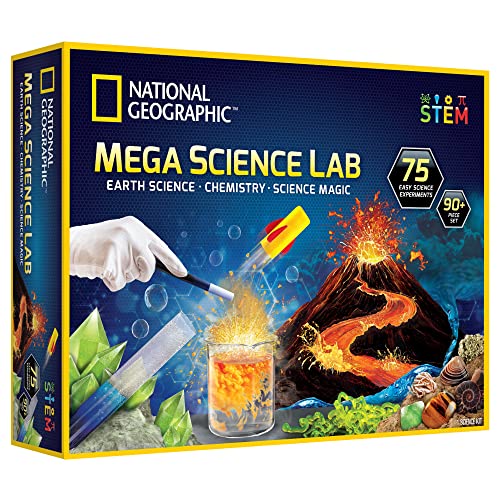
National Geographic Mega Science Lab
This kit from National Geographic offers more than 75 experiments, including growing crystals, digging for fossils, and exploring volcanic reactions. It comes with real specimens like geodes and pyrite, making it a treasure trove for curious minds.
Pros
- Huge variety of activities
- Real specimens add authenticity
- Great value for the number of projects
Cons
- Some activities are messy
- Requires additional supplies like jars

Snap Circuits Pro Electronics Exploration Kit
Snap Circuits allows kids to build over 500 electronic projects, from alarms to AM radios, using snap-together parts. No soldering or tools are needed, making it safe and accessible. The clear instructions teach circuit design step by step.
Pros
- Endless building possibilities
- Teaches real electronics principles
- Parts snap together easily
Cons
- Batteries not included
- Small parts may be a choking hazard for younger kids
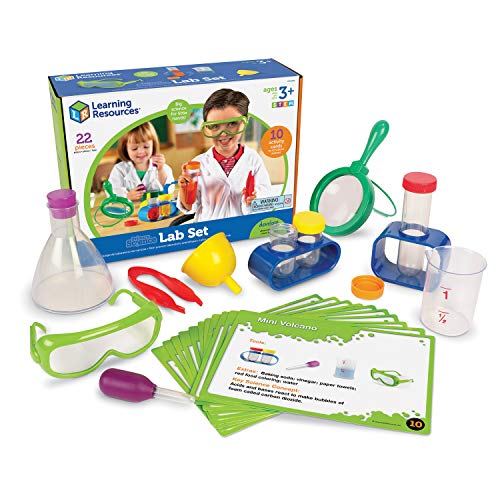
Learning Resources Primary Science Lab Set
This set is designed for little hands, featuring oversized tools like test tubes, a magnifying glass, and a safety glasses. It includes 10 simple experiments that introduce basic science concepts in a playful way. The pieces are durable and easy to clean.
Pros
- Perfectly sized for young children
- Durable and easy to clean
- Encourages early curiosity
Cons
- Limited number of experiments
- May be too simple for older kids
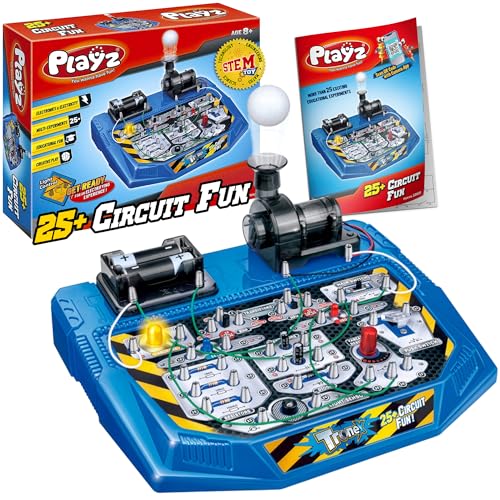
Playz Electrical Circuit Board Engineering Kit
This kit lets kids construct working circuits using wires, bulbs, and switches. It includes over 25 experiments that demonstrate voltage, current, and resistance. The build-your-own approach helps children understand how electricity flows.
Pros
- Teaches practical circuit building
- Includes real electrical components
- Encourages problem-solving
Cons
- Requires careful assembly
- Adult help needed for complex steps

Crayola Paper Butterfly Science Kit
This unique kit combines science and art by letting kids create color-changing paper butterflies. It includes 5 science experiments that explore capillary action and color mixing. The finished butterflies make beautiful decorations.
Pros
- Blends creativity with scientific principles
- Mess-free and easy cleanup
- Beautiful results to display
Cons
- Limited number of experiments
- May be too short-lived for some

4M Crystal Growing Experiment
Kids can grow their own crystals in just a few days, learning about geology and chemistry. The kit includes crystal powder, a display base, and detailed instructions. It is a simple yet fascinating experiment that yields a tangible result.
Pros
- Teaches patience and observation
- Results are visually impressive
- Great for science fair projects
Cons
- Requires careful following of instructions
- Messy powder handling
The lineup, side by side
| # | Model | Number of Experiments | Best for | Score | Price |
|---|---|---|---|---|---|
| 1 | Thames & Kosmos Ultimate Science Kit | 20 | Overall best with 20 diverse experiments | 9.6 | Check price |
| 2 | National Geographic Mega Science Lab | 75+ | Budding geologists and nature lovers | 9.2 | Check price |
| 3 | Snap Circuits Pro Electronics Exploration Kit | 500+ | Future engineers and tech enthusiasts | 9.5 | Check price |
| 4 | Learning Resources Primary Science Lab Set | 10 | Preschoolers and early elementary | 8.8 | Check price |
| 5 | Playz Electrical Circuit Board Engineering Kit | 25+ | Hands-on learning with real circuit components | 8.7 | Check price |
| 6 | Crayola Paper Butterfly Science Kit | 5 | Creative kids who love art and nature | 8.4 | Check price |
| 7 | 4M Crystal Growing Experiment | 3 crystal growing projects | Patience and observation skills | 8.2 | Check price |
What matters most
Good to know
What is the best premium science kit for a 7-year-old?
The Learning Resources Primary Science Lab Set is excellent for younger kids, but for a 7-year-old who can handle more, the Thames & Kosmos Ultimate Science Kit is also suitable. It offers a wide range of experiments that are engaging and educational.
Are premium science kits worth the extra cost?
Yes, for children who are genuinely interested in science, premium kits often use higher-quality materials, include more experiments, and provide better instructions. They tend to be more durable and offer deeper learning experiences compared to budget options.
Can these kits be used for multiple children?
Most kits are designed for one child but can be shared. The Thames & Kosmos and Snap Circuits kits have reusable components, making them ideal for siblings or classroom settings. However, consumable supplies like crystal powder will need to be replenished.
Do I need to buy extra materials?
Some kits require common household items like water, baking soda, or jars. Always read the product description to see what is included and what you need to provide. Batteries are often required for electronic kits and are not included.
What safety precautions should I take?
Always read the safety instructions included in the kit. Use safety glasses when recommended, and supervise younger children. Some experiments may involve small parts that could be a choking hazard, so keep them away from toddlers.
How long do the experiments take?
It varies by kit. Some experiments can be done in minutes, while others, like crystal growing, take days to see results. The manuals often indicate the time required for each experiment, so you can plan accordingly.
Are these kits suitable for science fair projects?
Absolutely. Many of these kits, especially the Thames & Kosmos and National Geographic ones, provide excellent bases for science fair projects. They come with clear explanations and allow for variations that kids can explore.
Can girls and boys both enjoy these kits?
Yes, science is for everyone. These kits are gender-neutral and designed to appeal to any child who loves discovery. The activities are engaging for all.
What is the age range for these premium kits?
The age ranges vary from 4 years old for the Learning Resources set to 10 and up for the Crystal Growing kit. Most are aimed at 8 and up, but always check the packaging to ensure it matches your child’s abilities.
Do these kits align with school curriculum?
Many kits are designed to supplement STEM education and align with Next Generation Science Standards (NGSS). They teach concepts like electricity, chemistry, and physics that are covered in school, making them great for reinforcing learning at home.
Our pick
For most families, the Thames & Kosmos Ultimate Science Kit is the best overall because it offers a rich variety of experiments, durable components, and a strong educational foundation. If your child is especially interested in electronics, choose the Snap Circuits Pro; for younger kids, the Learning Resources Primary Science Lab Set is the perfect start. Pick the one that matches your child’s passion and age, and you will not be disappointed.


