Outdoor Privacy Screens: Mesh, Reed and Hedge Compared
For most yards, Windscreen4less’s Heavy Duty Privacy Screen balances privacy, airflow, and long-run coverage on chain-link and wood fences. Coarbor’s tighter weave raises blockage on chain-link runs, and Sunnyglade’s lighter mesh suits smaller or temporary setups on a budget. All three mount with grommeted edges and zip ties.
Windscreen4less’s Heavy Duty Privacy Screen suits homeowners screening a full fence line, since knitted HDPE mesh sheds wind instead of catching it like a sail. Coverage stretches across long chain-link and wood runs without seams. Its knitted texture looks plainer than reed or hedge styles, so decorative appeal takes a back seat to durability.
Outdoor privacy screens differ by material, blockage rate, and mounting method, so a screen built for a chain-link fence often fails on a deck railing or balcony. We compared manufacturer specs, grommet spacing, and patterns in owner feedback across fence, patio, and balcony use cases to pick these seven.
The best picks, ranked
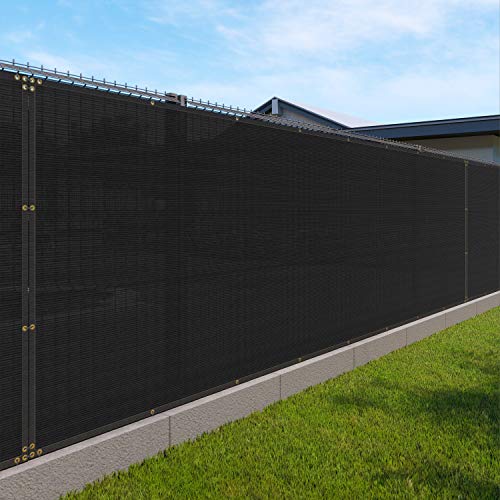
Windscreen4less Heavy Duty Privacy Screen Fence
Knitted HDPE mesh construction lets wind slip through small perforations rather than pushing against a solid panel. Brass grommets run every 24 inches along all four hems, supporting zip ties or hog rings on chain-link, wood, or vinyl fencing. Windscreen4less sells multiple roll lengths up to 50 feet, so a single order can cover a long property line without seams.
Pros
- Grommets on every edge support multiple mounting methods
- Perforated mesh cuts wind load compared to solid fabric
- Long roll lengths cover extended fence runs without splicing
Cons
- Knitted texture reads plainer than reed or hedge styles
- Full-length rolls get heavy and awkward for one installer
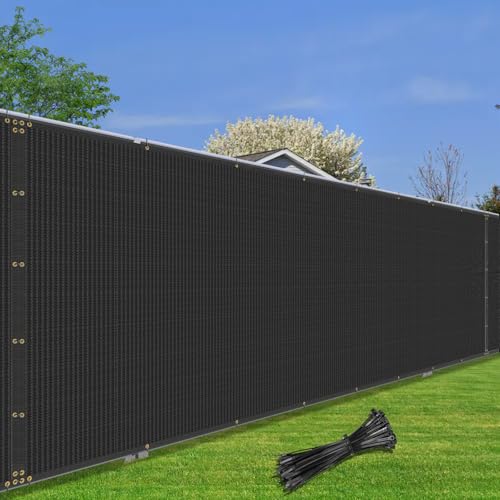
Coarbor Privacy Fence Screen
Coarbor weaves this mesh tighter than typical windscreen fabric, pushing blockage toward the higher end of the range while still passing some air. Metal grommets line the top and bottom hems for zip-tying to chain-link fabric at standard post intervals. Wood rail fences work too, provided the ties wrap securely around the rail.
Pros
- Tighter weave raises blockage above basic mesh windscreens
- Grommet spacing lines up with standard chain-link posts
- Double-stitched edges resist fraying over time
Cons
- Higher blockage means more wind load during storms
- No pre-cut panels for deck railings or curved surfaces

ColourTree Fence Privacy Screen
ColourTree stocks this screen in height and length combinations wide enough to fit odd-shaped yards without stacking multiple rolls. UV-stabilized fabric resists fading, and a reinforced binding wraps the perimeter to keep grommets from tearing loose. Color choices include green, black, and tan, which helps the screen blend with existing fencing or plantings.
Pros
- Wide size range cuts down on custom cutting
- UV-stabilized fabric holds color in direct sun
- Multiple colors blend with fencing or landscaping
Cons
- Thinner gauge than heavy-duty competitors
- Corner grommets can stretch under sustained wind pressure

Sunnyglade 6 x 50 ft Privacy Fence Screen
A single 6 by 50 foot panel from Sunnyglade covers a full run without seams, which keeps material cost down for larger yards. Knitted rather than woven construction sheds wind but lets through more light than solid fabric. Owners typically use it on patios and gardens rather than as a permanent fence covering.
Pros
- One 50-foot panel spans long runs without seams
- Lighter material weight eases solo installation
- Grommets on every side allow horizontal or vertical hanging
Cons
- Fabric gauge runs lighter than premium mesh screens
- Edges fray sooner under constant wind, per owner reports
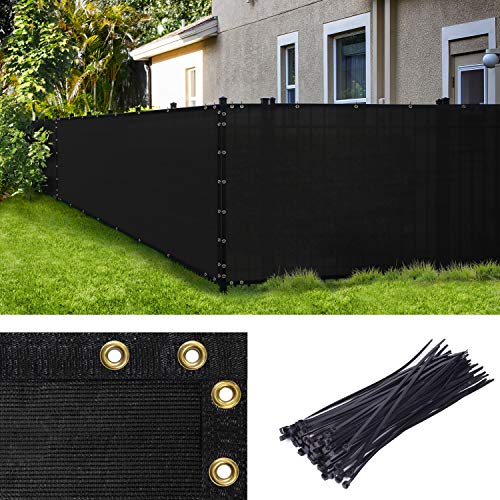
Amgo Privacy Fence Screen
Amgo opens the knit wider than solid privacy fabric, cutting the wind load fence posts absorb during storms. Reinforced corner patches spread stress at mounting points, which matters most on exposed lines without a windbreak nearby. Several density options let buyers trade some blockage for lower wind resistance in gusty areas.
Pros
- Open knit specifically reduces sail effect in high wind
- Reinforced corners outlast plain grommet holes
- Density options balance privacy against wind exposure
Cons
- Blockage rate trails tighter-weave competitors slightly
- Not built for balcony or railing mounting

Vicoober Artificial Ivy Leaf Privacy Fence Screen
Synthetic ivy leaves woven into a mesh backing block sightlines almost completely, unlike fabric that relies on density alone. Panels connect edge to edge with zip ties, so covering a fence section means linking several one-meter squares rather than hanging one roll. Extra leaf surface area catches more wind than flat mesh, so a sturdy fence needs to be behind it.
Pros
- Near-total visual blockage beats flat mesh or fabric
- Leaf texture doubles as a landscaping accent
- Modular panels adapt to irregular fence lengths
Cons
- Leaf surface area adds wind resistance versus flat mesh
- Long fence runs need many individual panels

Backyard X-Scapes Natural Reed Fencing
Reed stalks bundled and wired into rolls give this fencing a tiki or coastal look synthetic mesh cannot copy. Wire lacing runs through the roll instead of grommeted hems, so installers usually tie it to railings or lattice with zip ties or twine. Lighter weight than hedge panels makes it a common pick for apartment balconies and pergola sides where drilling is off-limits.
Pros
- Natural material suits balconies and pergolas better than plastic mesh
- Lighter weight than artificial hedge panels eases railing mounting
- Zip ties or twine secure it without drilling
Cons
- Blockage rate trails knitted mesh or hedge panels
- Reed degrades faster than synthetic materials in constant rain
How they stack up
| # | Model | Material | Best for | Score | Price |
|---|---|---|---|---|---|
| 1 | Windscreen4less Heavy Duty Privacy Screen Fence | Knitted HDPE mesh | Best overall | 9.4 | Check price |
| 2 | Coarbor Privacy Fence Screen | Woven polyester mesh fabric | Best for chain-link fences | 9.2 | Check price |
| 3 | ColourTree Fence Privacy Screen | Knitted polyethylene fabric | Best value | 9.0 | Check price |
| 4 | Sunnyglade 6 x 50 ft Privacy Fence Screen | Knitted HDPE mesh | Best budget | 8.7 | Check price |
| 5 | Amgo Privacy Fence Screen | Knitted HDPE mesh with air-permeable holes | Best wind-resistant | 8.5 | Check price |
| 6 | Vicoober Artificial Ivy Leaf Privacy Fence Screen | Artificial ivy leaves on mesh backing | Best for full privacy blockage | 8.2 | Check price |
| 7 | Backyard X-Scapes Natural Reed Fencing | Natural reed stalks wired together | Best for balconies and pergolas | 8.0 | Check price |
How to choose
What to look for in an outdoor privacy screen Material accounts for most of the difference between these screens. Knitted HDPE mesh sheds wind and suits long fence runs, while woven fabric blocks more light at the cost of higher wind load. Reed and artificial hedge styles trade some durability for a natural or decorative look. Blockage rate, grommet spacing, and UV treatment matter more than roll length when comparing listings.
Mounting on fences versus decks and balconies Chain-link fences typically need grommets paired with zip ties or hog rings spaced every few feet along the top and bottom rail. Wood or vinyl fences sometimes accept screws through the hem, though zip ties remain more common. Renters on a deck or balcony usually reach for lighter materials like reed fencing, since drilling into railings is rarely an option.
Wind load and weather durability Small perforations in knitted mesh let wind pass through instead of pushing against the whole panel, easing stress on grommets and posts. Solid woven fabric and artificial hedge panels block more sightlines but catch more wind, so they need sturdier fencing behind them. Reinforced corner patches and double-stitched hems tend to outlast plain grommet holes on exposed lines, based on recurring owner feedback.
Matching blockage level to your privacy goal A screen rated around 90 percent blockage still lets in light and airflow, which suits patios and pool areas for many owners. Near-solid options like artificial ivy panels come closer to full visual blockage but behave more like a wall in wind and can shade nearby plants. Deciding between complete privacy and a balance of shade, airflow, and screening should come before picking a material.
Good to know
How do you attach a privacy screen to a chain-link fence?
Thread zip ties or hog rings through the grommets sewn into the screen’s hem, wrapping them around the chain-link diamonds every few feet along the top and bottom rail.
What is the difference between a privacy screen and a windscreen?
Amazon listings use the terms loosely, but windscreen usually implies a more open knit meant to cut wind on sports courts, while privacy screen points to a higher blockage rate for residential fences.
Do privacy screens add extra wind load to a fence?
Solid fabric and artificial hedge panels catch more wind than knitted mesh, so fences in exposed or gusty areas generally hold up better with an open-knit screen instead of a solid one.
Which privacy screen material lasts longest outdoors?
UV-stabilized knitted HDPE mesh tends to resist fading and fraying the longest, while natural reed fencing typically degrades faster under constant rain.
Can a privacy screen work on a deck or balcony railing?
Yes. Lighter materials like reed fencing or smaller mesh panels suit railings better than fence-length rolls, and zip ties or twine avoid drilling.
Is knitted mesh or solid fabric better for full privacy?
Solid woven fabric and artificial hedge panels block sightlines more completely than knitted mesh, but they also cut down on airflow and light near patios and plants.
What is the best privacy screen for an apartment balcony?
Natural reed fencing, such as Backyard X-Scapes rolls, works well because it is lightweight, ties on without drilling, and fits rental restrictions.
How long do outdoor privacy screens hold up before fading or fraying?
UV-stabilized knitted mesh from brands like Windscreen4less or ColourTree typically outlasts thinner budget mesh and natural reed, based on manufacturer specs and recurring owner feedback.
Do privacy screens block noise as well as sightlines?
Dense woven fabric and ivy-style panels cut down on some ambient noise, but none of these screens is built or rated as a sound barrier.
What size privacy screen do I need for a standard 6-foot fence?
Most brands sell 6-foot-tall rolls in lengths from 25 to 50 feet, so measuring the fence run first avoids buying multiple rolls to splice together.
The bottom line
Windscreen4less’s Heavy Duty Privacy Screen stays the strongest all-around choice for anyone screening a full fence line, since its knitted mesh sheds wind without pulling grommets loose. Buyers on a tighter budget should look at the Sunnyglade mesh screen instead. Anyone screening an apartment balcony should skip fence-length rolls entirely and choose Backyard X-Scapes reed fencing, which ties on without permanent hardware.