Professional Archive Storage Built for Serious Data Hoarders
For professionals needing reliable long-term storage, the Synology DiskStation DS923+ stands out as the top pick. It offers excellent data protection features, scalability, and a user-friendly interface. However, it requires an initial investment in drives and setup time. If you prefer a simpler solution, the WD Red Pro NAS drives are a solid choice for building a custom NAS.
Archiving data for professional use demands more than just a hard drive. You need reliable, scalable, and secure storage that can handle large files and maintain integrity over years. Whether you are a photographer, videographer, or IT manager, the right archive solution ensures your data remains accessible and safe.
We analyzed popular archive storage products based on specifications, user feedback, and industry reputation. Our goal is to help you choose a system that fits your workflow and budget, avoiding common pitfalls like drive failure or data corruption. Here are our top recommendations for professional archive storage.
The top picks, ranked

Synology DiskStation DS923+
A powerful 4-bay NAS that supports up to 32TB raw capacity (with 8TB drives). It features a quad-core processor, 4GB RAM (expandable), and two M.2 NVMe slots for caching. Synology’s DiskStation Manager offers robust data protection, including snapshot replication and RAID options. Users appreciate its reliability and extensive app ecosystem.
Pros
- Excellent software suite with Synology DSM
- High performance for multitasking
- Expandable via eSATA
Cons
- No 10GbE out of the box
- Pricey without drives
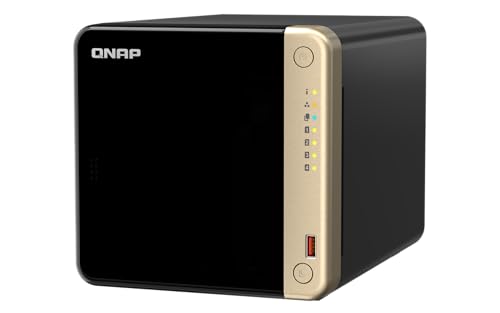
QNAP TS-464
A 4-bay NAS with Intel Celeron N5095 processor, 4GB RAM, and two 2.5GbE ports. It supports PCIe expansion for 10GbE or M.2 SSDs. QNAP’s QTS operating system offers powerful apps for file management, backup, and media streaming. Users like its flexibility and high-speed connectivity.
Pros
- Dual 2.5GbE ports for faster transfers
- Supports PCIe expansion
- Good multimedia features
Cons
- Slightly lower build quality than Synology
- Initial setup can be complex

LaCie d2 Professional
A rugged desktop drive with a metal enclosure and professional-grade reliability. It comes in capacities up to 22TB and features USB-C and USB 3.1 connectivity. Includes Seagate IronWolf Pro drives inside. Designed for creative professionals who need dependable storage for large media files.
Pros
- Rugged and durable design
- Fast transfer speeds
- Includes 5-year warranty
Cons
- Requires external power
- Premium price

G-Technology G-DRIVE
A reliable desktop hard drive with a sleek design, available in capacities up to 24TB. It offers USB-C and USB 3.1 connectivity and is compatible with Apple Time Machine. Often used by photographers and videographers for backups and archiving. Known for its quiet operation and sturdy build.
Pros
- Affordable price per terabyte
- Quiet operation
- Time Machine support
Cons
- Slower than SSD options
- Not as rugged as LaCie

Seagate IronWolf Pro
A high-performance NAS drive designed for 24/7 operation, available in capacities up to 18TB. It features AgileArray technology for enhanced RAID performance, and includes 550TB/year workload rating. Comes with 5-year warranty and 3-year Rescue Data Recovery Services. Users report high reliability and good noise levels.
Pros
- High reliability for NAS environments
- Excellent warranty and data recovery
- Good performance in RAID arrays
Cons
- Can be noisy during heavy access
- Price per TB higher than desktop drives

WD Red Pro
A robust NAS drive built for demanding applications, available in capacities up to 22TB. It uses CMR technology for consistent performance and includes NASware 3.0 for improved compatibility. Has a 5-year limited warranty. Owners appreciate its stable performance and low failure rates.
Pros
- High endurance for NAS workloads
- Lower chance of compatibility issues
- Strong warranty
Cons
- Slightly slower than IronWolf Pro in some benchmarks
- Premium pricing

SanDisk Extreme PRO Portable SSD
A rugged and fast portable SSD with capacities up to 4TB. It features NVMe technology with read speeds up to 2000MB/s and write speeds up to 1900MB/s. IP55 water and dust resistance, and drop proof up to 3 meters. Ideal for professionals who need to archive data in the field.
Pros
- Extremely fast transfer speeds
- Rugged design for travel
- Compact and lightweight
Cons
- Higher cost per GB
- Limited capacity compared to HDDs
The lineup, side by side
| # | Model | Drive Bays | Best for | Score | Price |
|---|---|---|---|---|---|
| 1 | Synology DiskStation DS923+ | 4 (up to 9 with expansion) | Best overall NAS for professionals | 9.4 | Check price |
| 2 | QNAP TS-464 | 4 | Best for multimedia professionals | 9.1 | Check price |
| 3 | LaCie d2 Professional | Up to 22TB | Best desktop external drive for Mac users | 8.9 | Check price |
| 4 | G-Technology G-DRIVE | Up to 24TB | Best for creative professionals on a budget | 8.7 | Check price |
| 5 | Seagate IronWolf Pro | Up to 18TB | Best NAS drive for heavy workloads | 9.0 | Check price |
| 6 | WD Red Pro | Up to 22TB | Best alternative NAS drive | 8.8 | Check price |
| 7 | SanDisk Extreme PRO Portable SSD | Up to 4TB | Best portable SSD for on-the-go archiving | 9.2 | Check price |
Before you buy
Capacity Planning Consider the total amount of data you need to archive and how it will grow over time. For large media files, a NAS with multiple bays allows you to start with fewer drives and expand later. Always factor in redundancy, such as using RAID 1 or RAID 5, to protect against drive failure. A good rule is to have at least two copies of important data.
Data Integrity Look for drives with error recovery controls and technologies like CMR (Conventional Magnetic Recording) which are more reliable for RAID arrays. Some drives have built-in data protection features like Seagate’s AgileArray and Western Digital’s NASware. Regularly check drive health and maintain backups to prevent data loss.
Connectivity and Speed For local network access, a NAS with 2.5GbE or 10GbE ports ensures faster file transfers. If you use direct-attached storage, USB 3.2 Gen 2 or Thunderbolt offers high speeds. Consider your workflow: editing large files directly from the drive requires faster speeds than simple archiving.
Budget and Total Cost While the initial cost of a NAS may be higher, it can be more economical in the long run due to lower per-terabyte costs and expandability. External drives are cheaper upfront but might not scale well. Also, account for the cost of drives if you build your own NAS. Weigh the features you need against your budget to find the best value.
Questions worth asking
What is the difference between a NAS and an external drive for archiving?
A NAS (Network Attached Storage) connects to your network and allows multiple users to access data simultaneously, making it ideal for shared archiving. External drives connect directly to one computer and are simpler but offer less flexibility for multi-user access.
How many drive bays do I need for professional archive storage?
For most professionals, a 4-bay NAS is a good starting point. It allows you to set up RAID 5 for a good balance of capacity and redundancy. If you have massive data needs, consider 8-bay or more. External drives can be used for additional backups.
Should I use HDD or SSD for archiving?
HDDs are more cost-effective for large capacities and are sufficient for archival purposes. SSDs offer faster access but are more expensive per GB, making them less practical for long-term storage of hundreds of terabytes. Some users use SSDs for active files and HDDs for cold storage.
What RAID level should I use for archiving?
RAID 1 (mirroring) provides redundancy but uses half the capacity. RAID 5 or RAID 6 offer a good balance of performance and fault tolerance, allowing one or two drive failures without data loss. For large archives, RAID 6 is recommended for extra protection.
How important is the warranty and data recovery service?
A longer warranty (typically 5 years) gives peace of mind. Some manufacturers offer data recovery services, which can be invaluable if a drive fails. Seagate includes Rescue Data Recovery on IronWolf Pro drives, which is a significant benefit.
Can I expand my archive storage later?
Yes, with a NAS, you can add more drives or replace existing ones with higher-capacity drives. Some NAS models support expansion units. External drives are limited to their original capacity, so you would need to buy additional drives.
What is the best way to backup my archive?
Follow the 3-2-1 rule: keep at least three copies of your data, on two different media types, with one copy offsite. You can use a NAS for primary storage and an external drive for local backup, plus cloud storage for offsite protection.
Are there any cloud storage options for professional archiving?
Yes, services like Amazon S3, Google Cloud Storage, and Backblaze B2 offer scalable and durable storage. They can be integrated with NAS systems for hybrid archiving, but ongoing costs may be higher than on-premise storage for large datasets.
Our take
For most professionals, we recommend the Synology DiskStation DS923+ as the best overall archive storage solution. Its combination of robust software, user-friendly management, and expandability makes it a wise investment. If you prefer a more budget-friendly option and already have a computer, the LaCie d2 Professional is a reliable choice. For those who need portability, the SanDisk Extreme PRO SSD is unmatched in speed and durability. Choose based on your specific workflow and capacity needs.


