How to Choose a Tour-Level Golf Shoe That Fits Your Game
FootJoy’s Pro/SL balances spikeless traction, waterproofing, and all-day comfort for most golfers walking 18 holes. Adidas’ Tour360 22 suits players chasing aggressive spiked grip for fast swings, and the Skechers Go Golf Max fits budget-conscious walkers who still want a cushioned Goga Max insole underfoot.
FootJoy’s Pro/SL leads this lineup for low-handicap players who walk full rounds and want spikeless grip that also works off the course. Its firmer midsole trades away some plushness for stability, a fair tradeoff for stability-focused golfers.
Spiked versus spikeless, leather versus synthetic, narrow versus wide lasts: the choices multiply fast. We compared published outsole patterns, waterproof membrane ratings, weight figures, and owner feedback on real-world fit for each model.
Our top picks

FootJoy Pro/SL
A molded TPU outsole mimics traditional cleat traction without metal or plastic spikes underfoot. Full-grain leather forms the upper, treated for waterproofing and paired with a fused tongue that blocks debris on wet fairways. Off-course wear works just as well thanks to the low-profile spikeless sole.
Pros
- Comfortable enough for a full 18-hole walk
- Doubles as a casual shoe away from the course
- Wide fit option available for wider feet
Cons
- Grip falls short of metal spikes on steep wet slopes
- Stiffer leather needs a break-in period

Adidas Tour360 22
Removable metal spikes lock down aggressively for players with fast swing speeds. An external TPU heel counter pairs with Boost cushioning in the midsole to stabilize lateral movement through the downswing. Weight runs higher than spikeless rivals as a tradeoff for that lockdown.
Pros
- Strong lateral stability for fast swings
- Boost midsole cushions longer rounds
- Spikes replace individually when worn
Cons
- Heavier than spikeless competitors in this lineup
- Narrower toe box fits some feet tightly

Skechers Go Golf Max
A Goga Max insole cushions every step, paired with a lightweight mesh and synthetic upper that keeps total weight under 11 ounces. Multi-directional lugs replace a full spike or TPU pattern. Comfort takes priority here over tour-level lockdown.
Pros
- Lightest shoe in this lineup
- Cushioned insole cuts fatigue on long walks
- Lower cost than leather tour models
Cons
- Water resistance falls short of a sealed membrane
- Traction softens on steep wet slopes

ECCO Biom H4
Hydromax water-repellent leather wraps a roomier last built for wider forefeet. Fluidform midsole technology molds directly to that last, easing pressure points common in narrower spiked designs. Traction pods handle hardpan lies without a full spike pattern.
Pros
- Roomier fit for wide or high-volume feet
- Leather upper resists surface moisture
- Traction pods grip well on hardpan lies
Cons
- Costs more than other spikeless options here
- Leather upper needs a longer break-in period

PUMA Ignite Articulate
Independently flexing outsole pods keep ground contact steady on uneven lies. IGNITE foam in the midsole returns energy through the swing and the walk alike. Mesh and synthetic overlays on the upper keep breathability high for warm-weather rounds.
Pros
- Flexible sole adapts to uneven terrain
- Breathable upper suits hot climates
- Responsive foam midsole underfoot
Cons
- Not fully waterproof in heavy rain
- Less ankle support than higher-profile models

Under Armour HOVR Drive 2
HOVR foam in the midsole prioritizes cushioning over mobility, a better match for cart-based rounds than full walks. Microfiber makes up the upper, treated with a durable water repellent coating instead of a sealed membrane. Casual styling carries over well beyond the course.
Pros
- Plush cushioning suits cart-based rounds
- Costs less than leather tour models
- Casual look works beyond the course
Cons
- DWR coating wears off faster than a membrane
- Less lateral lockdown for aggressive swings
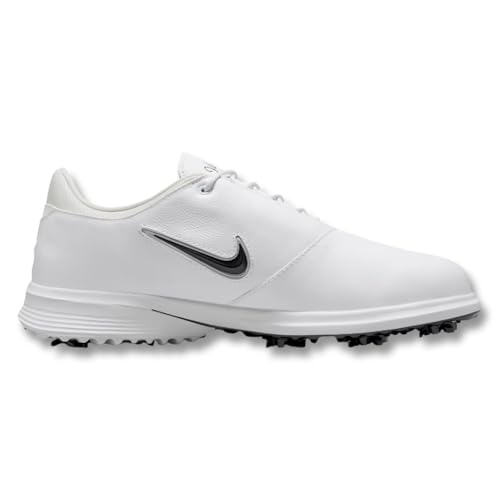
Nike Air Zoom Victory Tour 3
A Zoom Air unit in the forefoot adds responsive cushioning for players who walk most rounds. Small rubber lugs form an integrated traction system rather than replaceable spikes. Synthetic leather on the upper handles light rain but not sustained wet weather.
Pros
- Zoom Air cushioning eases fatigue while walking
- Low-profile look transitions off-course easily
- Secure heel lockdown reported by owners
Cons
- Traction lugs wear faster on abrasive cart paths
- Not rated for sustained heavy rain
What to look for
Spiked or spikeless for tour-level play Metal or ceramic spikes, like those on the Adidas Tour360 22, give the most lateral lockdown for fast swing speeds and firm turf. Spikeless outsoles such as the FootJoy Pro/SL’s TPU pattern sacrifice a little grip on steep wet slopes but let you walk straight into the clubhouse. Recreational players moving to spikeless report little real drop-off in stability on dry courses.
Why waterproofing matters more than the spec sheet suggests A sealed membrane, built into the FootJoy Pro/SL and the ECCO Biom H4’s Hydromax leather, keeps feet dry through a full wet round. DWR coatings on models like the Under Armour HOVR Drive 2 only resist light moisture and wear off with washing. Early morning golfers dealing with heavy dew should prioritize membrane-backed waterproofing over a coated synthetic.
Which golf shoe fits wide or high-volume feet best? A roomier last built into the ECCO Biom H4 accommodates wider forefeet without sizing up a half size, unlike narrower models such as the Adidas Tour360 22. Owners who’ve dealt with pressure points in traditional spiked shoes often do better trying a wide-fit specific model first.
Walking the course versus riding a cart Lighter shoes with more underfoot cushioning, like the Nike Air Zoom Victory Tour 3’s Zoom Air forefoot or the Skechers Go Golf Max’s Goga Max insole, suit walkers since fatigue builds over 18 holes on foot. Cart-based players can prioritize a plusher ride over weight, making the Under Armour HOVR Drive 2’s foam midsole a reasonable choice despite being the heaviest shoe in its category here.
Side by side
| # | Model | Sole type | Best for | Score | Price |
|---|---|---|---|---|---|
| 1 | FootJoy Pro/SL | Spikeless TPU | Best overall | 9.4 | Check price |
| 2 | Adidas Tour360 22 | Removable metal spikes | Best for spiked traction | 9.1 | Check price |
| 3 | Skechers Go Golf Max | Spikeless multi-directional lugs | Best value | 8.8 | Check price |
| 4 | ECCO Biom H4 | Hybrid spikeless traction pods | Best for wide feet | 8.6 | Check price |
| 5 | PUMA Ignite Articulate | Articulated spikeless pods | Best for lightweight play | 8.3 | Check price |
| 6 | Under Armour HOVR Drive 2 | Spikeless rubber traction | Best for riding style | 8.1 | Check price |
| 7 | Nike Air Zoom Victory Tour 3 | Integrated rubber lug traction | Best for walking rounds | 8.0 | Check price |
Common questions
What is the best golf shoe for walking 18 holes?
The Nike Air Zoom Victory Tour 3 and FootJoy Pro/SL combine lighter builds with cushioned midsoles, making both better suited to full walking rounds than heavier riding-style shoes.
Are spikeless golf shoes as good as spiked for tour-level play?
Spikeless shoes like the FootJoy Pro/SL match spiked traction on dry, firm turf, but spiked models like the Adidas Tour360 22 still hold an edge on wet or steep terrain.
Which golf shoe fits wide feet best?
The ECCO Biom H4 uses a wider last built into the shoe rather than requiring a half-size up, making it the better pick for wide or high-volume feet.
Can golf shoes be worn casually off the course?
Spikeless models such as the FootJoy Pro/SL and Under Armour HOVR Drive 2 have low-profile soles that pass as casual sneakers away from the course.
How waterproof are spikeless golf shoes?
It depends on the upper treatment. Sealed membrane shoes like the FootJoy Pro/SL or ECCO Biom H4 handle a full wet round, while DWR-coated shoes resist light rain but not sustained moisture.
What is the best budget option among tour-level golf shoes?
The Skechers Go Golf Max offers a cushioned Goga Max insole and lightweight build at a lower cost than leather tour models.
FootJoy Pro/SL vs Adidas Tour360 22, which is better?
The FootJoy Pro/SL suits walkers who want spikeless comfort and versatility, while the Adidas Tour360 22 suits players prioritizing spiked lateral stability for faster swings.
Do golf shoes need to be replaced often?
Traction wears faster on cart-path-heavy courses. Rubber lug or spike outsoles like those on the Nike Air Zoom Victory Tour 3 typically need replacing sooner than reinforced spikeless TPU patterns.
Which golf shoe works best for cart-based rounds?
The Under Armour HOVR Drive 2’s foam midsole prioritizes plush cushioning over lateral lockdown, matching the lower mobility demands of riding rather than walking.
The verdict
FootJoy’s Pro/SL earns the top spot here for balancing spikeless traction, sealed waterproofing, and all-day walking comfort most golfers need round after round. Players chasing maximum lateral lockdown at faster swing speeds should look at the Adidas Tour360 22 instead. Anyone shopping on a tighter budget still gets solid cushioning from the Skechers Go Golf Max.


