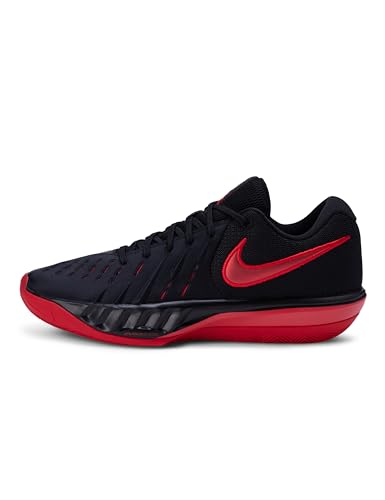
Basketballs Built to Survive Rough Outdoor Courts
Spalding NBA Street Phantom wins on outdoor durability, thanks to a thick performance rubber cover built specifically for asphalt courts. Wilson NCAA Killer Crossover gives similar toughness for less money. Molten BG3800 delivers the strongest grip among the composite options compared here.
Spalding NBA Street Phantom is the ball to buy for rough outdoor courts, backed by a deep channel rubber cover built for asphalt. Wilson NCAA Killer Crossover trails close behind on value. Molten BG3800 takes the grip category if control matters more than raw toughness.
Heavy duty in basketballs comes down to cover chemistry rather than marketing claims. Indoor leather feels superb and dies fast on asphalt, while cheap rubber survives but loses grip and bounces inconsistently within months. Cover thickness, channel depth and pebbling depth predict how a ball plays after six months outdoors, so we compared published specifications, materials and owner reports across seven current balls.
Our top picks

Spalding NBA Street Phantom Outdoor Basketball
A deep channel performance rubber cover targets asphalt and concrete specifically. Aggressive pebbling holds grip through dust better than composite covers manage. Owners report the ball keeps its shape and bounce long after budget rubber balls go flat and slick.
Pros
- Cover outlasts composite on asphalt
- Deep channels aid handling in dust
- Holds shape and bounce over seasons
Cons
- Rubber feels harsher than composite indoors
- Needs regular reinflation like most rubber balls

Wilson NCAA Killer Crossover Basketball
A durable rubber cover pairs with a butyl bladder that holds air far longer than budget alternatives. Finer pebbling than the Street Phantom suits players who prefer a softer feel. Most driveway hoops do not need anything more than this ball offers.
Pros
- Holds air well between sessions
- Strong grip for a rubber cover
- Solid value for the durability offered
Cons
- Pebbling wears smooth on rough concrete over time
- Feels lighter than premium outdoor balls
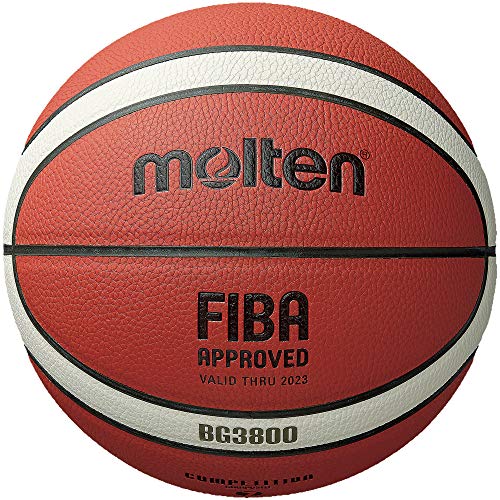
Molten BG3800 Basketball
Twelve seam lines run under the fingers instead of the usual eight, and many players report a more consistent release because of it. A composite cover outlasts indoor leather and works on either surface. Rough asphalt still wears it faster than pure rubber.
Pros
- Grip and release stay consistent shot to shot
- Works across indoor and outdoor courts
- Panel layout aids shot alignment
Cons
- Composite wears faster than rubber on asphalt
- Different feel takes adjustment
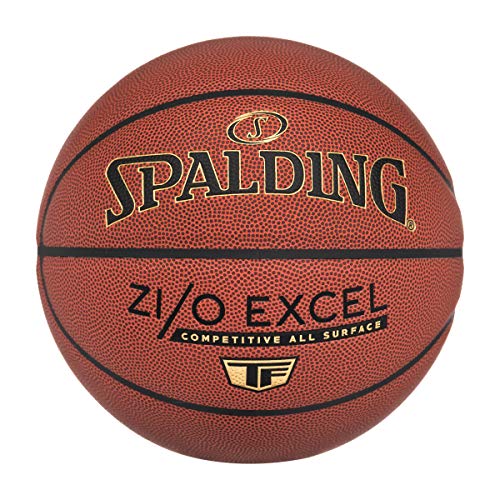
Spalding Zi/O Excel Indoor Outdoor Basketball
Games that move between a gym and a park call for this ball specifically. A composite cover keeps an indoor-like feel while tolerating outdoor abuse, and deep channels preserve control on dusty courts. Expect it to lean indoor rather than split the difference evenly.
Pros
- Comfortable grip on both surfaces
- Softer feel than pure outdoor rubber
- Deep channels help in dusty conditions
Cons
- Outdoor life is shorter than dedicated rubber balls
- Cover marks visibly on rough concrete

Wilson NCAA Evo NXT Game Basketball
A microfiber composite cover and moisture wicking surface keep grip steady as hands get sweaty during a game. This is the ball to reserve for gym play, not a driveway. One outdoor session is enough to visibly mark the cover.
Pros
- Grip stays strong even when hands are damp
- True game ball feel and consistency
- Holds its shape well over time
Cons
- Not built for outdoor surfaces at all
- Priced at the premium end

Under Armour 495 Indoor Outdoor Basketball
This ball sits deliberately in the middle ground. A composite cover with deep channels plays acceptably on both surfaces and takes drill work without shredding. Based on specifications, it suits training more than specialist outdoor use.
Pros
- Handles high volume drill work
- Air retention stays consistent
- Comfortable grip through dust
Cons
- Neither the best indoor nor outdoor choice
- Cover scuffs quickly on rough asphalt
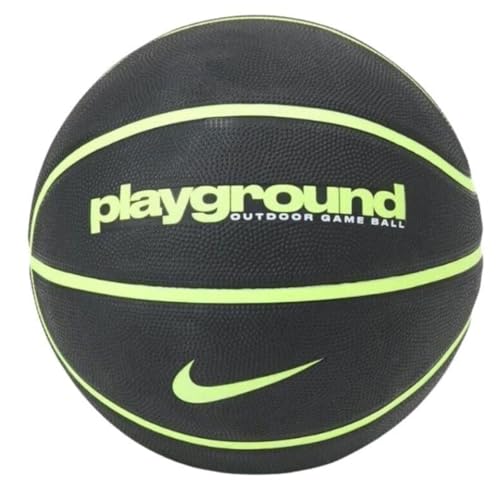
Nike Everyday Playground 8P Graphic Basketball
A straightforward rubber playground ball with deep channels suits casual pickup games. Concrete wears it slower than any composite ball at this price. Bright graphics make it easy to spot in a bag of identical balls.
Pros
- Affordable enough to leave in a car
- Rubber cover tolerates concrete abuse
- Deep channels aid control
Cons
- Grip trails behind composite options
- Loses air faster than butyl bladder balls
What matters most
What makes a basketball heavy duty? Cover material decides outdoor life more than brand, panel count or price. Rubber covers survive asphalt and concrete for years. Composite covers last a season or two outdoors, and genuine leather wears out within weeks. A ball headed for outdoor use should be rubber, even at the cost of a firmer feel.
How do channels and pebbling affect grip? Grooves between panels give fingers something to catch, and deeper channels help most on dusty courts or dry hands. Pebbling on the panel faces does similar work and wears down over time on rough surfaces. A ball that felt grippy in month one and slick by month six has usually worn its pebbling flat.
Which basketball size fits which player? Size seven, at 29.5 inches, is the standard men’s and general adult ball. Size six, at 28.5 inches, covers women’s and youth play, and size five suits younger children. A ball that is too large for the player teaches shooting mechanics that are hard to unlearn later.
Why does air retention matter this much? Butyl bladders hold air for weeks, while cheaper bladders need topping up almost every session. A ball at the wrong pressure bounces unevenly and feels dead, which is the most common reason people assume a ball has gone bad. Keep a pump nearby and check pressure against the range printed near the valve.
How they compare
| # | Model | Cover | Best for | Score | Price |
|---|---|---|---|---|---|
| 1 | Spalding NBA Street Phantom Outdoor Basketball | Performance rubber | Best overall | 9.4 | Check price |
| 2 | Wilson NCAA Killer Crossover Basketball | Durable rubber | Best value | 9.2 | Check price |
| 3 | Molten BG3800 Basketball | Composite leather | Best grip | 9.0 | Check price |
| 4 | Spalding Zi/O Excel Indoor Outdoor Basketball | Zi/O composite | Best all surface option | 8.8 | Check price |
| 5 | Wilson NCAA Evo NXT Game Basketball | Microfiber composite | Best for indoor play | 8.6 | Check price |
| 6 | Under Armour 495 Indoor Outdoor Basketball | Composite | Best for training | 8.3 | Check price |
| 7 | Nike Everyday Playground 8P Graphic Basketball | Rubber | Best budget | 8.0 | Check price |
Common questions
What makes a basketball heavy duty?
A thick rubber or reinforced composite cover, deep molded channels and a butyl bladder. Rubber covers are the single biggest factor in surviving asphalt and concrete.
Can you use an indoor basketball outside?
You can, but the cover wears rapidly. Premium composite balls like the Wilson Evo NXT show visible damage after a handful of outdoor sessions.
How often should a basketball be inflated?
Check pressure before each session and inflate to the range printed near the valve. Balls with butyl bladders hold pressure for weeks, while budget balls often need topping up every time.
What size basketball do I need?
Size seven at 29.5 inches suits adult men’s play, size six at 28.5 inches is the women’s and youth standard, and size five fits younger children.
Why has my basketball lost its grip?
Usually worn pebbling, dust or oils from hands. A damp cloth restores some grip, but pebbling ground flat on concrete cannot be brought back.
Does the color or graphics on a basketball affect durability?
No. Printed graphics can wear off an outdoor ball over time, but they have no effect on how long the cover itself lasts.
How long should an outdoor basketball last?
A quality rubber ball used regularly on asphalt typically stays playable for a year or more. A composite ball on the same surface often loses grip within a season.
Should a basketball be stored inflated or flat?
Inflated, at normal playing pressure and away from extreme heat or cold. Storing a ball flat can crease the cover, and a hot car ages the bladder faster.
Rubber vs composite basketball, which lasts longer outdoors?
Rubber lasts longer on asphalt and concrete, often by several seasons. Composite feels closer to indoor leather but wears down faster outside.
Is a heavy duty basketball worth it for occasional pickup games?
Yes, since a rubber cover survives inconsistent storage and rough courts better than any indoor ball. Occasional players benefit most from durability that tolerates neglect.
The bottom line
Spalding NBA Street Phantom is the basketball to leave by an outdoor hoop, since its thick rubber cover survives asphalt while keeping usable grip. Wilson NCAA Killer Crossover covers the same job for less. Molten BG3800 suits mixed surface players who rate grip above raw toughness.