Snowshoes Built for Heavy Hikers and Loaded Packs
MSR’s Lightning Ascent 30 is the top heavy duty snowshoe, pairing a high load ceiling with 360 degree frame traction. Tubbs Wilderness 36 floats the largest combined loads in deep snow, and the Chinook Trailside 30 covers budget buyers up to about 250 pounds.
Heavy users and loaded packs need long decks, strong frames and traction that holds when momentum runs high. MSR’s Lightning Ascent 30 delivers all three, edging out the rest of this comparison. Tubbs Wilderness 36 and the budget Chinook Trailside 30 lead the alternatives.
Shopping gets tricky since most snowshoes rate around 180 pounds and quietly sink or bend past that figure. Published load ranges, deck dimensions, rivet and frame construction, plus reports from heavier owners narrowed the field to seven high-capacity pairs.
Before you buy
What Heavy Duty Really Means in Snowshoes Capacity is the headline spec, but three quieter factors decide whether a snowshoe survives a big user. Frame and rivet strength determine flex under a 250 pound stride, and premium aluminum or molded decks resist it best. Deck area, roughly length times width, sets flotation, which is why 30 to 36 inch models dominate this class. Heavier hikers also carry more momentum into every slip, so crampon bite matters more too.
How to Calculate Your Real Load and Match a Rating Weigh yourself in winter clothing and boots, add the loaded pack, then shop against that total rather than your gym weight. A 240 pound hiker carrying a 30 pound pack needs a 270 pound rating at minimum. Cold, dry powder supports less than settled snow, so size up again or plan on flotation tails. Undersized shoes do not break; they sink, and wading becomes the exhausting failure mode.
Best Heavy Duty Snowshoes by Terrain Type Groomed and rolling trails suit the value tier, Yukon Charlie’s, Chinook and G2, where modest crampons suffice. Deep untracked snow rewards maximum deck area, the Tubbs Wilderness 36’s specialty. Rocks and ice on mixed terrain favor the molded MSR Evo Trail with tails, and steep routes belong to the Lightning Ascent 30. Buying for the terrain, not just the rating, avoids the classic mistake of hauling a 36 inch deck through tight forest.
Bindings, Poles and Making Big-Load Gear Last Bindings fail before decks under heavy loads. Ratchets and quick-pull systems should get snugged twice, once at the trailhead and again after ten minutes once boots settle. Poles with powder baskets take real strain off knees at higher body weights, so treat them as equipment here, not accessories. Dry the shoes away from direct heat after each outing, check rivets, and retire any pair with a cracked frame joint before it fails mid-trail.
Our top picks

MSR Lightning Ascent 30 Snowshoes
In its 30 inch size, the Lightning Ascent carries about 280 pounds, and optional tails push flotation further. Full-perimeter teeth on the aluminum frame stop a heavy hiker from skating on traverses, where extra mass raises the stakes. Ergo Televator heel lifts spare big legs on sustained climbs.
Pros
- Serious capacity without a weight penalty
- Traction scaled to heavy-hiker momentum
- Tails adapt one pair to powder days
Cons
- Top-tier price
- Mesh bindings need care around crampon points in storage

Tubbs Wilderness 36 Snowshoes
At 36 inches, the Wilderness offers the largest deck here, rated for combined loads up to about 300 pounds. Tubular aluminum frames and soft decking spread weight for real float in untracked snow. Cobra toe crampons and an ActiveLift heel bar keep it capable once trails tilt upward.
Pros
- Best flotation for the heaviest loads
- Comfortable stride despite the length
- Proven Tubbs binding security
Cons
- Long deck is cumbersome in tight trees
- Soft decking vulnerable to sharp rock
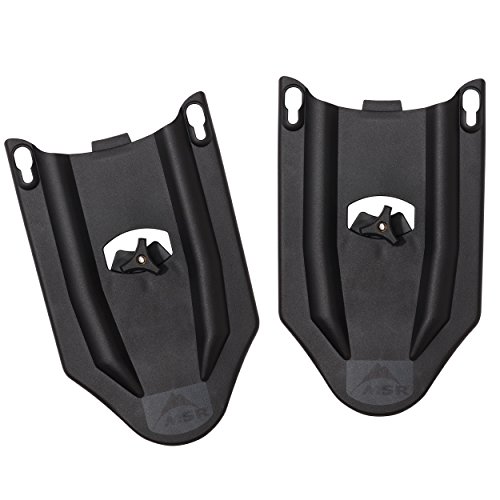
MSR Evo Trail with Flotation Tails
Adding MSR’s flotation tails lifts the molded Evo Trail’s capacity to roughly 250 pounds while keeping its rock-proof unibody deck. Steel traction rails hold sidehills under heavy loads. Big hikers on mixed terrain benefit most, since rocks would tear apart fabric decking.
Pros
- Toughest deck construction available
- Capacity adjusts by adding or dropping tails
- Grips ice confidently under load
Cons
- Two-part purchase, shoes plus tails
- Shorter base float without tails fitted

Yukon Charlie’s Advanced 936 Snowshoes
The 9 by 36 inch Advanced series carries users in the 250 to 300 pound band at a mid-tier price. Quick-pull bindings cinch over big winter boots without fine finger work. Aluminum frames and heel cleats handle groomed and rolling terrain, the natural habitat for this class.
Pros
- Big-load rating for mid-tier money
- Fast binding entry in the cold
- Wide deck aids stability
Cons
- Traction is modest on ice
- Bulky to strap on a pack

Chinook Trailside 30 Snowshoes
Trailside’s 30 inch size rates to about 250 pounds at a fraction of premium pricing. Freeze-resistant polyethylene decking rides aluminum frames with ratchet bindings and heel straps. Casual weekend walkers who happen to be big get exactly what they need, nothing more.
Pros
- Lowest cost to real capacity
- Simple bindings fit any boot
- Light for its size
Cons
- Crampons underwhelm on steep ice
- Hardware loosens under aggressive miles

G2 GO2GETHER 30 Inch Snowshoes
A heel lift bar and toothed aluminum crampons reach the budget tier here, features heavy hikers use more than most buyers realize. Double ratchet bindings resist loosening under a big stride. An included bag and pole compatibility round out a practical package.
Pros
- Heel lift rare at this price point
- Bindings hold under heavy loads
- Carry bag included
Cons
- Padding compresses on all-day outings
- Lesser-known brand support

Winterial Highland 30 Inch Snowshoes
Winterial bundles 30 inch shoes, adjustable poles and a carry bag for heavier beginners testing the sport. An aluminum frame and ratchet bindings manage packed trails and gentle backcountry. Treat this as a first-season rig rather than an expedition tool.
Pros
- Complete package, one purchase
- Poles help heavier users balance
- Easy ratchet entry
Cons
- Components are entry grade throughout
- Not suited to steep or icy routes
How they stack up
| # | Model | Load | Best for | Score | Price |
|---|---|---|---|---|---|
| 1 | MSR Lightning Ascent 30 Snowshoes | About 280 lb, tails extend | Best overall | 9.4 | Check price |
| 2 | Tubbs Wilderness 36 Snowshoes | 36 in | Best for deep snow float | 9.2 | Check price |
| 3 | MSR Evo Trail with Flotation Tails | Injection molded unibody | Best for durability | 9.0 | Check price |
| 4 | Yukon Charlie’s Advanced 936 Snowshoes | 9 x 36 in | Best value large size | 8.8 | Check price |
| 5 | Chinook Trailside 30 Snowshoes | 30 in | Best budget | 8.6 | Check price |
| 6 | G2 GO2GETHER 30 Inch Snowshoes | 30 in | Best budget with heel lift | 8.3 | Check price |
| 7 | Winterial Highland 30 Inch Snowshoes | 30 in | Best starter kit for big users | 8.0 | Check price |
Questions worth asking
What snowshoes hold 300 pounds?
The Tubbs Wilderness 36 and Yukon Charlie’s Advanced 936 rate to roughly 300 pounds, and the MSR Lightning Ascent 30 approaches it with tails attached. Always count body weight plus pack against the rating.
Are 30 inch snowshoes too big for packed trails?
They stay manageable but feel slightly clumsy on firm pack. Heavy users doing mostly groomed miles can drop to a 25 inch shoe with a high rating, or add modular tails only when snow softens.
Do heavier people need different snowshoes?
Yes. More weight demands more deck area for float, stronger frames and rivets, and better crampons to check slips. Standard 22 inch recreational shoes rated near 180 pounds sink and strain under bigger users.
How much weight can snowshoes support including a backpack?
Whatever the listed rating states, which spans roughly 150 to 300 pounds across this group. That rating covers total load, so a winter pack of 20 to 40 pounds counts against it.
Which is better for big users, longer or wider snowshoes?
Both add float, but length adds it with less stride interference, which is why heavy duty models run 30 to 36 inches long. Very wide decks force an unnatural gait that tires hips over miles.
Can I use flotation tails instead of buying bigger snowshoes?
On MSR’s modular models, yes. Tails add roughly 70 pounds of capacity to an Evo Trail and adapt Lightning Ascents to powder. Fixed-deck brands require choosing the larger size upfront instead.
Is snowshoeing good exercise for heavier people?
Yes, and it stays low impact compared with running. It burns plenty in cold conditions and scales with pace, while properly rated shoes and poles protect joints along the way.
Why do my snowshoes sink even though I’m under the weight limit?
Snow density is the variable ratings cannot capture. Cold, dry powder supports far less than settled pack, so expect several inches of sink in fresh snow as normal.
Heavy duty snowshoes vs standard snowshoes: what’s the real difference?
Deck area, frame strength and crampon bite all scale up, not just the weight rating printed on the box. Bindings also get reinforced, since they take the brunt of a heavier stride.
The bottom line
The MSR Lightning Ascent 30 is the heavy duty pick that compromises nothing, carrying big loads while out-gripping everything else on this list. Deep-snow specialists should choose the Tubbs Wilderness 36 for its unmatched float. On a budget, the Chinook Trailside 30 and G2’s 30 inch model prove real capacity no longer requires a premium spend.


