Running Backpacks for Commuters and Trail Runners
The Salomon ADV Skin 12 Set is our top running backpack overall for its vest style fit and included soft flasks. The Nathan VaporAir 3.0 is the best value for long trail days, while the Salomon Active Skin 8 is the lightest option for shorter fast runs.
For running with a load, the Salomon ADV Skin 12 Set is the pack that stays quietest on the body, with the Nathan VaporAir 3.0 offering strong value for long trail efforts and the Salomon Active Skin 8 suiting shorter faster runs. The seven options below are running specific designs, which fit very differently from a hiking daypack.
Running packs are hard to judge from a listing because the stated litres tell you nothing about bounce, and bounce is the single thing that determines whether you keep using a pack. We compared capacity, sizing systems, hydration compatibility, pocket placement, fabric weight and ventilation, then weighed what owners report about chafing, sloshing bladders and how each pack behaves when it is only half full.
What matters most
Vest fit beats pack fit for running A running vest wraps the ribcage and clips across the chest, so the load moves with your breathing rather than swinging from the shoulders. A traditional daypack, however light, pivots at the shoulder straps and generates bounce with every stride. If you plan to run rather than hike, buy a vest style design even for commuting.
Size to your chest, not your back length Running vests are sized by chest circumference and there is very little slack in the system, which is why a size guess so often results in returns. Measure your chest over the layer you usually run in and follow the manufacturer’s chart. A vest that is too large will bounce no matter how tightly you cinch it.
Flasks or bladder depends on the run Front mounted soft flasks are easy to refill and let you monitor how much you have left, which suits racing and loops with aid stations. A rear bladder carries more volume in one go and suits remote trails where refills are scarce. Half full bladders slosh, so fill them properly or squeeze the air out.
Pack for the run you actually do Most runners buy more capacity than they use, and an under filled pack shifts more than a properly loaded one. Four to eight litres covers training runs and short trail outings, ten to twelve suits long days and run commuting with a change of clothes. Compression straps help when the load is light.
Our top picks

Salomon ADV Skin 12 Set
The ADV Skin 12 wraps the torso like a vest rather than hanging off the shoulders, and the sensifit style adjustment pulls the load in so it moves with the ribcage. Two soft flasks are included, so you can start running without buying extras. Owners report it is the pack that finally stopped them noticing the load on long days.
Pros
- Exceptionally stable with almost no bounce
- Soft flasks included in the set
- Excellent front pocket access while moving
Cons
- Sizing must be right, there is little slack
- Premium price for the category
Nathan VaporAir 3.0
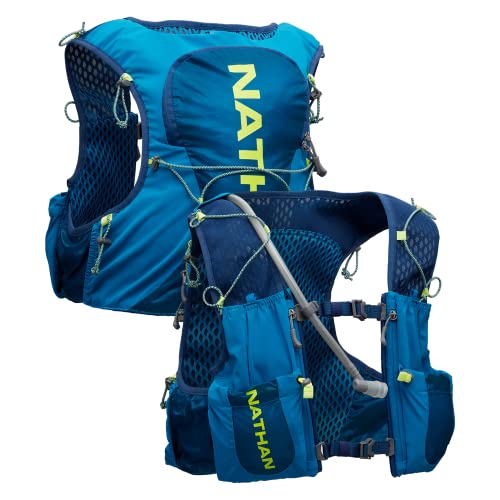
The VaporAir ships with a hydration bladder rather than flasks, which suits runners who prefer to carry a larger single reservoir on remote trails. Its mesh construction breathes well in heat and the front pockets take a phone and gels without unclipping. It is a genuine long distance vest at a friendlier outlay than the Salomon flagship.
Pros
- Bladder included for long routes
- Good ventilation in hot conditions
- Front pockets reachable on the move
Cons
- Bladder can slosh when partly full
- Fewer size options than Salomon
Salomon Active Skin 8
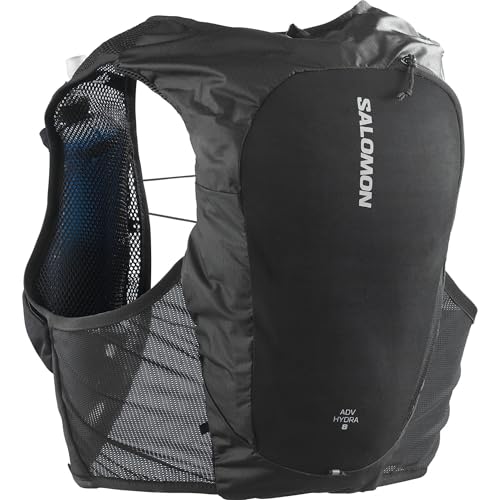
The Active Skin 8 is the pared back version of Salomon’s vest, keeping the close fit while dropping weight and some storage. It suits training runs, short races and anyone who only needs water, a phone and a jacket. Two soft flasks are included, which is generous at this level.
Pros
- Light enough to forget you are wearing it
- Flasks included
- Simple adjustment system
Cons
- Limited capacity for full day outings
- Thin fabric needs care with rough packing

CamelBak Octane 12
With 12 litres and a more traditional pack shape, the Octane carries a change of clothes and a laptop sleeve’s worth of kit while still fitting closely enough to run with. It ships with CamelBak’s reservoir, which is a proven design. Commuters value the larger main compartment more than trail runners value the extra bulk.
Pros
- Enough room for commute essentials
- Proven reservoir and bite valve
- Vest harness reduces bounce for a pack this size
Cons
- Bulkier than pure running vests
- Back panel warms up on hot days

Osprey Duro 6
Osprey’s Duro uses a light frame and airy mesh that keeps the back cooler than most close fitting vests, which matters in summer heat. It includes a reservoir and offers well organised pockets for poles and layers. The structure adds a small amount of weight in exchange for that airflow.
Pros
- Noticeably cooler on hot runs
- Pole attachment for mountain routes
- Well organised pocket layout
Cons
- Slightly heavier than minimalist vests
- Smaller capacity than commuting packs

Ultimate Direction Ultra Vest 6.0
Ultimate Direction designs around the demands of ultra races, so this vest carries mandatory kit, two flasks and food while remaining adjustable as your torso changes over many hours. The comfort cinch system lets you retighten on the move without stopping. It is a specialist tool rather than a general purpose commuter pack.
Pros
- Adjusts easily during long efforts
- Carries mandatory race kit comfortably
- Flasks included
Cons
- Overkill for short training runs
- Sizing is less forgiving than rivals

Nathan Pinnacle 4L
At four litres the Pinnacle is closer to a running vest with pockets than a backpack, which is exactly right for hour long runs where you only need water, keys and a phone. It sits high and tight so nothing swings. Anyone regularly carrying a jacket or a change of clothes will find it too small.
Pros
- Almost no bounce due to small load
- Very light on the shoulders
- Cheapest way into a proper running vest
Cons
- Too small for commuting or long days
- Limited storage for layers
Side by side
| # | Model | Capacity | Best for | Score | Price |
|---|---|---|---|---|---|
| 1 | Salomon ADV Skin 12 Set | 12 litres | Best overall | 9.4 | Check price |
| 2 | Nathan VaporAir 3.0 | About 7 litres plus reservoir | Best value for long trails | 9.2 | Check price |
| 3 | Salomon Active Skin 8 | 8 litres | Best lightweight option | 9.0 | Check price |
| 4 | CamelBak Octane 12 | 12 litres | Best for run commuting | 8.8 | Check price |
| 5 | Osprey Duro 6 | 6 litres | Best ventilation | 8.5 | Check price |
| 6 | Ultimate Direction Ultra Vest 6.0 | About 10.5 litres | Best for ultra distance | 8.2 | Check price |
| 7 | Nathan Pinnacle 4L | 4 litres | Best minimalist pack | 8.0 | Check price |
Frequently asked questions
What size running backpack do I need?
Four to eight litres suits training and short trail runs, while ten to twelve litres covers long mountain days and run commuting with clothes. Choose the smallest size that fits your usual load, since under filled packs bounce more.
How do I stop a running pack bouncing?
Get the chest sizing right first, then tighten sternum straps and side cinches so the pack sits against the torso. Distribute weight evenly between front and back pockets, and fill or compress any partly empty compartments.
Can I run to work with a normal backpack?
You can, but shoulder mounted daypacks swing with each stride and chafe over distance. A vest style pack such as the CamelBak Octane 12 carries the same load far more comfortably at running pace.
Are soft flasks better than a bladder?
Flasks are easier to refill and let you see what is left, which suits racing and loops. Bladders carry more in one go and suit remote routes. Many runners use both, with flasks in front and a reservoir behind.
Do running vests fit women differently?
Yes, several brands including Salomon, Nathan and Ultimate Direction offer women’s specific cuts with adjusted strap placement and harness shaping. These usually fit far better than unisex versions.
How do I wash a running backpack?
Rinse it in cool water with a mild soap, avoid the washing machine where the manufacturer advises against it, and air dry away from direct heat. Rinse bladders and flasks after every use to prevent mould.
Will a running pack hold trekking poles?
The Osprey Duro 6 and Ultimate Direction Ultra Vest 6.0 both include pole attachment. Many other vests can carry poles with an aftermarket quiver attached to the shoulder straps.
How much water should I carry?
Roughly half a litre per hour is a common starting point, adjusted for heat, effort and how many refill points your route offers. Carrying more than you need adds weight and increases bounce.
Our take
The Salomon ADV Skin 12 Set is the running backpack we would recommend to anyone running far enough to need real capacity, because it disappears against the body and comes ready to use with flasks. The Nathan VaporAir 3.0 delivers most of that for long trail days at a lower cost, and the Salomon Active Skin 8 covers shorter runs. Get the chest sizing right before worrying about anything else.