Top Math Toys for Early Learners and Growing Minds
The Learning Resources MathLink Cubes are our top pick for most families, offering a versatile set of 100 linking cubes that grow with your child from basic counting to early multiplication. Their main strength is the sheer range of activities possible, from pattern making to introducing addition and subtraction. The primary downside is the small size of the cubes, which may pose a choking hazard for children under three, so supervision is essential for younger siblings.
Math skills form the foundation for logical thinking and problem solving. The right toys can turn abstract numbers into something kids can see, touch, and understand. Professional math toys go beyond simple counting, introducing concepts like patterns, geometry, and early algebra in playful ways.
We compared seven leading math toys currently on Amazon, considering factors like educational depth, build quality, and how well they engage young learners. Whether you have a toddler just learning to count or a kindergartener ready for more complex challenges, this roundup will help you find a tool that makes math feel like play.
Our top picks
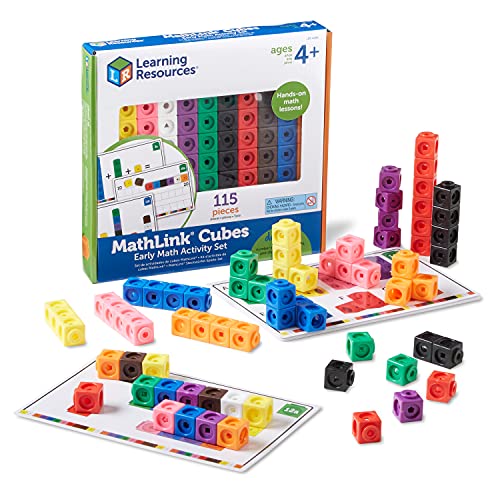
Learning Resources MathLink Cubes Early Math Activity Set
This set includes 100 colorful cubes that link together on all sides, plus 15 double-sided activity cards. It is designed for kids ages 5 and up, but younger children can use the cubes for free play. The cards guide children through patterns, counting, addition, subtraction, and even introductory multiplication. Owners report that the cubes are sturdy and the activities keep children engaged for long periods. The main limitation is that the cubes are small, so they are not suitable for children under 3.
Pros
- Endless possibilities with linking cubes
- Activity cards promote independent learning
- Strong and well-made
Cons
- Small parts pose choking hazard for toddlers
- Storage box is flimsy
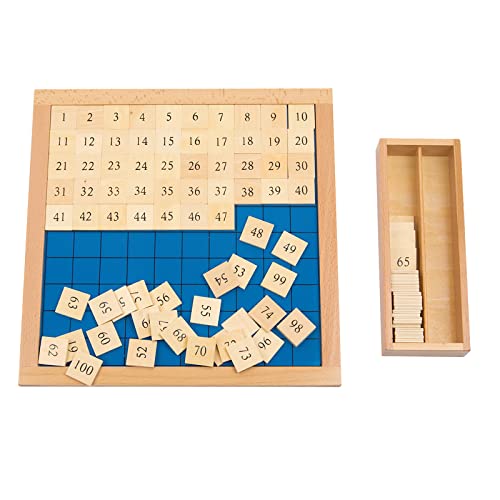
Montessori Number Blocks & Counting Coins Set
This wooden set includes number tiles from 1 to 10, corresponding counting coins, and a wooden tray. It follows the Montessori philosophy of tactile learning, allowing children to match quantities with numerals. The natural wood finish is safe and eco-friendly. Parents appreciate how it helps children visualize numbers and understand one-to-one correspondence. The main downside is that the coins are small and could be lost easily, and the set only goes up to 10, so older kids may outgrow it.
Pros
- High-quality wood construction
- Encourages independent, self-corrected learning
- Great for tactile learners
Cons
- Limited to numbers 1-10
- Small coins require adult supervision

Learning Resources Counting Bears & Sorting Activity Set
This set comes with 60 colorful bears in six colors and five sizes, along with sorting bowls, activity cards, and a storage jar. It is a staple in many preschool classrooms. The bears are perfect for teaching color recognition, sorting, counting, and simple addition and subtraction. The activity cards offer progressive challenges. Critics point out that the bears are lightweight plastic, but they are durable enough for typical play. The set is ideal for children aged 3 and up.
Pros
- Multiple math concepts in one set
- Bears are fun and engaging
- Includes storage container
Cons
- Bears may be too small for very young children
- Cards are not sturdy

ThinkFun Math Dice Jr.
Math Dice Jr. is a fast-paced game that helps children practice addition and subtraction. Players roll the target die and five scoring dice, then try to combine the numbers using addition or subtraction to match the target. It is designed for ages 6 and up, but younger kids can play with modified rules. The game is compact and portable, making it great for travel. Owners report that it improves mental math skills while being genuinely fun. The limitation is that it focuses only on addition and subtraction, so it may not challenge advanced learners.
Pros
- Improves mental agility
- Quick rounds keep kids engaged
- Easy to carry anywhere
Cons
- Limited to basic operations
- Dice are small and easy to lose
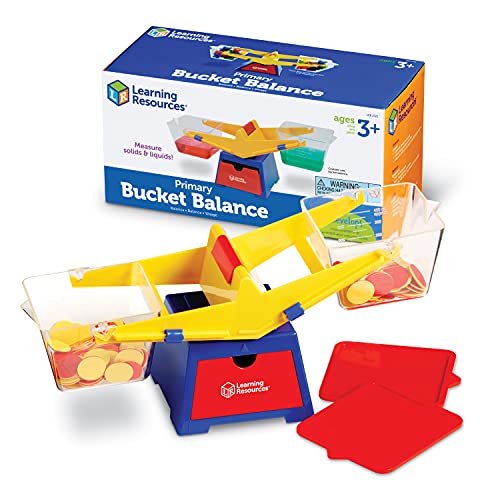
Learning Resources Primary Bucket Balance Teaching Scale
This bucket balance scale lets children explore weight, measurement, and comparison. It comes with two clear buckets that can hold liquids or solids, and the scale is calibrated for accurate measurement. Kids can use counters, toys, or water to see which side is heavier. It is a great introduction to scientific thinking and basic physics. The scale is sturdy and easy to clean. One drawback is that it does not include weights, so you need to supply your own items to weigh. Also, the buckets are not very deep, limiting the volume of water.
Pros
- Hands-on exploration of mass and volume
- Clear buckets make observations easy
- Works for both liquids and solids
Cons
- No weights included
- Buckets are shallow

Melissa & Doug Abacus
This classic wooden abacus features 100 brightly colored beads in groups of 10. It is a timeless educational tool that helps children learn counting, patterns, and simple arithmetic. The frame is solid wood and the beads slide smoothly. It is suitable for children as young as 3, but even older kids can use it to visualize multiplication and division. The main limitation is that it only offers one type of activity, so some children may lose interest. Also, the beads are not removable, which limits creativity.
Pros
- Classic design that never goes out of style
- Smooth sliding beads
- Durable construction
Cons
- Limited to visual counting
- Beads are fixed in place

Educational Insights MathShark Electronic Math Game
MathShark is an electronic handheld game that quizzes kids on addition, subtraction, multiplication, division, fractions, decimals, and percentages. It has eight levels of difficulty and a large LCD screen. The device provides immediate feedback and tracks progress. It is recommended for ages 6 and up. Many parents use it to supplement schoolwork. However, some find the interface clunky and the buttons small for younger hands. Also, it requires batteries, and some units have reported short battery life.
Pros
- Covers a wide range of math topics
- Adjustable difficulty levels
- Encourages independent practice
Cons
- Screen is small
- Battery compartment is tight
What matters most
Compared at a glance
| # | Model | Includes | Best for | Score | Price |
|---|---|---|---|---|---|
| 1 | Learning Resources MathLink Cubes Early Math Activity Set | 100 cubes and 15 activity cards | Versatile counting and early operations | 9.4 | Check price |
| 2 | Montessori Number Blocks & Counting Coins Set | Number tiles 1-10 and counting coins | Hands-on number recognition and counting | 9.2 | Check price |
| 3 | Learning Resources Counting Bears & Sorting Activity Set | 60 bears, 6 cups, 2 tongs, activity cards | Sorting, patterning, and early counting | 9.0 | Check price |
| 4 | ThinkFun Math Dice Jr. | 1 target die, 5 scoring dice, game go bag | Mental math and quick thinking | 8.9 | Check price |
| 5 | Learning Resources Primary Bucket Balance Teaching Scale | Scale with 2 buckets | Understanding weight and measurement | 8.8 | Check price |
| 6 | Melissa & Doug Abacus | 1 wooden abacus with 100 beads | Classic counting and arithmetic | 8.6 | Check price |
| 7 | Educational Insights MathShark Electronic Math Game | MathShark unit, instruction guide | Interactive math fact practice | 8.5 | Check price |
Frequently asked questions
What are the best math toys for 4 year olds?
For 4 year olds, look for toys that teach counting, sorting, and shape recognition. The Learning Resources Counting Bears and the Melissa & Doug Abacus are excellent choices. They are hands-on, colorful, and help build foundational skills. Also, consider the Montessori Number Blocks for a more structured approach.
Can math toys help with school readiness?
Yes, math toys can significantly boost school readiness. They introduce basic concepts like numbers, counting, and patterns in a playful way. Children who are familiar with these ideas find it easier to grasp formal math instruction in kindergarten and first grade. Moreover, they develop problem-solving skills and persistence.
Are electronic math games as effective as traditional toys?
Electronic math games like the MathShark can be effective for practicing arithmetic facts and providing instant feedback. They are great for independent play and can track progress. However, traditional hands-on toys offer more tactile and visual learning experiences, which are crucial for conceptual understanding. A balance of both is ideal.
How do I clean and maintain wooden math toys?
Wooden toys should be wiped with a damp cloth and mild soap, then dried immediately. Avoid soaking them in water, as it can warp the wood. Check for splinters regularly, especially if the toy is well-used. Store them in a dry place to prevent mold.
What is the recommended age for MathLink Cubes?
MathLink Cubes are recommended for children ages 5 and up. The cubes are small and can be a choking hazard for younger children. If you have a 3 or 4 year old, you can still use them with close supervision, but it is safer to wait until the child is older.
Do math toys require adult supervision?
Most math toys are designed for independent play, but adult supervision is recommended for children under 3 or for toys with small parts. Engaging with your child during play can also enhance the learning experience. Ask questions and encourage them to verbalize their thought process.
Can these toys be used in a classroom setting?
Absolutely. Many of these toys, like the Counting Bears and MathLink Cubes, are staples in early childhood classrooms. They are durable and designed for group use. Teachers can use them for centers, small group activities, or whole class demonstrations.
What is the best way to introduce math toys to a reluctant child?
Start by playing with the toy yourself and showing enthusiasm. Let the child see that it is fun. Avoid pressuring them to perform. Instead, invite them to join you in a low-stakes activity, like sorting bears by color or building a tower with cubes. Once they are engaged, you can subtly incorporate math concepts.
Are there math toys for children with special needs?
Yes, many math toys are excellent for children with special needs. Tactile toys like the Montessori Number Blocks and Counting Bears can be particularly beneficial for children with autism or sensory processing issues. They provide a hands-on, predictable way to learn. Always choose toys that match the child’s individual abilities and interests.
How long do these toys typically last?
With proper care, wooden toys like the Melissa & Doug Abacus can last for years, even being passed down to siblings. Plastic toys such as MathLink Cubes are also durable, though small parts may get lost. Electronic games may have a shorter lifespan due to battery and technology issues, but they usually last through several years of use.
Our pick
If you want a single math toy that will grow with your child and offer the most educational value, get the Learning Resources MathLink Cubes Early Math Activity Set. It is versatile, durable, and backed by thousands of positive reviews. For a more natural, Montessori-style approach, the Melissa & Doug Abacus is a timeless choice that every child should have. For families looking for a fun game to play together, ThinkFun Math Dice Jr. provides an engaging way to practice mental math. Ultimately, the best choice is the one that matches your child’s interests and your educational goals.