Ski Helmet Protection Compared: MIPS, SPIN, and WaveCel
Smith Optics’ Vantage MIPS pairs a Koroyd liner with adjustable venting for skiers who face mixed weather. Giro’s Ledge MIPS delivers similar rotational protection for less money. POC’s Obex SPIN suits racers who want a low-profile, aerodynamic shell for high-speed runs.
Smith Optics’ Vantage MIPS leads this list for skiers who want rotational protection and adjustable venting in one shell. Its Koroyd liner and 21-vent AirEvac system suit lift-served days that swing from cold mornings to warm afternoons. That flexibility costs more than fixed-vent shells like the Wildhorn Drift, which skips a rotational-impact layer entirely to hit a lower price.
We compared shell construction, certification claims, vent adjustability, and owner feedback on fit across seven current Amazon listings. Weight and goggle compatibility factored in too, since all-day comfort determines whether a skier actually keeps a helmet buckled.
What to look for
What to look for in a ski helmet Shell construction splits into two main types, in-mold and hardshell. In-mold shells bond the outer layer directly to EPS foam, trimming weight for all-day wear. Hardshell designs add a separate ABS layer over the foam, resisting scuffs across multiple seasons. Certification matters as much as shell type, so check for ASTM F2040 or CE EN 1077 on the listing. Fit should sit snug without pressure points, with the brim level and goggles meeting the shell without a gap.
MIPS, SPIN, and WaveCel: how rotational-impact layers differ Most crashes arrive at an angle rather than straight on. MIPS places a low-friction layer inside the helmet that lets the shell rotate slightly against the head, cutting rotational force transfer. POC’s SPIN pads work on a similar idea, using silicone-filled pads that shear on impact instead of a full slip-plane. Anon’s WaveCel takes a different route, a collapsible cellular structure that flexes, crumples, and glides to absorb both linear and rotational energy. None of these systems make a helmet crash-proof, but each targets the same problem, reducing brain rotation during a fall.
Best ski helmets for racing and high-speed skiing Racers and aggressive skiers reach higher impact speeds than casual riders on groomed runs. A low-profile shell like the POC Obex SPIN cuts wind drag and sits closer to the head. Reinforced zones on race-oriented helmets hold up better against gate contact in slalom and giant slalom training. Ventilation tends to run more limited on these shells, since airflow openings can weaken the aerodynamic profile. Skiers who split time between racing and casual touring may want a second, better-vented helmet for warmer days.
Best ski helmets for cold-weather comfort and all-day wear Lift-served skiing often means standing in wind and cold between runs. Adjustable vents, like the slider on the Bern Macon 2.0 MIPS, let a skier close airflow in a storm and open it on a warm afternoon. Fleece-lined ear pads, found on the Anon Logan WaveCel, add warmth without a separate balaclava. Weight matters over a full day, since helmets in the 370 to 450 gram range feel lighter on the neck than heavier shells. Goggle integration affects comfort too, since a gap between helmet and goggle lets cold air in.
The shortlist, ranked

Smith Optics Vantage MIPS
Smith builds the Vantage MIPS around an in-mold shell paired with a Koroyd honeycomb liner, a crushable structure that absorbs impact energy. A MIPS layer sits beneath the padding, letting the shell rotate slightly on an angled hit to cut rotational force. AirEvac 2 ventilation opens 21 vents for warm days and seals them shut in a storm.
Pros
- MIPS layer plus Koroyd liner combines linear and rotational protection
- Adjustable ventilation suits both cold lift lines and warm spring skiing
- Pairs with Smith goggles for a gapless fit
Cons
- Priced above most in-mold competitors on this list
- Koroyd liner needs occasional cleaning since honeycomb cells trap moisture

Giro Ledge MIPS
Giro bonds an in-mold polycarbonate shell to EPS foam on the Ledge MIPS, keeping weight down for a helmet at this price. A MIPS liner adds rotational protection usually reserved for pricier shells. Nine stack vents pull warm air out passively, with no manual slider to operate.
Pros
- MIPS protection at a lower price than most helmets on this list
- Lightweight in-mold shell suits all-day wear
- Wide size range fits both narrow and rounder head shapes
Cons
- Fixed vents can’t close in high wind or heavy snow
- Ear pads are not removable for warm-weather storage

Wildhorn Drift
Wildhorn keeps the Drift affordable with a straightforward in-mold shell and no rotational-impact layer. Removable, washable ear pads and liner make it easier to maintain across a season. A rear dial adjusts fit without needing a mirror.
Pros
- Lower cost of entry into a certified ski helmet
- Removable, washable liner and ear pads
- Simple rear dial adjustment works with gloves on
Cons
- No MIPS or comparable rotational-impact layer at this price
- Fixed vents give no way to cut airflow in a storm

POC Obex SPIN
POC shapes the Obex SPIN with a low-profile silhouette favored by racers and aggressive skiers. SPIN pads inside the liner shear on impact to cut rotational force, POC’s alternative to a full MIPS slip-plane. Reinforced shell zones hold up against gate contact during slalom training.
Pros
- Low-profile, aerodynamic shape suited to racing and high-speed skiing
- SPIN pads reduce rotational impact force
- Reinforced zones resist gate contact better than lighter shells
Cons
- Heavier than the in-mold helmets on this list at 450 g
- Fewer vents than airflow-focused models, so less cooling on warm days
Salomon Husk Prime MIPS
Salomon designed the Husk Prime MIPS to pair with its own goggle lineup, closing the gap between brim and goggle frame. A sliding vent control opens 14 channels on warm afternoons. A magnetic buckle closes the chin strap without fumbling in gloves.
Pros
- Gapless fit with Salomon goggles reduces cold air intrusion
- Sliding vent control adjusts airflow without removing gloves
- Magnetic buckle closes faster than standard clips
Cons
- Fit is optimized for Salomon goggles and may gap with other brands
- Mid-pack weight compared to the lightest in-mold shells here
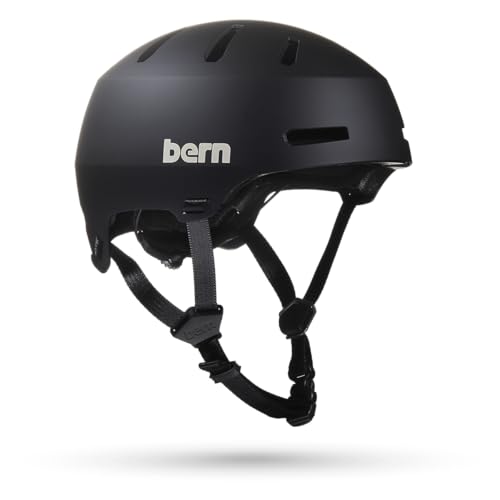
Bern Macon 2.0 MIPS
Bern fits the Macon 2.0 MIPS with a Boa dial that fine-tunes fit one-handed, useful with gloves on. A slider closes all five vents in a storm or opens them for spring skiing. Its Zip Mold liner molds to the head shape over the first few wears.
Pros
- Closeable vent slider gives more temperature control than fixed-vent helmets
- Boa dial allows one-handed fit adjustment with gloves
- Audio-compatible ear pads work with most clip-in headphone sets
Cons
- Bulkier profile than race-oriented shells like the POC Obex SPIN
- Fewer total vents than airflow-focused helmets on this list
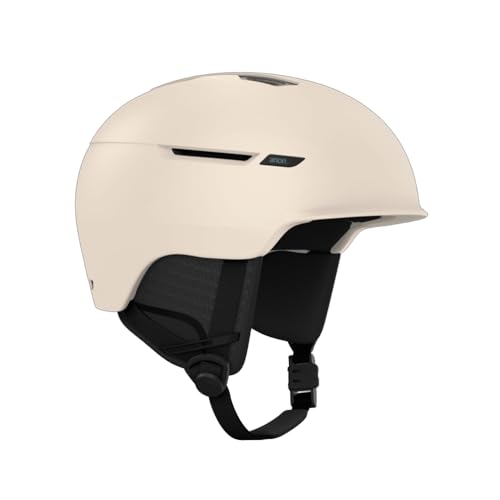
Anon Logan WaveCel
Anon fits the Logan with WaveCel instead of MIPS, a collapsible cellular liner that flexes and crumples on impact. Fleece-lined ear pads add warmth without a separate layer underneath. A magnetic clip holds Anon goggles against the brim to block wind.
Pros
- WaveCel offers a MIPS-alternative rotational-impact layer
- Fleece-lined ear pads add cold-weather warmth
- Magnetic goggle clip keeps goggles seated against the brim
Cons
- Heaviest helmet on this list at 470 g
- Fixed vents don’t adjust for temperature swings during the day
How they compare
| # | Model | Shell construction | Best for | Score | Price |
|---|---|---|---|---|---|
| 1 | Smith Optics Vantage MIPS | In-mold with Koroyd honeycomb liner | Best overall | 9.4 | Check price |
| 2 | Giro Ledge MIPS | In-mold polycarbonate shell | Best value | 9.1 | Check price |
| 3 | Wildhorn Drift | In-mold polycarbonate shell | Best budget | 8.8 | Check price |
| 4 | POC Obex SPIN | Hybrid in-mold shell with reinforced zones | Best for racing and downhill speed | 8.6 | Check price |
| 5 | Salomon Husk Prime MIPS | In-mold shell with EPS liner | Best for goggle integration | 8.4 | Check price |
| 6 | Bern Macon 2.0 MIPS | In-mold shell with Zip Mold EPS core | Best for adjustable ventilation control | 8.2 | Check price |
| 7 | Anon Logan WaveCel | In-mold shell with WaveCel liner | Best for cold-weather warmth | 8.0 | Check price |
Questions worth asking
What is MIPS in a ski helmet?
MIPS stands for Multi-directional Impact Protection System. A low-friction layer inside the helmet lets the shell shift slightly against the head during an angled hit. That slip cuts rotational force reaching the brain compared with a helmet that lacks the layer.
How should a ski helmet fit?
A properly fitted helmet sits level, about one finger-width above the eyebrows. It should feel snug without pinching and shouldn’t shift when you shake your head side to side. Goggles should meet the brim without leaving a gap for cold air.
In-mold versus hardshell ski helmets, what changes?
In-mold construction bonds the outer shell directly to EPS foam during manufacturing, cutting overall weight. Hardshell helmets add a separate ABS layer over the foam, adding durability against scuffs and dings. Racers who value impact resistance over weight often prefer hardshell builds.
Do ski helmets expire or need replacement?
Most manufacturers recommend replacement after five years, since foam liners break down from sweat, sunlight, and temperature swings. Any helmet involved in a hard impact needs replacement immediately, even without visible cracks. Storage in a hot car or garage speeds up foam degradation.
Can a bike helmet substitute for a ski helmet?
Bike helmets are tested for lower-speed, single impacts and lack the ear coverage or cold-weather insulation a ski helmet provides. Ski-specific helmets meet ASTM F2040 or CE EN 1077, standards built around snow-sport impact speeds. A bike helmet leaves ears exposed to wind and cold on a chairlift.
What is WaveCel, and how does it compare with MIPS?
WaveCel is a collapsible cellular liner, used by brands like Anon, that flexes, crumples, and glides on impact. MIPS instead relies on a slip layer that lets the shell rotate against the head. Both target rotational force, but the mechanisms differ enough that owners shouldn’t assume one outperforms the other without independent testing.
How many vents does a ski helmet need?
Most all-mountain helmets carry between 5 and 21 vents, with higher counts common on adjustable ventilation systems. Fixed-vent helmets, like the Giro Ledge MIPS, work fine in consistently cold climates. Skiers who see both cold mornings and warm afternoons benefit more from a slider or dial that closes vents on demand.
Are pricier ski helmets safer than budget certified models?
A certified budget helmet like the Wildhorn Drift meets the same ASTM F2040 and CE EN 1077 standards as premium shells. Higher prices typically buy rotational-impact technology, adjustable ventilation, or goggle integration, not a higher certification tier. Owners who skip those extras can still get comparable baseline protection from a certified budget model.
What is SPIN technology, and is it different from MIPS?
SPIN uses silicone-filled pads inside the liner that shear on impact, POC’s approach to reducing rotational force. It skips the full slip-plane layer that MIPS uses between the liner and shell. Both aim at the same angled-impact problem through different pad and layer designs.
Our take
Smith Optics’ Vantage MIPS remains the strongest all-around pick, pairing a Koroyd liner with adjustable venting for skiers who ride in mixed conditions. Racers focused on gate training should look at the POC Obex SPIN instead, since its low-profile shell and reinforced zones suit high-speed courses better. Skiers on a tighter budget who still want certified protection can choose the Wildhorn Drift, though it skips a rotational-impact layer.