Swim Goggles That Stay Sealed From Warmup to Finish
For pool competition, the Speedo Vanquisher 2.0 remains a reliable low profile pick. Open water swimmers wanting wider sighting should choose the Aqua Sphere Kayenne. Sprinters chasing the lowest drag should look at the TYR Tracer-X Elite Mirrored.
Tired of goggles fogging halfway through a set? The Speedo Vanquisher 2.0 has stayed a competitive staple for its low profile fit and dependable anti fog coating. Open water swimmers need to see further to their sides, and the Aqua Sphere Kayenne’s wider lens handles that better than a racing specific shape. Sprinters focused purely on drag reduction should look at the TYR Tracer-X Elite Mirrored’s compact racing shell instead.
Lens curvature, seal material and strap design change how a goggle performs across different strokes and distances. We compared field of view, seal type, strap systems and how each model suits racing versus open water or daily training, based on listed specifications and owner feedback.
Our top picks
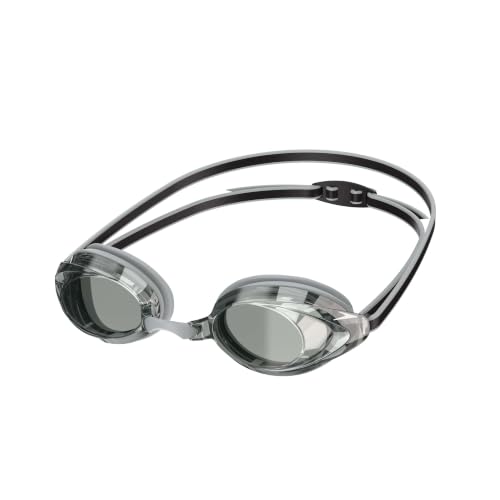
Speedo Vanquisher 2.0
A curved polycarbonate lens sits inside a low profile shell that has stayed a common sight on competitive swim teams for years. Silicone gaskets conform to varied face shapes without excessive pressure. Owners report the anti fog coating lasting through a full practice session before needing a rinse.
Pros
- Silicone seal fits a range of face shapes
- Anti fog coating holds through long sessions
- Low profile shell cuts drag while racing
Cons
- Narrower field of view than open water goggles
- Nose bridge sizing requires picking the right piece

TYR Special Ops 2.0 Polarized
Polarized lenses cut glare off outdoor pool surfaces and open water noticeably better than standard tinted lenses. A wider frame improves peripheral vision for sighting during open water swims. Swimmers training outdoors specifically favor this over indoor focused racing goggles.
Pros
- Polarized lens cuts outdoor glare effectively
- Wider frame improves peripheral sighting
- Quick adjust buckle simplifies strap changes
Cons
- Bulkier profile than pure racing goggles
- Polarization adds no benefit indoors

Arena Cobra Ultra Swipe
A wipeable anti fog coating on the inner lens can be refreshed with a finger swipe instead of replaced once it wears down. The low profile racing shape suits sprint and mid distance events equally well. Owners describe the swipe feature genuinely restoring clarity after fogging starts.
Pros
- Anti fog coating refreshes instead of wearing out
- Low profile shape suits racing
- Dual gasket improves seal reliability
Cons
- Swipe feature needs periodic reactivation
- Tighter fit may not suit larger heads

TYR Tracer-X Elite Mirrored
A compact shell minimizes drag specifically for sprint events, where fractions of a second decide placement. Mirrored coating reduces glare under bright competition lighting. Swimmers racing short distances tend to prefer this over bulkier training goggles that add resistance.
Pros
- Compact shell reduces drag while racing
- Mirrored coating cuts glare under bright lights
- Split strap adds stability during starts and turns
Cons
- Smaller lens limits peripheral vision
- Tight seal can leave marks after long wear

Aqua Sphere Kayenne
A lens larger than typical racing models extends the field of view considerably, useful for sighting buoys during open water swims. A soft silicone frame spreads pressure over a wider area for comfort on long swims. Triathletes and open water swimmers favor this over narrow racing shapes.
Pros
- Wide lens improves sighting in open water
- Soft frame stays comfortable over long durations
- One handed strap adjustment
Cons
- Larger profile adds more drag than racing goggles
- Less suited to pure sprint competition

Speedo Fastskin Hyper Elite
Built alongside Speedo’s racing suit line, this goggle emphasizes a secure, low movement fit during starts, turns and dives. Lens curvature matches typical competition pool lighting well. Swimmers preparing for meets use these to mirror race day conditions during training.
Pros
- Secure fit holds through dives and turns
- Anti fog coating suited to long training sets
- Buckle system matches racing goggle standards
Cons
- Costs more than basic training goggles
- Narrow fit may not suit all face shapes

Zoggs Predator Flex
A flexible frame conforms to the eye socket without the rigid pressure points some racing goggles create. Swimmers prioritizing comfort during longer training sessions over pure racing performance get more from this design. Daily lap swimmers favor its balance of comfort and reasonable cost.
Pros
- Flexible frame reduces pressure points
- Comfortable through extended daily sessions
- Reasonable cost for the comfort level
Cons
- Seal is less rigid than dedicated racing goggles
- Anti fog coating wears faster than premium options
How to choose
What separates racing goggles from training goggles Racing goggles favor a low profile shell and tight seal to minimize drag during competition starts and turns. Training goggles prioritize comfort and durability for repeated daily use, accepting a bit more bulk. Choose based on whether the goggle spends most of its time in competition or in daily practice sets.
Choosing lens type for indoor versus outdoor pools Clear or lightly tinted lenses suit indoor pools, where glare is minimal and visibility matters more than sun protection. Mirrored and polarized lenses, like those on the TYR Tracer-X Elite and TYR Special Ops, cut glare significantly outdoors and in open water. Matching lens tint to the typical swim environment improves visibility more than any other single factor.
Field of view for open water and triathlon swimming Open water swimmers need to sight buoys and other swimmers well beyond the narrow window racing goggles provide. Wider lens designs, such as the Aqua Sphere Kayenne, extend peripheral vision at the cost of slightly more drag. Pool racers rarely need that tradeoff, since sighting is not a concern within a lane.
Seal and strap fit for long training sessions A silicone gasket conforms better to varied face shapes than harder plastic seals, cutting down on leaks over a long practice. Dual strap systems distribute pressure more evenly across the back of the head than a single strap does. Swimmers doing multi hour training blocks should prioritize seal comfort over pure racing drag reduction.
The lineup, side by side
| # | Model | Lens | Best for | Score | Price |
|---|---|---|---|---|---|
| 1 | Speedo Vanquisher 2.0 | Curved polycarbonate, anti fog coated | Best overall | 9.3 | Check price |
| 2 | TYR Special Ops 2.0 Polarized | Polarized polycarbonate | Best for outdoor glare | 9.1 | Check price |
| 3 | Arena Cobra Ultra Swipe | Curved polycarbonate with Swipe coating | Best anti fog technology | 8.9 | Check price |
| 4 | TYR Tracer-X Elite Mirrored | Mirrored polycarbonate | Best for sprinting | 8.8 | Check price |
| 5 | Aqua Sphere Kayenne | Wide curved polycarbonate | Best field of view | 8.6 | Check price |
| 6 | Speedo Fastskin Hyper Elite | Curved polycarbonate, anti fog coated | Best for competitive training | 8.4 | Check price |
| 7 | Zoggs Predator Flex | Curved polycarbonate, anti fog coated | Best value | 8.2 | Check price |
Questions worth asking
What makes goggles suitable for competitive swimming?
Competitive goggles use a low profile shape to reduce drag, a reliable anti fog coating for sustained clarity and a secure seal that holds through dives and turns. Racing specific models also often meet event lens tint requirements for indoor versus outdoor competition.
How do I stop swimming goggles from fogging?
Most goggles ship with a factory anti fog coating that degrades over time from touching or rubbing the lens interior. Rinsing goggles in clean water after use and avoiding contact with the coated surface extends its effectiveness.
Are mirrored or clear lenses better for racing?
Mirrored lenses reduce glare under bright competition lighting and outdoor sun, making them popular for daytime meets. Clear lenses suit indoor pools with controlled lighting, where glare is less of a factor.
What is the difference between racing goggles and open water goggles?
Racing goggles use a narrow, low profile shape to minimize drag over short, controlled distances. Open water goggles favor a wider lens for peripheral sighting of buoys and other swimmers over longer, less controlled distances.
How tight should swimming goggles fit?
A properly fitted goggle creates a light suction seal without pressing painfully into the eye sockets. Straps too loose cause leaking, while overtightened straps cause discomfort and red marks without improving the seal much further.
Do polarized lenses help in an indoor pool?
Polarized lenses are designed to cut glare from sunlight reflecting off water, so they offer little benefit under standard indoor pool lighting. Save polarized options for outdoor pools and open water swimming.
How often should competitive swim goggles be replaced?
Most swimmers replace goggles every few months of regular use, as the anti fog coating degrades and the silicone seal loses elasticity. Visible scratching on the lens or a seal that no longer holds without excessive tightening both signal it is time for a new pair.
Can one pair of goggles work for both racing and open water?
A mid profile design with a moderate field of view can handle both reasonably well, though it compromises slightly on drag versus sighting compared to a specialized pair. Serious competitors in both disciplines often keep separate goggles for each purpose.
Which swimming goggles are best for beginners in competition?
The Speedo Vanquisher 2.0 suits newer competitive swimmers well, since its adjustable nose bridge and dual strap make achieving a reliable seal easier than a highly specialized racing shape.
Swim goggles vs racing goggles, what is the real difference?
General swim goggles balance comfort and durability for everyday laps, while racing goggles trade some comfort for a lower profile shell that reduces drag specifically during competition starts and turns.
Our take
Pick the Speedo Vanquisher 2.0 for general competitive use. Its proven fit and anti fog performance suit most pool racing needs without a specialized tradeoff. Swimmers doing open water events or triathlons should choose the Aqua Sphere Kayenne instead for its wider sighting field. Sprinters chasing the lowest possible drag should skip wide field designs entirely and go with the TYR Tracer-X Elite Mirrored.


