Professional Wood Routers That Handle Heavy Use
For most professional woodworkers, the Bosch 1617EVSPK is the top pick because it offers a perfect balance of power, precision, and versatility. Its plunge base and fixed base provide smooth operation for edge profiling and joinery. The main limitation is that some users find the cord placement slightly awkward. If you prioritize dust collection and visibility, the Triton TRA001 is a strong alternative.
Professional wood routers must handle continuous use, deliver precise cuts, and offer reliable performance. We compared the most popular models from leading brands to help you choose the right one for your shop.
From plunge routers to combo kits, these tools are built for joinery, edge profiling, and heavy-duty routing. Our list includes options for different budgets and preferences.
Before you buy
The best picks, ranked

Bosch 1617EVSPK
The Bosch 1617EVSPK is a 2.25 HP plunge and fixed base combo kit. It delivers smooth, precise cuts thanks to its variable speed control and micro-fine depth adjustment. Owners report excellent balance and low vibration, making it ideal for edge work and dovetail joinery.
Pros
- Smooth, precise depth adjustment
- Low vibration and quiet operation
- Two bases provide versatility
Cons
- Cord placement can be awkward
- Plunge base springs are stiff
Makita RT0701CX7
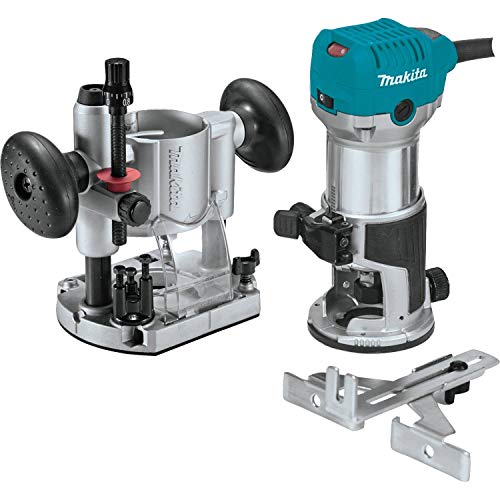
The Makita RT0701CX7 is a 1.25 HP compact router with a fixed base, plunge base, and offset base. It is lightweight and easy to handle, making it perfect for trimming laminates and light routing. Its variable speed and soft start provide control for fine work.
Pros
- Very lightweight and portable
- Multiple bases for various tasks
- Soft start for smoother operation
Cons
- Not powerful enough for heavy cuts
- Edge guide sold separately

DeWalt DW618PKB
The DeWalt DW618PKB is a 2.25 HP combo kit with fixed and plunge bases. It features a precision center and micro-fine depth adjustment. Users appreciate its D-handle design for comfortable control. It handles heavy cuts with ease and is a favorite among professional cabinet makers.
Pros
- Excellent depth adjustment
- D-handle provides good control
- Powerful motor for demanding tasks
Cons
- Heavier than some competitors
- Dust collection could be better

Triton TRA001
The Triton TRA001 is a 3.25 HP plunge router designed for table mounting. It offers above-table depth adjustment and a unique micro-adjustable turret. Its integrated dust extraction port and easy bit changes make it a top choice for router tables. Owners report exceptional power and smooth operation.
Pros
- Above-table depth adjustment is convenient
- Excellent dust collection
- Powerful motor for large bits
Cons
- Large and heavy
- Not ideal for handheld use

Porter-Cable 895PK
The Porter-Cable 895PK is a 2.25 HP combo kit with a fixed and plunge base. It is known for its robust construction and reliability. The micro-fine depth adjustment and template guides make it a solid choice for professional joinery. Users report that it handles large bits and hardwoods without bogging down.
Pros
- Durable build quality
- Smooth plunge action
- Powerful and consistent performance
Cons
- Bit changes require two wrenches
- No soft start feature

Festool 574512
The Festool 574512 OF 1400 EQ is a 2.25 HP plunge router with exceptional dust extraction. Its splinter guard and integrated dust port keep work areas clean. The router features a precise depth stop and fine adjustment. Professionals who value cleanliness and precision appreciate its performance, though the price is high.
Pros
- Superior dust collection
- Very precise adjustments
- Smooth and quiet operation
Cons
- Expensive
- Limited to plunge base only

Milwaukee 5616-20
The Milwaukee 5616-20 is a cordless 18V router with a 1.25 HP motor. It offers the freedom of cordless operation with the power of a corded compact. It features a variable speed dial and LED light. It is best for job site work and light routing tasks. Owners appreciate its convenience but note that battery life limits heavy use.
Pros
- Cordless convenience
- Compact and lightweight
- LED light for visibility
Cons
- Battery drain during heavy use
- Less power than corded models
Side by side
| # | Model | Motor | Best for | Score | Price |
|---|---|---|---|---|---|
| 1 | Bosch 1617EVSPK | 2.25 HP | Best overall for versatility and precision | 9.4 | Check price |
| 2 | Makita RT0701CX7 | 1.25 HP | Best compact router for trim and light work | 9.0 | Check price |
| 3 | DeWalt DW618PKB | 2.25 HP | Best for precision edge routing | 9.2 | Check price |
| 4 | Triton TRA001 | 3.25 HP | Best for table use and dust collection | 9.1 | Check price |
| 5 | Porter-Cable 895PK | 2.25 HP | Best for heavy-duty joinery | 8.9 | Check price |
| 6 | Festool 574512 | 2.25 HP | Best for dust-free routing | 9.3 | Check price |
| 7 | Milwaukee 5616-20 | 1.25 HP (18V) | Best for cordless portability | 8.5 | Check price |
Questions worth asking
What is the best router for a router table?
For router table use, the Triton TRA001 is highly recommended. It has a 3.25 HP motor, above-table depth adjustment, and excellent dust collection. Its design makes it easy to change bits and adjust depth from above the table.
How much horsepower do I need for professional woodworking?
For most professional work, a router with 2.25 HP is sufficient. If you plan to use large bits or work with hardwoods extensively, consider a 3 HP or more. Compact routers with 1.25 HP are best for trimming and light tasks.
What is the difference between a fixed base and a plunge base router?
A fixed base router maintains a set depth, ideal for edge profiling and trimming. A plunge base allows the bit to be lowered into the material, making it suitable for starting cuts in the middle of a workpiece, like mortises and grooves. Many routers come as combo kits with both bases.
Can I use a router without a table?
Yes, you can use a router handheld for many tasks. However, for precision and safety on larger pieces, a router table is beneficial. Handheld use is suitable for edge work, trimming, and smaller joinery.
How do I change a router bit safely?
First, unplug the router. Use wrenches to loosen the collet nut. Insert the bit with the shank fully into the collet. Tighten the nut securely, but avoid over-tightening. Always ensure the bit is sharp and the correct type for your task.
What is the ideal speed for routing hardwoods?
For hardwoods, a slower speed is recommended to prevent burning. Typically, speeds between 10,000 and 18,000 RPM work well. For softwoods and smaller bits, higher speeds are fine. Always check the manufacturer’s recommendations.
Are cordless routers powerful enough for professional work?
Cordless routers have improved, but they still lack the power and runtime of corded models. They are excellent for quick jobs and portability. For continuous heavy-duty routing, a corded router is more reliable.
How important is dust collection on a router?
Dust collection is very important for visibility and health. It also helps keep the work area clean. Routers with integrated dust ports and effective extraction, like the Festool, improve air quality and allow you to see your cut line better.
What is the best router for dovetail joinery?
For dovetail joinery, a router with a plunge base and precise depth adjustment is essential. The Bosch 1617EVSPK and DeWalt DW618PKB are excellent choices. They offer smooth plunge action and micro-adjustable depth for accurate cuts.
Can I use a router to cut acrylic or plastic?
Yes, you can route acrylic and plastic, but you must use appropriate bits and speeds. Use a slower speed to prevent melting. Also, use a sharp bit and make shallow passes. Always wear safety gear as chips can be sharp.
Our pick
For most professionals, the Bosch 1617EVSPK is the best all-around choice because it offers precision, versatility, and reliability at a reasonable price. If you primarily use a router table, invest in the Triton TRA001 for its power and above-table adjustments. For those who prioritize dust collection, the Festool is unmatched. Choose the router that fits your specific work style and budget.