How Much Cage Space Does a Pet Rabbit Really Need
MidWest Homes Wabbitat Deluxe gives a single rabbit enough floor space to stretch out fully at a moderate price. Prevue Pet Products’ Feisty Ferret Home suits owners wanting a tall multi-level setup with ramps. Ware Manufacturing Home Sweet Home fits smaller breeds or tighter living spaces best.
MidWest Homes Wabbitat Deluxe fits most single rabbits with room to hop and stretch out fully. Its one-inch wire spacing keeps paws safe while still letting air move through the cage. A shallower base tray than some rivals is the main tradeoff for its lower price.
Floor space matters more than cage height, since rabbits need room to move rather than climb. We compared floor dimensions, wire bar spacing, base tray depth, and door placement across each model’s current Amazon listing.
The best picks, ranked
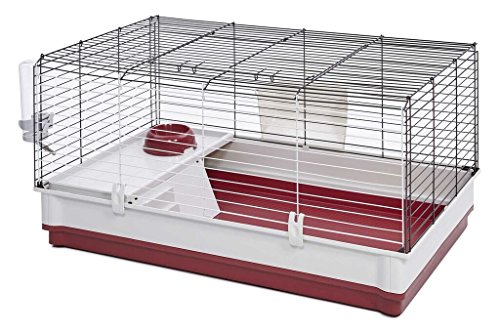
MidWest Homes for Pets Wabbitat Deluxe Rabbit Home
A 39.5 by 23.5 inch footprint gives one rabbit enough floor space to fully stretch out and hop around. Two front doors open from either side for feeding and cleanup. A pull-out plastic base tray simplifies daily cleaning without lifting the whole cage.
Pros
- Generous floor space for a single rabbit
- Two doors ease feeding and cleaning access
- Pull-out tray simplifies daily cleanup
Cons
- Tray depth runs shallow for deep bedding
- No upper level keeps overall height minimal

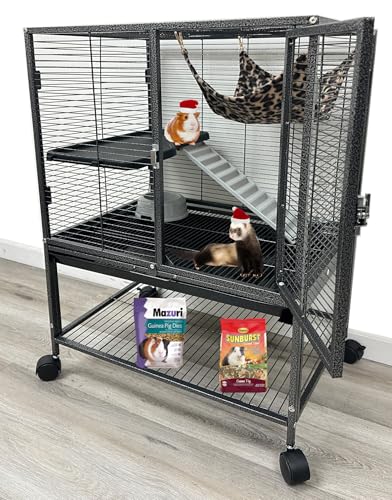
Prevue Pet Products Black Feisty Ferret Home
Two ramps connect a ground floor to an upper platform, adding usable vertical space for an active rabbit. A wide front door fits a full-size litter box through easily. Owners repurpose this ferret-branded cage for rabbits thanks to its wire spacing and sturdy frame.
Pros
- Two-level design adds vertical living space
- Wide front door fits large accessories
- Powder-coated frame resists rust over time
Cons
- Ramps take up floor space rabbits could otherwise use
- Assembly involves more parts than single-level cages

Ware Manufacturing Home Sweet Home Rabbit Cage
A compact wood and wire frame suits dwarf or small rabbit breeds better than larger wire-only cages. Its wood exterior gives it a furniture-like look for indoor placement. A slide-out tray under the wire floor catches waste for easier cleaning.
Pros
- Wood frame blends into home decor
- Suits smaller dwarf and small breed rabbits
- Slide-out tray eases cleaning
Cons
- Single door limits access angles
- Wood surfaces need protection from chewing

YITAHOME Rabbit Hutch Indoor Outdoor Cage
A weatherproof wood frame and asphalt roof let this hutch sit outdoors as well as indoors. A ground-level run and an elevated house give a rabbit separate sleeping and activity areas. A pull-out tray under the run eases waste cleanup outdoors.
Pros
- Weatherproof build suits outdoor placement
- Separate run and house areas add structure
- Large combined floor space across both levels
Cons
- Bulkier footprint needs more available space
- Wood roof needs occasional resealing outdoors
Petmate Small Animal Cage Habitat
A deep plastic base paired with a wire top contains bedding better than all-wire designs. Clear plastic sides let owners check on a rabbit without opening the cage. Its smaller footprint suits living spaces where a full hutch will not fit.
Pros
- Deep base contains bedding and litter well
- Clear sides make monitoring easy
- Tighter wire spacing suits young rabbits
Cons
- Top-opening lid makes handling less convenient
- Smaller footprint suits only compact breeds

Kaytee My First Home Rabbit Cage
A straightforward wire cage with a plastic base covers basic housing needs at a moderate price. Its half-height wire side panel keeps hay and bedding from scattering. First-time rabbit owners get a functional setup without extra features to manage.
Pros
- Priced below most comparable rabbit cages
- Half-height side panel reduces bedding scatter
- Simple design assembles quickly
Cons
- Floor space runs smaller than larger breeds need
- Single door limits cleaning access

Trixie Natura Small Animal Hutch
A basic wood hutch with a wire run covers short-term or supplemental housing at a low price. Its peaked roof sheds water when used in a covered outdoor spot. This hutch works best as a secondary enclosure rather than full-time adult housing.
Pros
- Lowest price point in this comparison
- Peaked roof helps shed water outdoors
- Lightweight enough to move between spots
Cons
- Shallow tray struggles to contain bedding
- Floor space runs tight for full-time adult housing
How to choose
How much floor space a rabbit cage actually needs House Rabbit Society guidelines call for floor space at least four times a rabbit’s stretched-out body length, more for larger breeds. A cage that only fits a rabbit lying flat leaves no room for normal movement. Multi-level designs add usable space vertically when floor footprint runs limited.
Why wire spacing affects paw safety Spacing wider than one inch risks a paw or leg slipping through and getting hurt. Tighter spacing, near half an inch, suits young or small breed rabbits specifically. Solid flooring sections, rather than wire throughout, also help prevent sore hocks on larger rabbits.
Indoor cage or outdoor hutch: which fits your rabbit? Indoor cages prioritize a contained base tray and quieter materials that fit household decor. Outdoor hutches need weatherproof wood or coated wire plus a roof that sheds rain. Rabbits kept outdoors also need temperature-appropriate shelter beyond the cage structure itself.
Cages for multiple rabbits or larger breeds Larger breeds, like Flemish Giants, need floor space well beyond what fits a dwarf breed’s cage. Bonded pairs generally need more combined space than simply doubling a single rabbit’s minimum. A multi-level or connected hutch design helps split space between sleeping and activity areas.
The lineup, side by side
| # | Model | Floor space | Best for | Score | Price |
|---|---|---|---|---|---|
| 1 | MidWest Homes for Pets Wabbitat Deluxe Rabbit Home | 39.5 x 23.5 inches | Best overall | 9.3 | Check price |
| 2 | Prevue Pet Products Black Feisty Ferret Home | 31 x 20.5 inches per level | Best multi-level design | 9.0 | Check price |
| 3 | Ware Manufacturing Home Sweet Home Rabbit Cage | 37 x 19 inches | Best for smaller breeds | 8.6 | Check price |
| 4 | YITAHOME Rabbit Hutch Indoor Outdoor Cage | 44 x 24 inches total | Best for indoor-outdoor use | 8.8 | Check price |
| 5 | Petmate Small Animal Cage Habitat | 31 x 20 inches | Best for easy monitoring | 8.4 | Check price |
| 6 | Kaytee My First Home Rabbit Cage | 30.5 x 18 inches | Best value | 8.2 | Check price |
| 7 | Trixie Natura Small Animal Hutch | 27.5 x 19.5 inches | Best budget | 8.0 | Check price |
Common questions
What size cage does a rabbit need?
A single rabbit needs floor space at least four times its stretched-out body length, often 30 by 36 inches or larger for medium breeds. Larger breeds and bonded pairs need proportionally more room.
Can rabbits live on a wire-bottom cage floor?
Wire flooring can cause sore hocks over time, so a solid resting mat should go in even wire-bottom cages. Several cages compared here pair a solid base tray with wire sides instead.
Is a hutch or an indoor cage better for a pet rabbit?
Indoor cages suit house rabbits and offer more temperature control plus daily social interaction. Outdoor hutches work when a rabbit has access to a secure, weatherproof, temperature-managed space.
How often does a rabbit cage need cleaning?
Spot cleaning the litter area daily plus a full bedding change weekly keeps ammonia buildup down. Deeper base trays, like the Petmate model’s 6 inch depth, stretch the time between full cleanings.
Do rabbits need a multi-level cage?
Multi-level designs add usable space and let an active rabbit exercise vertically. A single-level cage works fine as long as total floor space meets minimum guidelines.
What wire spacing is safe for rabbits?
One inch spacing suits most adult rabbits without risking paw injury. Half-inch spacing, used on the Petmate cage, adds extra safety margin for young or small breed rabbits.
Can two rabbits share one cage?
Bonded rabbit pairs can share a cage once floor space scales up, generally close to double a single rabbit’s minimum. Unbonded rabbits should not share an enclosure due to territorial aggression.
What should go on the floor of a rabbit cage?
A solid mat or fleece liner over part of the floor prevents sore hocks from wire or hard plastic. Hay should also cover a section of the floor for grazing and litter habits.
Which rabbit cage is best for small spaces?
Ware Manufacturing’s Home Sweet Home and Petmate’s Small Animal Cage Habitat both fit smaller footprints than full-size hutches. Dwarf and small breed rabbits do well in either without needing the larger MidWest or YITAHOME footprint.
The verdict
MidWest Homes Wabbitat Deluxe takes the top spot for floor space and cleaning access that suit most single rabbits. Owners with an active rabbit needing more vertical room should look at the Prevue Pet Products multi-level cage instead. Anyone housing a dwarf or small breed can save space and money with the Ware Manufacturing Home Sweet Home.