Rabbit Hutches Compared: Indoor Cages vs Outdoor Runs
The Aivituvin AIR37 leads on outdoor build quality, with a waterproof roof, pull out tray and a run that gives rabbits real ground space. PawHut’s 62 inch Wooden Rabbit Hutch offers similar footprint for less, and indoors the MidWest Wabbitat Deluxe is the easiest to clean and expand.
If your rabbits live outside, the Aivituvin AIR37 is the pick that balances weather protection with genuine run space, while the PawHut 62 inch hutch covers similar ground for less and the MidWest Wabbitat Deluxe is the better indoor base.
Buying a hutch is harder than it should be, because listing photos rarely show how little usable floor a two tier design actually provides once the ramp and sleeping box take their share. Welfare guidance in the UK and US both point to far larger enclosures than most mass market hutches offer on their own, which means almost every product here works best as a shelter attached to a run. We compared stated dimensions, roof and hardware materials, tray design and ramp angles, then weighed those against what owners report about rain ingress, latch security and how the timber holds up through a second winter.
The best picks, ranked

Aivituvin AIR37 Wooden Rabbit Hutch
Aivituvin builds this one with an asphalt style waterproof roof, a raised sleeping box and a wire run underneath so rabbits get shelter and ground space in the same footprint. The pull out tray under the house section makes daily cleaning quick. Owners report the fir timber needs an annual coat of pet safe preservative to keep the weather out.
Pros
- Weatherproof roof lifts for full access
- Run space underneath the sleeping area
- Deep pull out tray speeds up cleaning
Cons
- Timber needs retreating each year
- Still too small as a rabbit’s only space
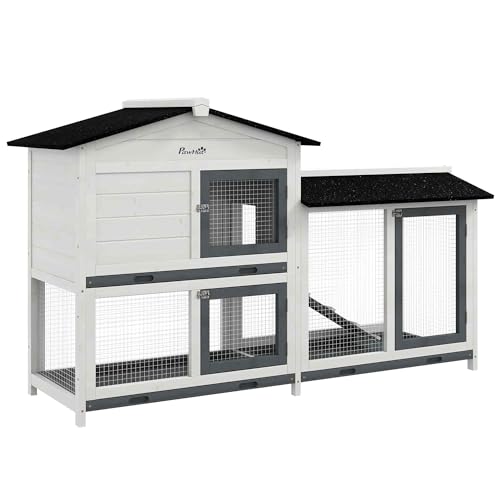
PawHut 62 Inch Wooden Rabbit Hutch with Run
The extra length here is the point, because it gives rabbits somewhere to take a few hops rather than just turn around. There is an enclosed sleeping section, a wire run and multiple access doors for feeding and cleaning. Build quality is fair rather than premium, and owners report the mesh staples benefit from being reinforced before first use.
Pros
- Longer run than most hutches at this level
- Several access points make daily care easier
- Reasonable outlay for the size
Cons
- Mesh fixings can need reinforcing
- Thin timber in the side panels
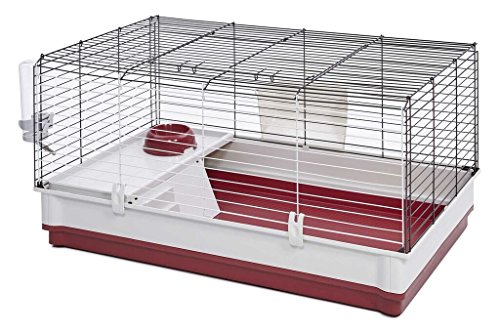
MidWest Homes for Pets Wabbitat Deluxe Rabbit Home
This is the practical indoor base most rabbit owners end up with, mainly because the deep plastic pan and top opening door make cleaning and handling straightforward. It folds for storage and pairs with an exercise pen for free roaming time. It is a base camp rather than a full home, and rabbits still need hours of run access daily.
Pros
- Deep pan contains litter and hay mess
- Top opening makes lifting rabbits easier
- Folds down when not in use
Cons
- Needs a pen attached for adequate space
- Wire floor sections are not suitable without cover

Trixie Rabbit Hutch with Sloped Roof
Trixie’s sloped roof design sheds rain well and the compact footprint suits patios and small yards where a long hutch will not fit. The hinged roof opens for cleaning and the sleeping compartment has a separating door. Because it is compact, it really does need to be paired with a run rather than used alone.
Pros
- Sloped roof sheds rain effectively
- Raised legs keep the floor off wet ground
- Fits patios and small gardens
Cons
- Too small to serve as the only enclosure
- Internal ramp is steep for older rabbits

Living World Deluxe Habitat Extra Large
The hybrid design uses a plastic base with a raised balcony platform, which gives a small rabbit somewhere to sit above floor level. The deep base holds bedding well and the front door drops down as a ramp. It is best suited to smaller breeds, since larger rabbits outgrow the platform quickly.
Pros
- Deep base keeps bedding contained
- Balcony adds usable vertical space
- Accessories included from new
Cons
- Cramped for large breed rabbits
- Plastic clips can loosen over time
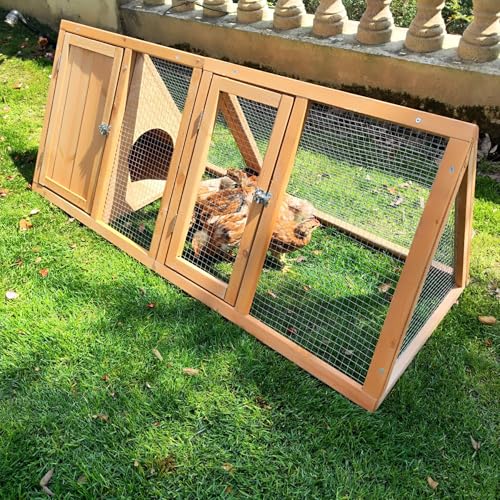
Petsfit Wooden Rabbit Hutch with Run
Petsfit sizes this one to give a bonded pair enough room to sit apart, which matters more than most listings acknowledge. The waterproof roof panel and treated timber cope with typical garden conditions. Assembly is longer than average, and owners report labelling on the parts could be clearer.
Pros
- Enough width for two rabbits to separate
- Roof panel keeps the sleeping area dry
- Solid latches on the main doors
Cons
- Assembly takes longer than rivals
- Part labelling is unclear in places

Kaytee My First Home Habitat for Rabbits
Kaytee’s wire habitat is the low cost indoor starting point, with a plastic base and simple wire top that comes apart for cleaning. It suits a rabbit that spends most of the day out in a pen and only sleeps or eats inside. The latches are basic, so check them each time you close up.
Pros
- Lowest outlay of the indoor options
- Comes apart quickly for deep cleaning
- Light enough to move between rooms
Cons
- Basic latches need checking regularly
- Only suitable alongside daily pen time
What to look for
Space is the specification that matters most Welfare organisations recommend enclosures far larger than a standard hutch provides, with room for a rabbit to take several consecutive hops, stand fully upright on its back legs and stretch out flat. Treat any hutch here as the shelter and litter area, and plan on attaching a run or exercise pen that the rabbits can reach at all hours rather than only when you let them out.
Weatherproofing is about more than the roof A waterproof roof panel keeps rain off the top, but wind driven rain comes in through open mesh sides and rising damp comes up through the base. Look for raised legs, an overhang on the roof edge and treated timber, then plan on a cover for the exposed side during winter. Owners report untreated fir absorbs water fast and starts to swell around the hinges within a season.
Ramps, mesh and safety details Steep ramps cause falls in older or overweight rabbits, so a gentle angle with cross battens is worth more than an extra tier. Wire floors are the other common problem, since resting on bare mesh leads to sore hocks. If a model has an open wire section, cover it with a solid mat. Check that latches cannot be nosed open and that mesh is stapled or screwed rather than tacked.
Cleaning access decides whether you keep it clean A hutch you can only reach through one small door will get cleaned less often, which is a health problem in warm weather when flystrike becomes a real risk. Pull out trays, hinged roofs and full width doors all make the daily job fast enough that it actually gets done. Based on specifications, prioritise a deep removable tray over almost any other convenience feature.
Compared at a glance
| # | Model | Material | Best for | Score | Price |
|---|---|---|---|---|---|
| 1 | Aivituvin AIR37 Wooden Rabbit Hutch | Fir wood frame with wire mesh | Best overall | 9.4 | Check price |
| 2 | PawHut 62 Inch Wooden Rabbit Hutch with Run | About 62 inches | Best value outdoor hutch | 9.2 | Check price |
| 3 | MidWest Homes for Pets Wabbitat Deluxe Rabbit Home | Indoor wire cage with plastic pan | Best indoor cage | 9.0 | Check price |
| 4 | Trixie Rabbit Hutch with Sloped Roof | Sloped, hinged for access | Best for small gardens | 8.8 | Check price |
| 5 | Living World Deluxe Habitat Extra Large | Indoor habitat with plastic base | Best for single indoor rabbits | 8.6 | Check price |
| 6 | Petsfit Wooden Rabbit Hutch with Run | Suited to a bonded pair | Best for two rabbits | 8.3 | Check price |
| 7 | Kaytee My First Home Habitat for Rabbits | Indoor wire habitat | Best budget indoor option | 8.0 | Check price |
Frequently asked questions
How big should a rabbit hutch be?
Bigger than most sold. Welfare guidance points to an enclosure where a rabbit can take three consecutive hops, stand fully upright and lie stretched out, which in practice means pairing any hutch with a permanently attached run.
Can rabbits live outside all year?
They can in a well built, draught free hutch that is raised off the ground and sheltered from wind and rain, provided they are acclimatised. Sudden moves between a warm indoor room and a cold garden are what cause problems.
Do I need to treat a wooden hutch?
Yes, with a pet safe wood preservative, usually once a year. Owners report untreated fir and pine swell around hinges and start to rot at the base within a couple of wet seasons.
Is a wire floor bad for rabbits?
Resting on bare wire causes sore hocks. If a hutch or cage has an open mesh section, cover it with a solid mat or a piece of untreated board so the rabbit always has a flat surface to sit on.
Indoor cage or outdoor hutch, which is better?
Indoor housing such as the MidWest Wabbitat Deluxe keeps rabbits closer to the household and away from predators and temperature swings, but needs daily free roaming time. Outdoor hutches suit gardens where a large run can be attached permanently.
How often should a hutch be cleaned?
Spot clean the litter corner daily and do a full strip down weekly. In warm weather the daily check matters more, because soiled bedding attracts flies and flystrike develops very quickly.
Can two rabbits share one hutch?
Only a bonded pair, and only with enough width for them to sit apart. Models sized for pairs such as the Petsfit hutch work, but unbonded rabbits will fight regardless of the space.
Are two tier hutches worth it?
Sometimes. The upper level adds a dry sleeping area, but a steep ramp reduces the usable floor below and creates a fall risk for older rabbits. A long single level with a run is usually the better use of the same footprint.
Our take
The Aivituvin AIR37 is the strongest all round outdoor choice, combining a genuinely waterproof roof with run space and a tray that makes cleaning quick enough to keep up with. PawHut’s 62 inch hutch gets you a similar footprint for less if you are willing to reinforce the mesh, and indoor keepers should start with the MidWest Wabbitat Deluxe plus a pen. Whichever you choose, plan the attached run at the same time rather than later.


