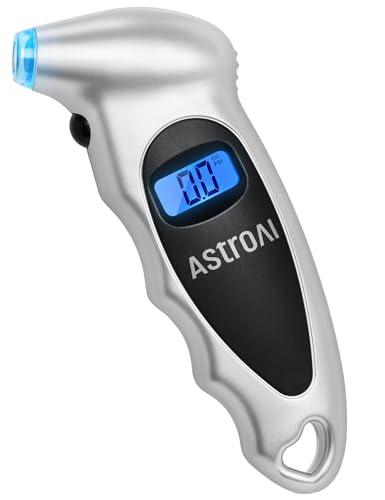
How to Pick a Rechargeable Tire Pressure Gauge That Lasts
AstroAI ACT10 leads with a built-in battery, three-unit digital display, and USB-C charging that suit most passenger vehicles. RYOBI’s P737 saves money for owners who already carry 18V ONE+ batteries. VacLife’s cordless inflator pairs a wider nozzle kit with a lower cost for households with bikes and inflatables.
AstroAI ACT10 suits drivers who want one tool that both reads and adds air. A built-in battery and USB-C port skip the need for a cigarette lighter cord. Battery capacity still limits it on larger truck tires, where a tool-platform inflator pumps faster.
Rechargeable covers both standalone gauges and full cordless inflators, and the two work very differently. We compared power source, display accuracy claims, nozzle compatibility, and charging method across current listings to separate real differences from marketing copy.
What to look for
How Rechargeable Gauges Store and Deliver Power A rechargeable gauge stores power in a built-in battery instead of a coin cell or AAA batteries. Most current models charge through USB-C or micro USB, much like a phone. Cordless tire inflators go further, adding a pump alongside the digital readout. That combination lets a single device check pressure and add air away from any outlet.
Digital Gauge or Cordless Inflator: Which Do You Need? A standalone digital gauge only measures pressure and tucks easily into a glovebox. A cordless inflator, like the AstroAI ACT10 or RYOBI P737, measures and adds air, which suits drivers who top off tires monthly. Tool owners with an existing 18V or 20V battery platform often prefer an inflator built for that system, since it skips a second battery to charge. Drivers who just want a pressure check gain little from an inflator’s extra bulk.
What Drives Accuracy in a Digital Reading Accuracy depends more on the sensor than on the power source itself. Owners report readings within a few PSI of shop equipment across most models listed here. Preset shutoff features, like those on the Milwaukee 2475-20 and DEWALT DCC020IB, rely on that same sensor to decide when to stop. A gauge that drifts over time usually points to sensor wear rather than battery type.
Matching a Gauge to the Battery Platform You Already Own Shoppers who already own RYOBI, Milwaukee, or DEWALT power tools can buy the bare inflator tool and skip a redundant battery. Those without a tool platform get better value from a built-in-battery model, such as VacLife, AVID POWER, or DEKO. Households with bikes, sports balls, or inflatable furniture benefit from a wider nozzle kit like DEKO’s. Matching gear already owned, rather than chasing the highest score, usually saves money.
The best picks, ranked
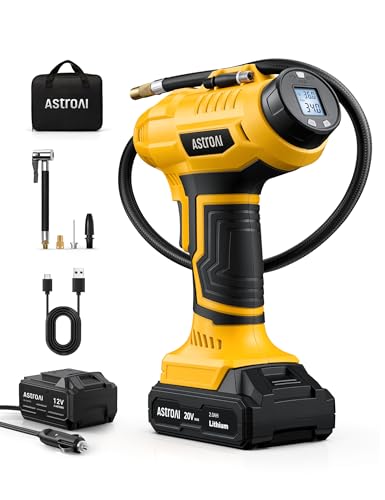
AstroAI ACT10 Cordless Tire Inflator
A built-in rechargeable battery pairs with a digital gauge that switches between PSI, BAR, and KPA on this model. Owners report it fills a flat sedan tire without needing an outlet nearby. USB-C handles charging, so no separate charger cable rides along in the trunk.
Pros
- Switches between three pressure units on one screen
- Auto shutoff stops the pump at a preset target
- Small enough to store in a glovebox
Cons
- Battery capacity limits it on larger truck tires
- No mounted work light for checking valves at night
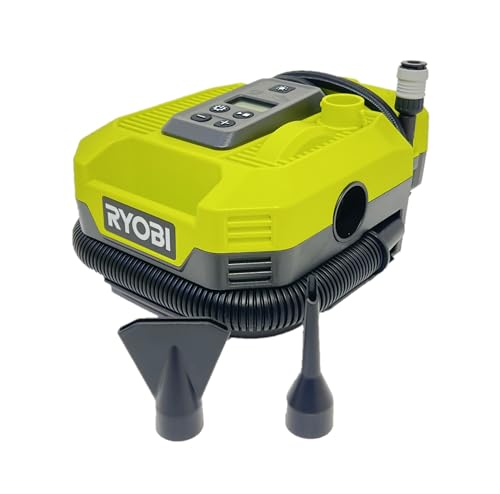
RYOBI P737 18V ONE+ Power Inflator
This inflator runs on the 18V ONE+ battery platform already found in RYOBI drills and saws. Anyone with that battery family skips buying a dedicated inflator battery. A digital display tracks live pressure while the pump runs, and the tool ships without a battery included.
Pros
- Works with any 18V ONE+ battery already owned
- Digital readout updates continuously while inflating
- Light enough for one-handed use at the curb
Cons
- Battery and charger sold separately
- Locked into RYOBI’s battery ecosystem
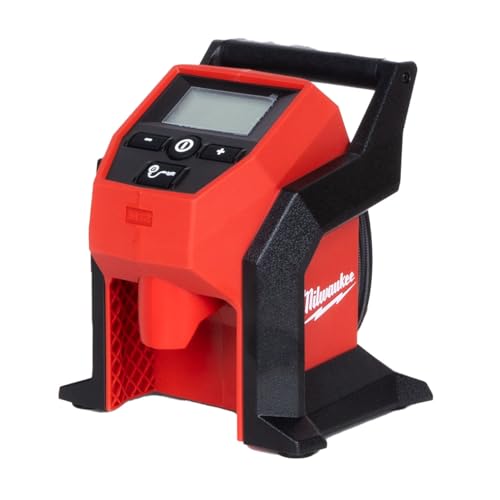
Milwaukee 2475-20 M12 Inflator
Milwaukee built this inflator around its M12 battery line, aiming it at contractors who already carry that pack. A built-in LED lights the valve stem inside dark garages. The digital gauge holds a preset pressure and shuts the pump off on its own.
Pros
- Rugged housing suits truck beds and job sites
- LED light helps in low visibility
- Preset shutoff avoids overfilling a tire by accident
Cons
- Needs a separate M12 battery purchase
- Bulkier than gauge-only tools without a pump

DEWALT DCC020IB 20V MAX Cordless Inflator
This inflator uses the 20V MAX battery line and a digital gauge with a locking preset dial. Owners report the readout stays steady even after several minutes of continuous pumping. It ships as a bare tool, so a compatible battery is needed separately.
Pros
- Preset lock holds a target PSI without drifting
- Dual-head nozzle covers both car and bike tires
- Coiled hose resists tangling in a trunk
Cons
- No battery or charger included in the box
- Best value only for existing DEWALT 20V pack owners

VacLife Cordless Tire Inflator
A built-in rechargeable battery means this inflator needs no separate tool battery purchase. A digital screen shows real-time pressure, and a small flashlight helps during nighttime checks. Owners report the included nozzles cover cars, bikes, and inflatable pool toys.
Pros
- No separate tool battery required
- Nozzle set covers bikes and inflatables alongside tires
- Built-in flashlight aids nighttime pressure checks
Cons
- Runs slower on larger truck tires
- Battery is not swappable once it degrades

AVID POWER Cordless Tire Inflator
This model keeps its feature list simple: a rechargeable battery, a digital gauge, and one nozzle adapter. Drivers who just want a quick top off skip paying for extra modes. Owners report a single charge lasts through several tires before needing power again.
Pros
- Costs less than tool-battery-based inflators
- Single-button operation keeps use simple
- Compact size fits easily in a glovebox
Cons
- Micro USB charging runs slower than USB-C
- Fewer nozzle options than pricier rivals

DEKO Cordless Tire Inflator
A wider nozzle kit ships with this inflator than with most rivals, covering sports balls, air mattresses, and pool floats alongside tires. The digital gauge switches between PSI, BAR, and KPA. Owners report it stores neatly in a small zippered case for road trips.
Pros
- Widest nozzle kit here for non-tire inflatables
- Zippered case keeps all parts together
- Multi-unit display suits international travel
Cons
- Pump speed lags behind dedicated tire-only models
- Case adds bulk compared with slimmer competitors
Compared at a glance
| # | Model | Power source | Best for | Score | Price |
|---|---|---|---|---|---|
| 1 | AstroAI ACT10 Cordless Tire Inflator | Built-in rechargeable battery | Best overall | 9.4 | Check price |
| 2 | RYOBI P737 18V ONE+ Power Inflator | RYOBI 18V ONE+ battery, sold separately | Best for Ryobi battery owners | 9.2 | Check price |
| 3 | Milwaukee 2475-20 M12 Inflator | Milwaukee M12 battery, sold separately | Best for durability | 8.9 | Check price |
| 4 | DEWALT DCC020IB 20V MAX Cordless Inflator | DEWALT 20V MAX battery, sold separately | Best for accuracy | 8.7 | Check price |
| 5 | VacLife Cordless Tire Inflator | Built-in rechargeable battery | Best value | 8.5 | Check price |
| 6 | AVID POWER Cordless Tire Inflator | Built-in rechargeable battery | Best budget | 8.2 | Check price |
| 7 | DEKO Cordless Tire Inflator | Built-in rechargeable battery | Best for multi-use | 8.0 | Check price |
Common questions
How accurate are rechargeable tire pressure gauges?
Most digital models read within a few PSI of shop gauges, based on their listed specifications. Accuracy comes from the pressure sensor, not the rechargeable battery.
What PSI range do rechargeable tire gauges cover?
Common ranges run from 0 to 150 PSI, enough for passenger cars, light trucks, and bike tires. Check a specific listing before inflating high-pressure truck or trailer tires.
Can a cordless tire inflator use my existing power tool battery?
Yes, if the inflator is built for that platform. RYOBI’s P737 uses 18V ONE+ packs, Milwaukee’s 2475-20 uses M12 packs, and DEWALT’s DCC020IB uses 20V MAX packs.
Is a rechargeable gauge better than a battery-powered one?
Rechargeable models avoid buying replacement coin cells or AAAs. They still need periodic USB charging, so they are lower maintenance rather than maintenance free.
How long does a rechargeable tire inflator hold a charge?
Built-in battery models like the AstroAI ACT10 and VacLife typically handle several tires per charge, according to their listings. Tool battery models depend on whatever pack is attached.
Which rechargeable tire pressure gauge works best for trucks and SUVs?
Tool-platform inflators such as the Milwaukee 2475-20 or DEWALT DCC020IB generally pump faster and suit larger tires better than compact built-in battery models.
Do rechargeable tire inflators work for bikes and sports balls?
Most ship with a Presta valve adapter and a ball needle. DEKO’s kit adds mattress and pool float nozzles for wider household use.
Rechargeable or plug-in tire inflator, which should I buy?
A plug-in model draws power from a car outlet indefinitely, useful for slow leaks on long trips. A rechargeable model works away from the car, such as on a bike or trailer, but is limited by battery life.
What is the difference between a tire gauge and a tire inflator?
A gauge only measures pressure, while an inflator measures pressure and pumps air into the tire. Cordless inflators like the AstroAI ACT10 combine both functions in one tool.
Final word
AstroAI ACT10 takes the top spot, since its built-in battery, three-unit display, and USB-C charging suit most drivers without tying them to one tool brand. Anyone already carrying RYOBI 18V or Milwaukee M12 batteries should look at the P737 or 2475-20 instead, since skipping a second battery purchase saves money over time. Households that also inflate bikes, balls, or pool floats regularly will get more mileage from DEKO’s wider nozzle kit.