Which Reptile Heat Lamp Handles a Large Enclosure Best
Zoo Med’s Deep Dome Dual Lamp Fixture leads this comparison with dual ceramic sockets and an 8.5 inch dome built for large enclosures. REPTI ZOO’s Dimmable Basking Lamp Fixture offers strong value through its built in dimmer. For tighter budgets, Zoo Med’s Repti Basking Spot Bulb works with domes owners already own.
Zoo Med’s Deep Dome Dual Lamp Fixture suits owners housing large bearded dragons, iguanas, or tegus, since its dual ceramic sockets run separate basking and UVB bulbs at once. Its 8.5 inch dome will not fit smaller 20 gallon screen tops, so measure your lid first.
Large reptile setups need higher wattage and bigger domes than starter kits provide, and fixture size gets overlooked easily. We compared wattage ratings, dome diameter, socket material, and owner feedback on heat output across basking, ceramic, and UVB combo styles.
What to look for
Matching Wattage to Enclosure Size Wattage needs climb sharply once an enclosure passes 40 gallons. A 50 watt bulb that warms a 10 gallon tank barely raises the temperature in a 75 gallon habitat. Ceramic sockets tolerate higher wattages than plastic ones, so fixtures rated above 100 watts usually use ceramic housings. Checking socket material before buying prevents melted fixtures later.
Dome Size and Fixtures for Big Lizards Bigger reptiles need wider basking platforms, so dome diameter matters as much as wattage. Fluker’s Sun Dome uses a 10 inch dome that spreads heat across a broader surface than a standard 5.5 inch dome. Wire guards matter too on larger fixtures, since climbing species like tegus and monitors can contact the bulb directly. Dual socket fixtures let owners run separate basking and UVB bulbs without a second clamp on the screen top.
Ceramic Emitters vs UVB Combo Bulbs Ceramic heat emitters produce infrared warmth without visible light, suiting reptiles that need round the clock heat. Mercury vapor bulbs like the Exo Terra Solar Glo combine UVB and heat output in one bulb, cutting the number of fixtures on the canopy. Neither option includes a built in thermostat, so pairing either with a separate temperature controller helps avoid overheating in glass or PVC enclosures.
Heating Tortoise Habitats and Nighttime Setups Tortoises basking on flat substrate benefit from wide, low mounted domes rather than narrow spotlights, since a focused beam leaves cooler patches nearby. Nighttime heat needs separate thought, since bright white bulbs can disrupt sleep cycles in nocturnal species. Red or infrared bulbs supply supplemental warmth after dark without that disruption. Owners in cooler climates sometimes run a daytime basking bulb and a nighttime infrared bulb on the same timer.
The best picks, ranked

Zoo Med Deep Dome Dual Lamp Fixture
Dual porcelain sockets let owners run a basking bulb and a UVB bulb side by side in one housing. An aluminum reflector dome measures 8.5 inches and clamps onto mesh screen tops. Each socket handles bulbs up to 150 watts, enough for iguanas, bearded dragons, and larger monitor enclosures.
Pros
- Two independent sockets run heat and UVB bulbs together
- Aluminum reflector directs more heat downward
- Clamp mount fits most 40 gallon and larger screen tops
Cons
- No dimmer or thermostat included
- Heavy dome needs a sturdy screen lid

REPTI ZOO Dimmable Basking Lamp Fixture
A built in rotary dimmer adjusts basking output without swapping bulb wattages. The ceramic socket handles bulbs up to 100 watts, and the aluminum dome resists warping under sustained heat. An adjustable clamp arm angles light across mid size dragon or gecko tanks.
Pros
- Dimmer switch fine tunes basking temperature
- Ceramic socket withstands more heat than plastic sockets
- Adjustable clamp arm changes the light angle
Cons
- Smaller dome limits use in tanks over 40 gallons
- Dimmer knob can drift under heavy vibration
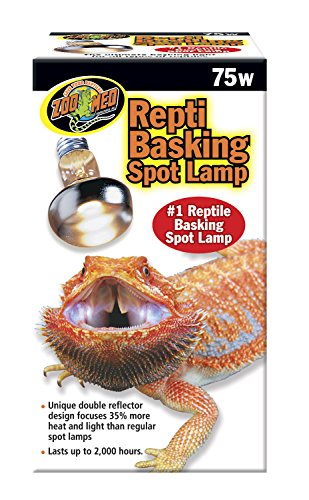
Zoo Med Repti Basking Spot Bulb
A standard incandescent basking bulb screws into any porcelain or ceramic dome fixture already on hand. Its concentrated beam raises surface temperature on a single basking rock without heating the whole enclosure. Multiple wattages ship separately, so owners can match output to tanks from 10 to 40 gallons when paired with a larger dome.
Pros
- Works with dome fixtures owners already own
- Several wattage options fit different tank sizes
- Simple replacement bulb needs no wiring changes
Cons
- Bulb alone does not include a dome or clamp
- Runs hotter to the touch than ceramic emitters
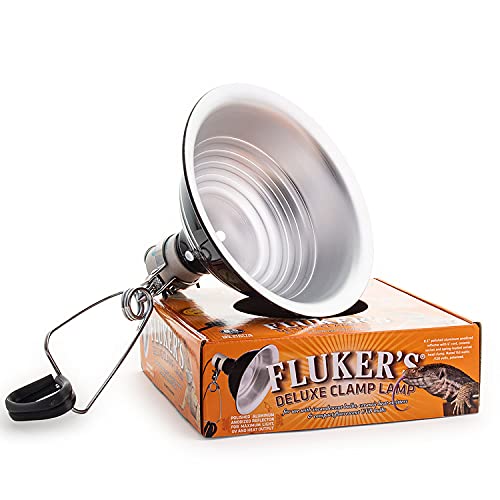
Fluker’s Sun Dome Lamp Fixture
A 10 inch aluminum dome spreads heat across the wider basking platforms tegus and large bearded dragons use. Its ceramic socket accepts bulbs rated to 150 watts without melting the housing. A wire guard keeps large reptiles from touching the bulb directly when mounted low.
Pros
- 10 inch dome covers wide basking platforms
- Wire guard reduces burn risk for climbing reptiles
- Ceramic socket tolerates sustained high wattage
Cons
- Bulky size does not fit standard 20 gallon screen tops
- Heavier fixture needs reinforced clamp mounting

Exo Terra Solar Glo Mercury Vapor Bulb
This self ballasted mercury vapor bulb outputs UVA, UVB, and heat from a single bulb, skipping a separate UVB tube. Owners running taller enclosures for bearded dragons and monitors report even heat spread from its higher mounting height. It must run in a ceramic socket rated for its wattage, since plastic sockets can melt.
Pros
- Combines UVB and heat output in one bulb
- Cuts the number of fixtures needed on the canopy
- Comes in several wattages for different enclosure heights
Cons
- Requires a ceramic socket, not compatible with plastic dome fixtures
- UVB output declines over months and needs periodic replacement

Zoo Med ReptiTherm Ceramic Heat Emitter
This ceramic emitter produces infrared heat without any visible light, allowing round the clock use without disturbing sleep cycles. It screws into standard ceramic socket dome fixtures rated for its wattage. Owners running large snake or monitor enclosures typically pair it with a thermostat to prevent overheating.
Pros
- Runs 24 hours without light disrupting nocturnal reptiles
- Higher wattage options suit larger, harder to heat enclosures
- Lasts longer in service than incandescent bulbs
Cons
- Requires a separate thermostat since it has no dimmer
- Emitter surface stays extremely hot and needs a wire guard

Zoo Med Nocturnal Infrared Heat Lamp
A red tinted bulb supplies nighttime heat while staying dim enough to avoid disrupting reptile sleep patterns. It fits the same porcelain or ceramic dome fixtures used for daytime basking bulbs. Owners running corn snakes or leopard geckos add it after dark for supplemental heat.
Pros
- Red spectrum limits sleep disruption compared to white bulbs
- Fits fixtures already used for daytime bulbs
- Several wattages match different enclosure sizes
Cons
- Some owners still notice the red glow in dark rooms
- Not intended as a primary daytime basking bulb
The lineup, side by side
| # | Model | Wattage | Best for | Score | Price |
|---|---|---|---|---|---|
| 1 | Zoo Med Deep Dome Dual Lamp Fixture | Up to 150W per socket, 300W total | Best overall | 9.4 | Check price |
| 2 | REPTI ZOO Dimmable Basking Lamp Fixture | Up to 100W, dimmable | Best value | 9.1 | Check price |
| 3 | Zoo Med Repti Basking Spot Bulb | 100W, also sold in 50W, 75W, 150W | Best budget | 8.8 | Check price |
| 4 | Fluker’s Sun Dome Lamp Fixture | Up to 150W | Best for large enclosures and big lizards | 8.6 | Check price |
| 5 | Exo Terra Solar Glo Mercury Vapor Bulb | 100W, also sold in 80W, 125W, 160W | Best UVB combo | 8.4 | Check price |
| 6 | Zoo Med ReptiTherm Ceramic Heat Emitter | 150W, also sold in 60W, 100W, 250W | Best ceramic heat emitter | 8.2 | Check price |
| 7 | Zoo Med Nocturnal Infrared Heat Lamp | 75W, also sold in 50W, 100W, 150W | Best for nighttime heat | 8.0 | Check price |
Good to know
What wattage heat lamp do large reptiles need?
Enclosures over 40 gallons generally need bulbs rated from 100 to 150 watts, run through a ceramic socket fixture rather than a plastic one.
Are ceramic heat emitters better than basking bulbs for big enclosures?
Ceramic emitters heat larger spaces around the clock without light, while basking bulbs create a brighter, more focused daytime hot spot.
Can a mercury vapor bulb replace separate UVB and heat bulbs?
Yes, bulbs like the Exo Terra Solar Glo combine UVB and heat output, though they still need a ceramic socket rated for the wattage.
What is the best heat lamp for a large bearded dragon?
Zoo Med’s Deep Dome Dual Lamp Fixture works well since its dual sockets run a basking bulb and a UVB bulb from one dome.
Do tortoises need a different heat lamp than lizards?
Tortoises benefit from wider, lower mounted domes that warm flat basking areas rather than narrow spotlights aimed at a perch.
Is a red heat lamp safe for nighttime reptile heating?
Red and infrared bulbs are commonly used for nighttime heat since they supply warmth while staying dim enough to avoid disturbing sleep.
How big should a heat lamp dome be for a 75 gallon tank?
Domes around 8.5 to 10 inches, like those from Zoo Med and Fluker’s, spread heat more evenly across large basking platforms.
Reptile heat lamp vs ceramic heat emitter, which suits large snakes?
Ceramic emitters suit large snakes needing constant heat without light, while heat lamps work better for species that bask under visible light during the day.
How often do UVB bulbs need replacing?
UVB output declines gradually even after the bulb still lights up, so most owners replace mercury vapor and fluorescent UVB bulbs every 6 to 12 months.
What is the difference between a basking bulb and a ceramic heat emitter?
A basking bulb gives off light and heat together, while a ceramic emitter gives off only heat, useful for nighttime or nocturnal species.
The verdict
Owners with large bearded dragons, iguanas, or tegus get the most from Zoo Med’s Deep Dome Dual Lamp Fixture, since its 8.5 inch dome handles both basking and UVB bulbs at high wattage. Buyers on a tighter budget can start with Zoo Med’s Repti Basking Spot Bulb and upgrade the dome later. Anyone housing nocturnal species after dark should add the Zoo Med Nocturnal Infrared Heat Lamp alongside their daytime fixture.


